



Long-Term Facilities Plan |
|
 |
Mark Laret, chief executive officer of UCSF Medical Center, presented to the Committee on Health Services of the
UC Board of Regents an update on the medical center's long-term facilities plan. His presentation addressed plans for
the Parnassus and Mount Zion campuses and the new Mission Bay campus.
Here is his full speech.
Committee on Health Services
UC Board of Regents
Jan. 18, 2006
My objective today is to update you on the complicated facilities challenges at UCSF Medical Center, and to share with you
our thinking about how to address these challenges in a manner that meets state and university seismic requirements, supports
our academic programs in the near term and long term, and does this in the most financially responsible manner.
UCSF Medical Center is in the enviable position of having strong financial performance, a steady growth in demand for
our services and an ability to recruit truly exceptional faculty, housestaff and students. In our case, it is our facilities
that present the greatest challenges — we need more space to develop academic and clinical programs; much of our space
is functionally obsolescent; and many of our facilities fail to meet state and university seismic requirements. Because we
are a self-supporting enterprise, every solution to these problems must be funded by the medical center itself, through retained earnings, debt and philanthropy.
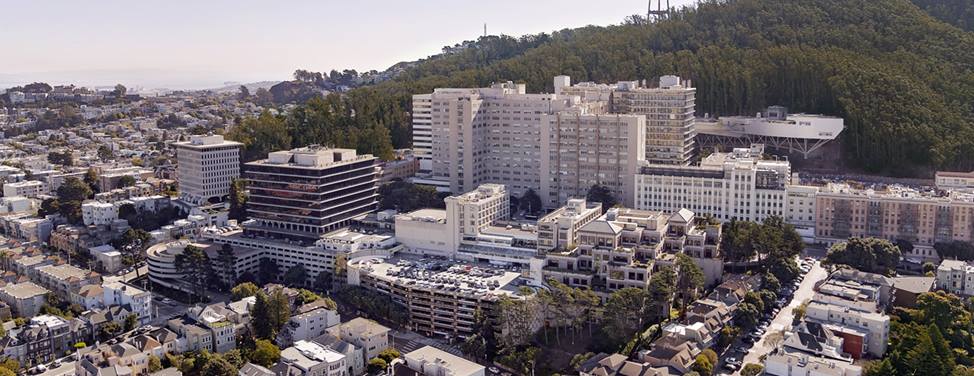
A quick review. UCSF Medical Center operates hospitals on two sites — first is Parnassus Heights, where we have
the interconnected Moffitt and Long hospitals (currently 494 beds of adult and pediatric services, including the Emergency Department).
We are making seismic adjustments to these hospitals now, and under current state seismic law will be able to operate the Moffitt
hospital until 2030 and the Long hospital permanently thereafter.
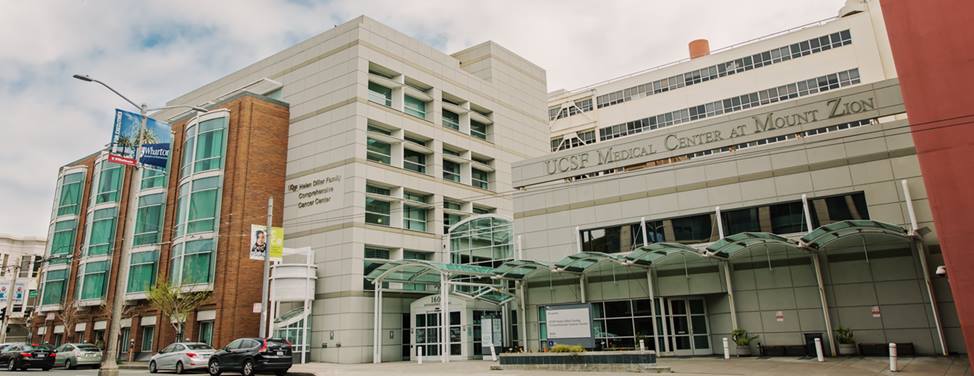
The Mount Zion medical center — where we are currently operating 72 beds, most of which are used for cancer surgery —
has a state seismic requirement that it either be retrofitted or shut down as an inpatient facility by 2013. Further, under current
university policy whether or not we continue to use Mount Zion as an inpatient hospital, some buildings must either be torn down or
retrofitted by 2013 if university employees are to occupy them.
Academic and Clinical Vision
Last year, we laid out in detail our academic and clinical vision for UCSF Parnassus, Mount Zion and the new Mission Bay campuses.
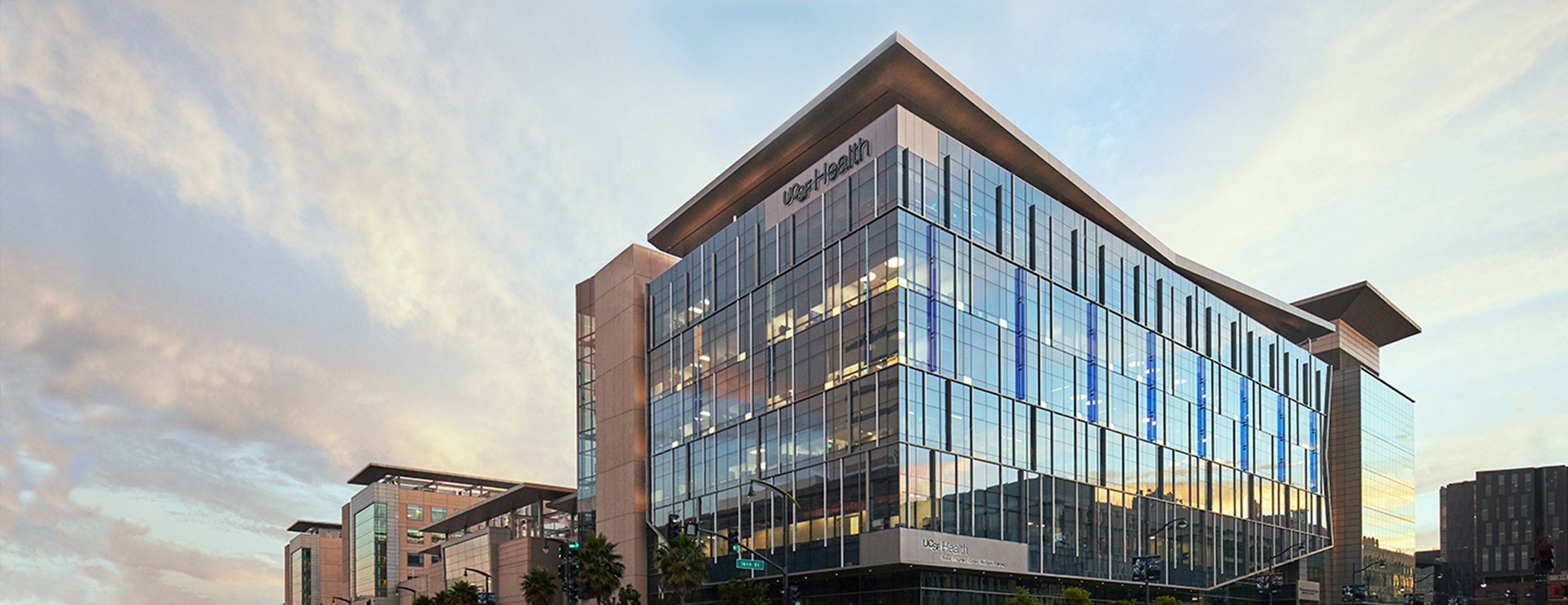
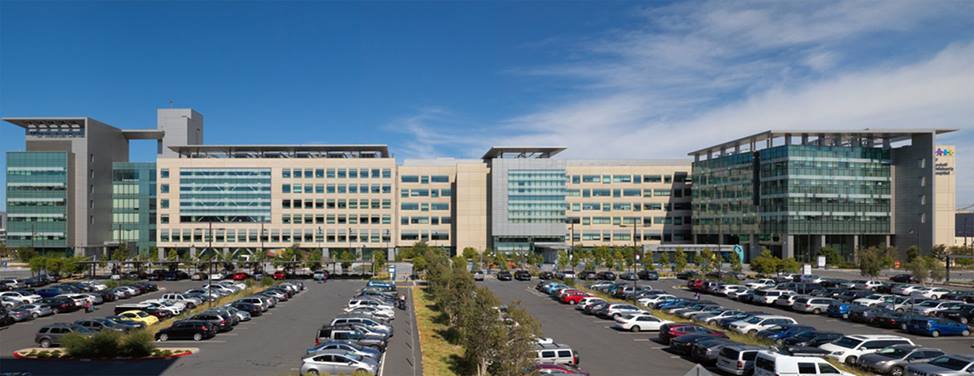
In short, that plan was to acquire 14 acres of land adjacent to the research campus at Mission Bay in order to build a women's,
children's and cancer hospital there by 2013, enabling us to move all inpatient services from the Mount Zion campus by the 2013
seismic deadline. Our long term vision was, and remains, to have two major inpatient campuses at Parnassus and Mission Bay,
with Mount Zion ultimately serving mostly as an outpatient center.
Three years ago, the cost estimates for the Mission Bay project were about $700 million, to be funded from medical center debt
(our capacity is about $400 million) and philanthropy (about $300 million). The philanthropic goal was aggressive but, we believed,
achievable. After detailed program planning, this past summer two independent cost estimates put the price tag of the project at
well over $1 billion. While $700 million was a stretch, $1 billion was not realistic and certainly not by 2013.
Over the past several months, Medical School Dean David Kessler and I have discussed the financial reality of this situation
with the UCSF campus leadership, with committees of the Academic Senate and with our community-based UCSF Medical Center Executive Council.
The consensus is that the plan should proceed simultaneously on two tracks. Building a major clinical campus at Mission Bay is
the right thing academically and clinically, but we should plan to build that clinical campus in phases, as we can afford it.
There is agreement that the first phase should be a home for the UCSF Children’s Hospital. On the second track, to address the
2013 seismic deadline at Mount Zion, even though we ultimately envision this campus as an outpatient facility, the consensus is
that we should proceed now to make the necessary seismic improvements there to allow its use as an inpatient hospital, as needed,
until 2030. By making these seismic improvements, we would eliminate the business risk — and the risk to our very strong a
cademic cancer program — of no longer being able to care for cancer patients at Mount Zion after 2013 should the state
seismic laws remain in place.
At Mission Bay, land acquisition continues as you have authorized. We are in the process of executing the ground lease for
the Catellus property in excess of 9 acres and the WYL property has been acquired. Negotiations are underway for an option
on the X3 parcel.
New Children's Hospital
The UCSF Children’s Hospital, currently on three floors in the Moffitt and Long hospitals, is one of the highest ranked
children's hospitals in the country. It is where the neonatal intensive care concept was first implemented and pioneering
treatments were developed like surfactant that in the past 40 years has halved infant mortality internationally and fetal
surgery that corrects birth defects, which were previously fatal, before babies are born. This children's hospital needs its
own facility and visibility. Once it leaves Parnassus, it will open considerable additional space for other adult programs there.
We have begun the detailed planning for a 180-bed children's hospital as a first phase project at Mission Bay and we are ready
to begin fundraising for it. Current estimates are that this project could be built for approximately $600 million, if
midpoint of construction is 2012. We will obviously bring this project to the Regents regularly for updates and approvals,
but we will only ask for your permission to proceed with this project when we have secured the financing, including the
philanthropic support. I can tell you that the prospect of beginning the fundraising in earnest has electrified our faculty
and staff as well as many in our donor community who are motivated to bring this project to fruition as soon as possible.
Mission Bay, Mount Zion
Consistent with the original plan we discussed with you, subsequent phases of development at Mission Bay would include the
inpatient and outpatient cancer programs, and inpatient and outpatient women's programs.
The second track is to address the Mount Zion campus. We have completed a detailed review of all of the elements necessary
to bring facilities into compliance with university and state seismic requirements. In addition, we have evaluated the costs
of adding beds and operating rooms at Mount Zion to meet the growing demand for our services.
The plan has the following major elements:
- Relocate tenants occupying approximately 60,000 square feet in the Hellman building, and tear this 1916 building down.
This step needs to occur to meet university seismic guidelines since this building is rated "very poor."
- Strengthen the A, B and D buildings. Some of this strengthening is required to meet university requirements and some
is required to meet state inpatient hospital requirements.
- Add two additional operating rooms and between 28 and 56 additional beds to accommodate expected growth.
The total cost of this project is between $250 and $300 million, of which approximately $100 million has to be expended
simply to meet university seismic and triggered infrastructure upgrades. These are costs we have to incur regardless of how
we use Mount Zion — as a hospital, outpatient facilities or faculty offices. The incremental costs beyond this base
include the cost of relocations of programs, faculty and staff; the costs of upgrading facilities to meet state seismic
requirements; and the costs of the additional operating rooms and beds. A more detailed project plan will of course be
coming to the Regents for review and approval.
The costs of this project, while significant, are within the debt capacity of UCSF Medical Center. We also believe
we can complete this project well before the 2013 deadlines.
Advantages, Disadvantages
This revised plan has the advantage that, by 2013, we will have addressed the seismic requirements for Mount Zion,
enabling us to use the hospital (under state law) as needed until 2030; and for education, research and outpatient services
(under university policy) for as long as needed. Further, this plan allows UCSF to proceed with our long-term academic vision
of a major clinical campus at Mission Bay to be built in phases, as resources allow. The first phase of the children's hospital
planning and fundraising can begin now.
The disadvantages of this plan are that the required investment at Mount Zion is significant, and making this
investment will inevitably will delay the medical center’s ability to finance the first phase Mission Bay project.
Another consideration is that when the children’s hospital is completed at Mission Bay, UCSF will be operating hospitals on three
sites, which is not ideal.
But barring a major revision of state seismic law, immediate unprecedented philanthropic support or financial support
from the state — none of which we want to rule out but none of which we can count on — we believe that
we have no other choice but to pursue this revised plan.
Two-Track Approach
We cannot afford the original Mission Bay plan within the 2013 seismic timetable. The two-track approach — continue
acquiring land for a clinical campus at Mission Bay and build it in phases as resources allow, and make the seismic improvements
to the Mount Zion campus that will enable us to remain in business there until 2030 — is consistent with our academic
goals, our clinical goals and is financially responsible.
In subsequent meetings, we will be seeking your approval on many specific issues, including specific elements of
the children’s hospital planning and the Mount Zion seismic improvements. All of those actions will fit within the
context of what I have presented today. I look forward to your questions and comments.
|