




Hearing Loss

Overview
There are different types and varying degrees of hearing loss. It can be partial or total, sudden or gradual, temporary or permanent, and it can affect one ear or both. While some people lose their hearing for a very short period of time as a result of an accident, medical illness or treatment, for others it is a progressive process that takes many years. Some illnesses, such as diabetes, hypertension, or Meniere's disease, can contribute to the progressive loss of hearing.
Hearing loss is classified according to which part of the auditory, or hearing system, is affected. The outer ear consists of the visible ear and ear canal. The middle ear is an air-filled cavity containing three small bones. The middle ear is separated from the ear canal by the eardrum.
Our approach to hearing loss
At UCSF, our audiologists work closely with a variety of specialists to provide state-of-the-art evaluation and treatment for patients with any degree of hearing loss. Treatment depends on the cause and severity of the hearing loss, as well the patient's lifestyle and listening needs. We may recommend medication or surgery to address any underlying issues. In other cases, patients may benefit from hearing aids, assistive listening devices or cochlear implants. We offer the latest advanced technologies and provide patients with auditory training to maximize their hearing abilities.
Awards & recognition
-

Among the top hospitals in the nation
Signs & symptoms
There are three main types of hearing loss:
Sensorineural hearing loss
Permanent hearing loss occurs when inner ear nerves become damaged and do not properly transmit their signals to the brain. Those who suffer from this condition may complain that people seem to mumble or that they hear, but do not understand, what is being said. The aging process is a very common cause of sensorineural hearing loss. As we get older, the inner ear nerves and sensory cells gradually die. The condition is not often medically or surgically treatable. In most cases, the symptoms can be significantly minimized with hearing aids.
In addition to aging, sensorineural hearing loss may be caused by:
- Injury
- Excessive noise exposure
- Viral infections, such as measles or mumps
- Ototoxic drugs, which are medications that damage hearing
- Meningitis
- Diabetes
- Stroke
- High fever
- Meniere's disease
- Acoustic tumors
- Heredity
Conductive hearing loss
These disorders can be either temporary or permanent. They are caused by problems in either the outer or middle ear, which prevent sound from reaching the inner ear. People who experience this condition may find that voices and sounds appear faint. Many forms of conductive hearing loss can be helped medically or surgically. Some common causes of this condition include:
- Infection of the ear canal or middle ear
- Fluid in the middle ear
- Perforation or scarring of the eardrum
- Wax build-up
- Unusual growths or tumors in the ear
- Otosclerosis, a condition in which there is an abnormal growth of bone of the middle ear. This bone prevents structures within the ear from working properly and causes hearing loss. For some people with otosclerosis, the hearing loss may become severe.
Mixed hearing loss
Some people have a combination of both sensorineural and conductive hearing loss.
Hearing loss is often gradual and not immediately noticed by the person affected. Sometimes friends or family will notice a person's hearing problems before the person with the hearing loss recognizes it. For instance, family members may complain that the person with hearing loss listens to the television or radio too loud and often ask them to repeat what they've just said. Or, that the person with hearing loss doesn't answer the telephone or doorbell because they didn't hear it ringing.
Although each person may experience symptoms of hearing loss differently, some of the most common symptoms may include:
- Inability to hear people clearly and fully. People may seem to mumble and those experiencing hearing loss may not hear all parts of a conversation. For instance, someone with hearing loss may miss the essence of a story or punch line of a joke that someone just told.
- Frequent requests for repetition or clarification.
- Tendency to need to stare at people when they are talking in order to make it easier to understand what they are saying.
- Fatigue at the end of the day from straining to hear.
- Avoidance of social situations because of difficulty following conversations in noisy environments.
- Tendency to bluff when not hearing someone because of the fear of asking them to repeat themselves.
Diagnosis
Although hearing loss is very common among adults, particularly those over age 65, the condition is often under diagnosed in older people. Hearing loss can greatly impact a person's quality of life. Therefore, if hearing loss is suspected, it is important that the advice of a doctor specializing in diseases and conditions of the ear, known as an otologist, otolaryngologist, or ear, nose and throat doctor, is sought in order to make a definite medical diagnosis. The ear specialist also will work in close cooperation with audiologists, specialists in hearing disorders.
There are a variety of tests available to accurately diagnose the type and severity of hearing loss. These include:
- Air conduction, conventional or standard audiometry. This test is commonly used to measure the hearing of adults and older children. A range of test tones, from low to high frequency (perceived as "pitch"), is transmitted through earphones placed on or in each ear, and patients are asked to indicate with a hand raise, button push or verbal response when you hear each sound. This testing determines the very softest signals you can hear at each of the presented frequencies, and indicates frequency regions in which hearing may be impaired. The louder the sounds must be made to be heard, the greater the degree of hearing loss at that particular frequency or frequencies. The frequencies tested are those important for hearing and understanding speech and other environmental sounds.
- Bone conduction. If testing reveals a hearing loss, another type of headset, a bone vibrator, is used to determine hearing by bone conduction in order to determine the type of hearing loss. This device sends sounds directly to the inner ear, bypassing the outer and middle ear. If the sounds are heard better by bone conduction, the hearing loss is conductive in nature and is likely located in the outer or middle ear. If the sounds are heard equally well with the earphones and the bone vibrator, the hearing loss is sensorineural in nature. A combination of conductive and sensorineural hearing loss also may be present; this is called a mixed hearing loss.
- Word recognition. In addition to tests with tones, word recognition testing is usually performed to evaluate the ability to discriminate differences between the speech sounds of various words, and how clearly the words are heard. During this test, you will be asked to listen to and repeat words.
- Acoustic immittance. These tests are used to assess the status of the middle ear and related structures. A type of acoustic immittance test called, tympanometry, measures the movement of the eardrum to see if it moves normally when pressure changes are applied. Restricted eardrum movement could indicate a problem with the eardrum or middle ear structures. Acoustic reflex testing, a method of determining how the middle ear reacts to loud sounds also might be tested.
- Otoacoustic emissions (OAEs). OAEs are used to assess the function of the cochlea. OAEs are typically present when hearing is normal or near normal, and are typically absent when there is a problem in the cochlea.
- Auditory brainstem response (ABR). ABR is a procedure used to measure hearing sensitivity and determine if the neural pathways within the brainstem are transmitting sound properly. This test is used to rule out auditory-neurological problems. Brainwave activity in the auditory centers of the brain is recorded in response to a series of clicks or tones presented to each ear. During this procedure, electrodes are placed on the head to detect the electrical response of the brains to sounds presented while you rest or sleep. The electrodes do not cause pain or discomfort.
Treatments
Several options are available for hearing loss, ranging from medical treatment to listening devices, such as hearing aids. Treatment depends of the cause and severity of hearing loss. For age-related hearing loss, there is no cure, but hearing aids and other listening devices help treat the problem and improve quality of life.
Medical treatment
Medical treatment, including medications and surgery, is recommended for many types of hearing problems, particularly conductive hearing loss. However, even if medical treatment is not necessary for your type of hearing loss, we highly recommend a visit to an audiologist for both a definite diagnosis of the type of hearing loss and treatment advice.
Some of the most common causes of conductive hearing loss are fluid in the middle ear, with or without infection, and earwax blocking the ear canal. In cases where there is a bacterial infection of the middle ear, antibiotics are often used. Although these conditions often can be diagnosed and treated by a primary care doctor, persistent problems may require the care of an ear specialist. Conductive hearing loss also may be caused by a problem with the bones of the middle ear, which, in many cases, can be treated with surgery.
Hearing aids
If diagnosed with hearing loss that cannot be treated medically, a doctor will recommend a hearing aid evaluation and consultation with an audiologist. This consultation appointment will help determine which hearing aids or other assistive listening devices would be most appropriate. Lifestyle, listening needs and hearing concerns are important in determining the appropriate hearing aids.
Assistive listening, hearing enhancement and alerting devices
In some cases, hearing or alerting assistive devices may be recommended in addition to, or instead of, hearing aids. Hearing assistance technologies come in two forms:
- Signaling or test display devices. These are designed to convert sound or keystrokes into visual or vibratory stimulus, or into a written text.
- Assistive listening devices. These instruments are designed to enhance the sound that is received by picking up the sound closer to its source. This reduces the effects of distance, noise and reverberation and transmits sound directly to the ears or hearing aids.
There are a number of devices that can assist hearing in a variety of settings. These include:
- Large Area Listening Systems
- Television Listening Systems
- Conference Microphones
- Personal FM Systems
- Amplified Telephones
For details on each of the devices listed above, please see Hearing Enhancement Devices.
Signaling and text display systems
People with hearing loss can benefit from signaling and substitution systems, which convert sound or key strokes into another mode, such as text or flashing lights. These systems include:
- Signaling and Warning Systems
- Telephones
- TV Closed Captioning
Digital cell phones and hearing aid use
A common complaint of hearing aid users is the inability to use cell phones, particularly digital cell phones, with their hearing aids, or that they experience interference when trying to do so. Digital hearing aids are being continually updated to provide shielding from this interference. Cell phone technology also is changing. In fact, in 2003, the Federal Communications Commission (FCC) developed a report requiring a number of future actions by manufacturers and service providers to make digital wireless phones that are capable of being used effectively with hearing aids.
In the meantime, there are many strategies that will improve listening when using cell and land based telephones with hearing aids. For more information, please see Strategies for Using Your Cell Phone with Your Hearing Aids.
Cochlear implants
A cochlear implant is a small electronic device that can help improve the hearing of people with severe, irreversible hearing loss. Although a cochlear implant does not restore normal hearing, it can allow a person to hear and understand more speech than was possible with a hearing aid. The Cochlear Implant Center at UCSF Medical Center has been involved in the development and design of cochlear implant systems for over 30 years.
Aural rehabilitation and listening and auditory communication enhancement
Unfortunately, hearing aids will not correct hearing loss or restore hearing to normal levels. However, the use of hearing aids and assistive listening devices along with auditory training can help maximize hearing abilities. Training may consists of:
- Audiologic rehabilitation classes
- Learning good listening strategies
- Establishing guidelines for communicating with those around you
In addition, UCSF Audiology researchers are leaders in the quest to develop home based therapies for enhancing listening ability.
UCSF Health medical specialists have reviewed this information. It is for educational purposes only and is not intended to replace the advice of your doctor or other health care provider. We encourage you to discuss any questions or concerns you may have with your provider.
More treatment info
-
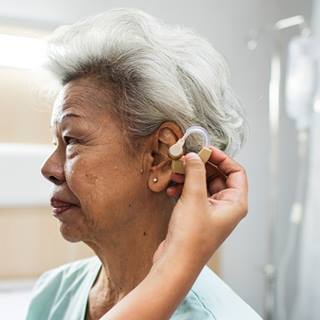
Hearing Aids
Audiologists work with patients with hearing loss to determine their communication needs and preferences to find the appropriate hearing aid.
Learn more -
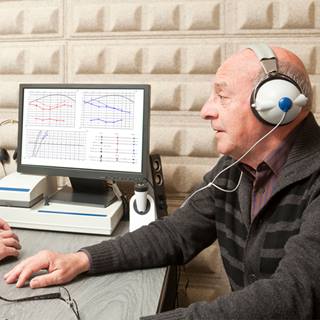
Cochlear Implants
The small electronic device placed in the inner ear can allow a person to hear more than was possible with a hearing aid.
Learn more