


Testicular Cancer

Overview
When detected early, testicular cancer is highly treatable and usually curable, which is why early diagnosis and treatment are so important for men of all ages. Adolescent boys and young men should be particularly aware of the signs and symptoms of the disease and perform regular testicular self-exams.
Testicular cancer is a disease in which cells become malignant, meaning cancerous, in one or both of the testicles. Testicular cancer can be broadly classified into two types: seminoma and nonseminoma. Seminomas make up about 40 percent of all testicular cancers. Nonseminomas are a group of cancers that include choriocarcinoma, embryonal carcinoma, teratoma and yolk sac tumors. A testicular cancer may have a combination of both types.
Our approach to testicular cancer
UCSF's urologic oncologists are internationally recognized experts in the treatment of testicular cancer. We offer the most current diagnostic tools and treatments, including surgery, radiation, chemotherapy and autologous bone marrow transplant, in which we preserve a patient's bone marrow for implantation after treatment.
Our patients have access to the latest experimental therapies under evaluation in clinical trials and to specialized care focused on protecting fertility. In addition, we provide patient education and support groups. Finally, our urologists are leaders in cancer risk assessment, genetic testing and prevention.
Awards & recognition
-

Among the top hospitals in the nation
-

Best in California and No. 7 in the nation for cancer care
-

Best in Northern California for urology
-

in NIH funding for urology research
Signs & symptoms
Most men can detect their own testicular cancers. Doctors generally examine the testicles during routine physical exams. Between regular checkups, if you notice anything unusual about your testicles, you should talk with your doctor.
Common symptoms include:
- A painless lump or swelling in either testicle
- Any enlargement of a testicle or change in the way it feels
- A feeling of heaviness in the scrotum
- A dull ache in the lower abdomen or the groin
- A sudden collection of fluid in the scrotum
- Pain or discomfort in a testicle or in the scrotum
Diagnosis
To help find the cause of symptoms, the doctor will evaluate your general health. Your doctor will perform a physical exam and may order laboratory and diagnostic tests. If a tumor is suspected, your doctor will probably recommend an ultrasound. If a tumor is detected, the testicle is removed.
- Blood tests. Measures the levels of tumor markers. Tumor markers are substances often found in higher-than-normal amounts when cancer is present. Tumor markers for testicular cancer involve beta human chorionic gonadotropin hormone (B-hCG); alpha-fetoprotein, a blood protein that's present in adults with some forms of cancer; and lactate dehydrogenase (LDH), a protein that can be elevated by cancer.
- Ultrasound. A diagnostic test in which high-frequency sound waves are bounced off tissues and internal organs. Their echoes produce a picture called a sonogram. Ultrasound of the scrotum can show the presence and size of a mass in the testicle. It is also helpful in ruling out other conditions, such as swelling due to infection.
- Biopsy. If a testicular tumor is suspected based on physical examination, blood tests and ultrasound, the testicle is removed. In nearly all cases of suspected cancer, the entire affected testicle is removed through an incision in the groin. This procedure is called inguinal orchiectomy. In rare cases, for example, when a man has only one testicle, the surgeon performs an inguinal biopsy, removing a sample of tissue from the testicle through an incision in the groin and proceeding with orchiectomy only if the pathologist finds cancer cells. (The surgeon does not cut through the scrotum to remove tissue, because if the problem is cancer, this procedure could cause the disease to spread.)
Treatments
Four treatments commonly used for testicular cancer are surgery, radiation therapy, chemotherapy and bone marrow transplant.
Surgery
Surgery is a common treatment for most stages of cancer of the testicle. A doctor may take out the cancer by removing one or both testicles through an incision (cut) in the groin. This is called a radical inguinal orchiectomy. Some of the lymph nodes in the abdomen may also be removed in a procedure called a lymph node dissection.
Radiation therapy
Radiation therapy uses X-rays or other high-energy rays to kill cancer cells and shrink tumors. Radiation usually is emitted by a machine and is called external-beam radiation, rather than radiation emitted by a substance consumed by the patient.
Chemotherapy
Chemotherapy uses drugs to kill cancer cells. It may be taken by pill, or injected into a vein. Chemotherapy is called a systemic treatment because the drugs enter the bloodstream, travel through the body and can kill cancer cells outside the testicle.
Bone marrow transplantation
Bone marrow transplantation is a newer type of treatment. In an autologous bone marrow transplant, bone marrow is taken from the patient and treated with drugs to kill cancer cells. The marrow is then frozen. The patient is given high-dose chemotherapy — with or without radiation therapy — to destroy the remaining marrow. The marrow removed from the patient is then thawed and returned to the patient by injection in a vein to replace the marrow that was destroyed.
UCSF Health medical specialists have reviewed this information. It is for educational purposes only and is not intended to replace the advice of your doctor or other health care provider. We encourage you to discuss any questions or concerns you may have with your provider.
Recommended reading












Where to get care (2)
Related clinics (4)
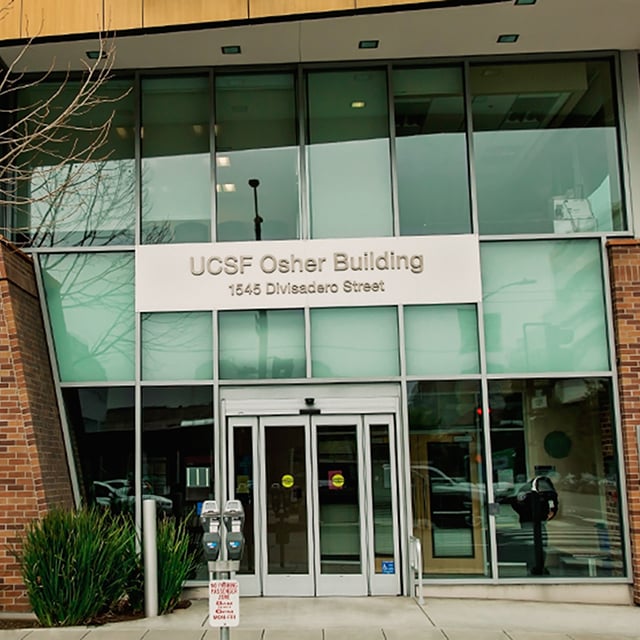
Osher Center for Integrative Health
 2
2