


Ulcers

Overview
A peptic ulcer is a sore that forms in the lining of the stomach or the beginning of the small intestines, called the duodenum. Ulcers are common, affecting an estimated 25 million Americans.
Contrary to popular belief, ulcers are not due to stress and diet. A bacterial infection brought on by the bacteria Helicobacter pylori (H. pylori) is the cause of the majority of all stomach ulcers. Prolonged use of nonsteroidal anti-inflammatory drugs (NSAIDs) or pain relievers such as aspirin, ibuprofen and naproxen sodium, which affect the stomach's ability to protect itself from acidic stomach juices, also may lead to ulcers.
Our Approach to Ulcers
UCSF delivers compassionate, comprehensive care for all gastrointestinal conditions, including ulcers. Treatment for an ulcer depends on the underlying cause. Most cases are due to the bacterium Helicobacter pylori, for which we prescribe a course of antibiotics as well as proton pump inhibitors, medications that reduce stomach acid and allow ulcers to heal.
Ulcers caused by nonsteroidal anti-inflammatory drugs, such as ibuprofen, often get better on their own once patients stop taking the drugs. If needed, proton pump inhibitors and other medications can help the healing process.
Awards & recognition
-

Among the top hospitals in the nation
-

One of the nation's best in gastroenterology & GI surgery
Signs & symptoms
If you have a peptic ulcer, you may only experience very mild symptoms or none at all. However, abdominal discomfort is the most common symptom associated with ulcers. Other symptoms include:
- Weight loss
- Poor appetite
- Bloating
- Burping
- Nausea
- Vomiting
Diagnosis
Your doctor may first perform an upper gastrointestinal (GI) series and endoscopy to check for ulcers.
An upper GI series involves X-rays of the esophagus, stomach and the beginning of the small intestine, called the duodenum. You will be asked to drink a chalky liquid, called barium, to make these organs appear more clearly on the X-ray.
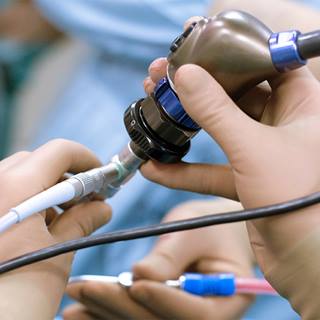
During an endoscopy, the upper portion of the gastrointestinal tract is visualized by using a long, thin and flexible tube with a tiny video camera and light on the end, called an endoscope. The areas examined during this procedure include the esophagus, or the swallowing tube leading to the stomach, the stomach and the duodenum. The high-quality picture from the endoscope is shown on a television monitor and provides a clear, detailed view. In many cases, upper GI endoscopy is a more precise examination than X-ray studies.
This procedure is performed by a gastroenterologist, a well-trained specialist who uses the endoscope to diagnose, and in some cases treat, problems of the upper digestive system. Your doctor will be assisted by specially trained nurses and technicians who are essential in performing the procedure safely and effectively.
If an ulcer is found, your doctor will then test you for the bacteria Helicobacter pylori (H. pylori). This test is important because treatment for an ulcer caused by H. pylori is different from that of an ulcer caused by nonsteroidal anti-inflammatory drugs (NSAIDs). H. pylori is most commonly diagnosed through blood test, although breath, stool and tissue tests also may be used.
Treatments
Peptic ulcers caused by the bacteria Helicobacter pylori (H. pylori) are usually treated with a combination of antibiotics that kill the bacteria as well as other drugs to reduce stomach acid and protect the stomach lining. The use of only one medication to treat H. pylori is not recommended.
At this time, the most proven effective treatment is a two-week course of treatment called triple therapy. It involves taking two antibiotics to kill the bacteria and an acid suppressor known as a proton-pump inhibitor (PPI). By decreasing the amount of acid in the stomach, PPIs are used to heal stomach ulcers, including those caused by nonsteroidal anti-inflammatory drugs (NSAIDS), and duodenal ulcers. Two-week triple therapy reduces ulcer symptoms, kills the bacteria and prevents the ulcer from recurring in more than 90 percent of patients.
Ulcers caused by nonsteroidal anti-inflammatory drugs (NSAIDs) usually heal once the person stops taking the medication. To help the healing process and relieve symptoms, your doctor may recommend taking PPIs to neutralize the acid and drugs called H2-blockers to decrease the amount of acid the stomach produces.
UCSF Health medical specialists have reviewed this information. It is for educational purposes only and is not intended to replace the advice of your doctor or other health care provider. We encourage you to discuss any questions or concerns you may have with your provider.