




Pituitary Tumors

Overview
Pituitary adenomas are tumors in the pituitary gland, located in the center of the head behind the eyes. The pituitary gland is less than a half inch in diameter, about the size of a pea. It's often called the "master gland" because it controls many of the body's other glands and the production of hormones, chemicals that regulate essential body processes.
If a pituitary tumor exists, the pituitary gland may make an excessive amount of hormones. Tumors that make hormones are called functioning tumors and those that don't make hormones are called nonfunctioning tumors.
Tumors that secrete hormones tend to be smaller than the pituitary gland when they're diagnosed. In fact, most pituitary tumors are microadenomas that measure 3 to 9 millimeters in diameter. Less common tumors are macroadenomas that are 10 millimeters or larger in diameter.
Tumors that don't secrete hormones tend to be larger and may compress other tissue such as the optic nerves, causing vision loss.
Some tumors may cause Cushing's disease, in which too many hormones called glucocorticoids are released into the bloodstream. This causes fat to build up in the face, back and chest while the arms and legs become very thin. Other symptoms include too much sugar in the blood, weak muscles and bones, a flushed face and high blood pressure.
Other pituitary tumors can cause a condition called acromegaly, where the hands, feet and face are larger than normal. In very young people, the entire body may grow much larger than normal.
Almost all pituitary tumors are benign, rather than malignant or cancerous, and are relatively slow growing. They rarely spread to other areas of the body.
Our approach to pituitary tumors
UCSF offers highly specialized, world-class care for pituitary tumors. Our team includes experts in neuroendocrinology, neurosurgery and radiation therapy, among other specialties.
UCSF surgeons pioneered a minimally invasive procedure to remove pituitary tumors, called the transsphenoidal approach, which is safer than traditional surgery and leaves no scars. UCSF has more experience with this procedure than any other program in the nation and has a record of excellent outcomes.
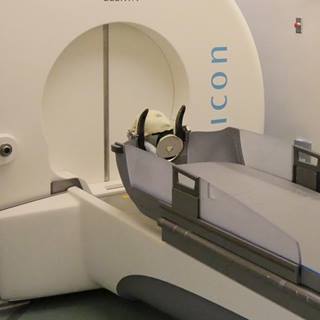
We also offer radiosurgery, which delivers precisely targeted, high doses of radiation to abnormal tissue while minimizing radiation exposure to surrounding healthy tissue. We use radiosurgery to treat pituitary tumors that can't be removed completely because they have grown into surrounding areas.
Awards & recognition
-

Among the top hospitals in the nation
-

One of the nation's best for diabetes care & endocrinology
-

Best in California and No. 2 in the nation for neurology & neurosurgery
-

pituitary surgeries performed annually
Signs & symptoms
Patients with pituitary tumors may experience one or more of the following symptoms:
- Headache
- Loss of peripheral vision or decreased acuity in one or both eyes
- Double vision
- Nausea with or without vomiting
- Weight loss or gain
- Loss of appetite
- Fatigue or decreased energy
- Joint pain
- Increase in shoe or ring size
- Development of high blood pressure or diabetes mellitus
- Decreased mental function
- Dizziness
One type of pituitary tumor can cause a woman's breasts to produce milk even though she isn't pregnant and can stop her periods. Women may experience irregular or lack of periods and infertility, while men may have erectile dysfunction, loss of body or facial hair, loss of sexual drive and infertility.
Diagnosis
During your visit to UCSF's California Center for Pituitary Disorders, our medical team will ask you about your medical history as well as your immediate family's medical history. If your primary care physician has sent your previous medical records, we will review this information.
Be sure to tell your doctors about any medications you are currently using, including over the counter medications, vitamins, nutritional supplements or herbal remedies.
We will examine you in an attempt to discover the cause of your medical problem. This evaluation may include the following:
- Blood or urine tests. These simple tests are used to measure the hormone levels in your blood and urine.
- Electrocardiogram (ECG or EKG). A simple, painless test that records the electrical activity of the heart through electrodes placed on the skin of the chest.
- X-rays. High-energy radiation is used to take pictures of the pituitary gland.
- Magnetic resonance imaging (MRI). This is a non-invasive procedure that produces two-dimensional views of an internal organ or structure, particularly your brain and spinal cord.
- Computed tomography (CT). This is a non-invasive procedure that takes cross-sectional images of the brain or other internal organs to detect any abnormalities that may not show up on an ordinary X-ray.
For patients with possible pituitary tumors, we also will perform a complete endocrinological evaluation.
Treatments
Transsphenoidal surgery
Pituitary tumors often can be removed safely through a neurosurgical procedure called transsphenoidal surgery. The word "transsphenoidal" describes the path the surgeon follows to reach the pituitary gland. The word comes from "trans," meaning "to cross or pass through," and "sphenoid," the name of the cavity, the sphenoid sinus, that is passed through to reach the pituitary gland. The operation now can be performed without any facial incision under the lip or in the nose.
The surgeon begins the approach to the pituitary gland by entering the nose on one side. The surgeon uses a very tiny microsurgical instruments especially designed for this particular operation and a brilliant fiberoptic light to illuminate the internal anatomy. In addition, a microscope magnifies the surgical area 12 times its actual size.
The surgeon then guides the instrument into the nasal cavity and an opening is made in the sphenoid bone. Once through the sphenoid sinus, an opening is made in the wall of the sella turcica to expose the pituitary gland.
The tumor can be readily distinguished from the normal pituitary gland tissue and is removed, preserving the normal gland. After the surgeon removes all the tumor tissue, the small cavity that is left is treated with alcohol to destroy any tumor cells that may remain. This cavity is then sealed, sometimes with a piece of fat that the surgeon removes from the patient's abdomen. The surgeon then applies a biological 'glue' that helps seal the pituitary area from the nose and promotes natural healing.
No nasal packing is required after the surgery. Typically, patients go home the following day.
Sometimes it is necessary to place a spinal drain, a tiny tube threaded into the space in the lower back that is occupied by spinal fluid, during surgery. This tube allows the surgeon to remove spinal fluid or inject saline solution into the spinal fluid space. Because the spinal fluid in the lower back mixes with the fluid around the brain and pituitary gland, changes in the level of the fluid in the spinal area can move the pituitary gland in such a way that the surgeon can remove the tumor more easily.
Some patients wake up after the operation with a mild lower back pain, a small bandage on their back and maybe even a drainage bag that will remain in place for 24 hours.
High-precision radiosurgery
The Gamma Knife is an advanced radiosurgery treatment used for small- to medium-size tumors, such as pituitary adenomas. It can also treat epilepsy, trigeminal neuralgia and abnormal blood vessel formations located deep in the brain.
Despite its name, it isn't a knife but delivers a single, very finely focused, high dose of radiation precisely to its target, while causing little or no damage to surrounding tissue. Abnormalities measuring 1.5 inches in diameter or smaller — even abnormalities no larger than a small pebble — are treated with the Gamma Knife.
Medications
The goal of medical therapy is to block the tumor from making abnormal quantities of hormones. Specific drugs are used to control specific types of hormone secretion.
The production of prolactin is controlled with the drug bromocriptine, which reduces the size of the tumor while maintaining normal prolactin levels. Bromocriptine also may be used with other treatments as well. Somatostatin analogues, such as Sandostatin, are used in conjunction with surgical removal for growth hormone-secreting tumors. These drugs are also used on recurrent tumors. Mitotane (Lysodren) and ketoconazole (Nozoral) are drugs used for ACTH-secreting tumors.
UCSF Health medical specialists have reviewed this information. It is for educational purposes only and is not intended to replace the advice of your doctor or other health care provider. We encourage you to discuss any questions or concerns you may have with your provider.

Where to get care (1)
Related clinics (4)

Osher Center for Integrative Health
 2
2