



























Most parents have heard stories about young children who are fed new foods and suffer allergic reactions. The good news is that those reactions are not very common, occurring in an estimated 2 to 5 percent of infants less than 1 year of age. However, infants and toddlers are more likely to develop food allergies than older children or adults because allergies usually occur early in life, when the immune and digestive systems are not mature.
Though the risk is small, parents and doctors should not be lulled into a false sense of security regarding the potential severity of adverse food reactions. To be safe, it's always wise to offer new foods to kids slowly, one at a time. Generally, parents should wait about a week to see whether a new food causes a reaction before introducing others into the diet.
An infant's risk of developing food allergies is strongly influenced by a family history of allergies. Children with an allergic parent have twice the risk of developing a food allergy than are children without an allergic parent.
Common Allergenic Foods
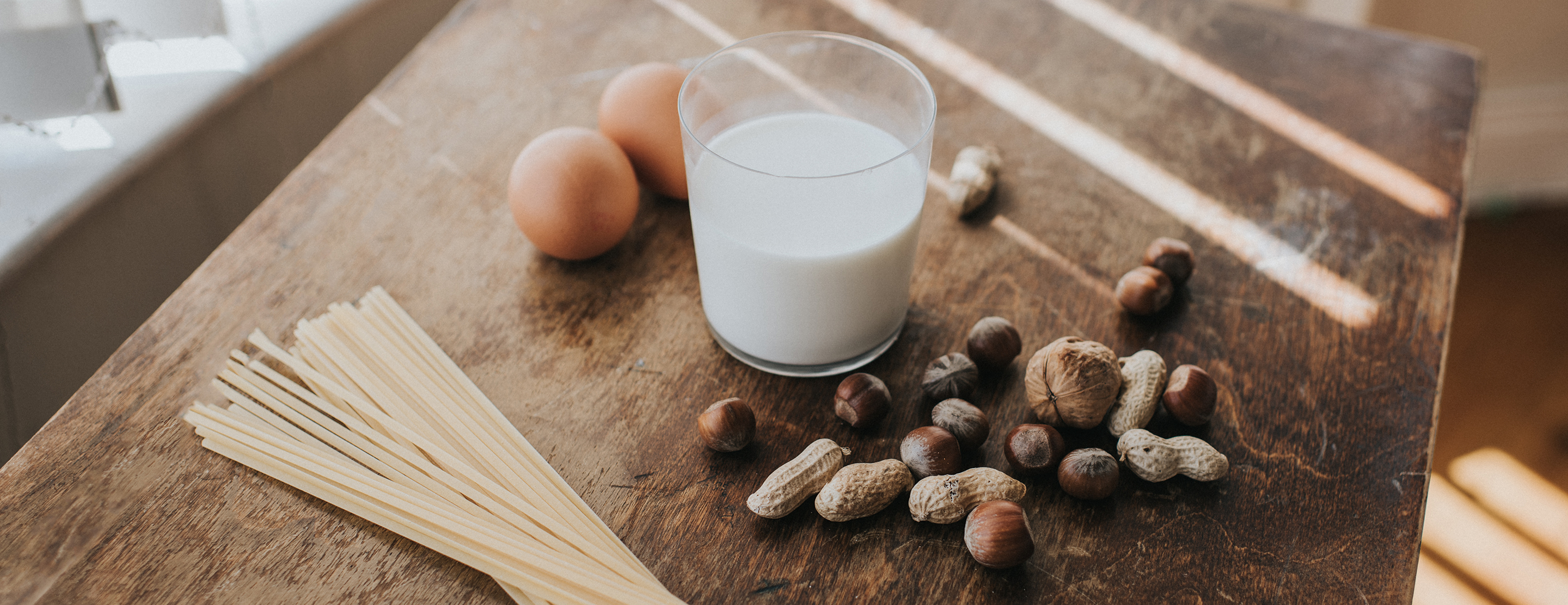
Allergic reactions can be triggered by eating a food or, for those who are very allergic, smelling or touching the food. The most common allergy-causing foods are called the "Big 8" and include:
- Peanuts
- Tree nuts, such as walnuts and pecans
- Milk
- Eggs
- Fish
- Shellfish
- Wheat
- Soy
These foods cause 90 percent of all food allergy reactions.
It is important to note that children can sometimes outgrow their allergies to milk, eggs, soy and wheat. However, allergies to peanuts, nuts, fish and shellfish tend to persist throughout adulthood.
Food Allergies vs. Food Intolerance
Food Allergies
Food allergies occur when the body's immune system mistakenly believes a harmless substance, in this case a food, is harmful. In an attempt to protect the body, the immune system makes specific antibodies to that food. These antibodies are called IgE antibodies. The next time the specific food is eaten, large amounts of antibodies and histamine are released by the immune system. Histamine is a substance produced by the body that plays a major role in many allergic reactions. These chemicals trigger allergic symptoms that can affect the respiratory system, gastrointestinal tract, skin and cardiovascular system. The best way to handle food allergies is to avoid all foods that cause the allergic reactions.
Food Intolerance
Food intolerance is a reaction to food that does not involve the immune system. Foods such as milk containing lactose, red wine, chocolate, monosodium glutamate (MSG), food colors and sulfites are all examples of foods commonly associated with intolerances. For example, a person with lactose intolerance lacks the enzyme needed to digest milk sugar and may experience symptoms such as gas, bloating and abdominal pain after eating milk products. As with food allergies, the best solution is to avoid these foods.
Common Symptoms of an Allergic Reaction
Symptoms caused by food allergies can vary greatly. They can differ in severity, timing, body location and amount of food eaten. Symptoms usually appear within 10 minutes to two hours after eating the allergenic food. Common symptoms include:
- Hives, which is the most common symptom
- Itching
- Swelling in the tongue and throat
- Abdominal cramps
- Diarrhea
- Runny nose
- Wheezing
- Red watery eyes
- Tingling in the mouth
- Difficulty breathing
- Vomiting
- Eczema
- Swelling
- Coughing
Anaphylaxis includes several of the symptoms above as well as breathing difficulty; drop in blood pressure and loss of consciousness. This reaction is rare and only happens in extreme cases.
In infants, intolerance to milk or soy protein can cause a variety of reactions, ranging from mild skin rashes to bloody stools to rare but severe anaphylactic reactions, characterized by hives, wheezing, rapid pulse and other symptoms. While these reactions can be worrisome, most subside when the milk or soy protein is removed from the diet. More than 90 percent of babies with the protein intolerance will outgrow it by 1 to 3 years of age.
Diagnosing a Food Allergy
Before being diagnosed with a food allergy, your child's doctor will ask about his or her food reactions. You may be asked to keep a detailed food history for your child. Sometimes an elimination diet — where foods suspected of causing the allergy are temporarily eliminated — is needed.
After this, your child's doctor may use a scratch skin test, during which a dilute extract of the food is placed on the skin, scratched with a needle and observed for swelling or redness. Other tests like the radioallergosorbent test (RAST) or enzyme-linked immunosorbant assay (ELISA) blood test may be used if your child had a severe allergic reaction. These tests measure the presence of food-specific IgE in the blood.
People can have a positive skin test to a food allergen even though they do not experience allergic symptoms after eating that food. A positive skin test does not automatically mean that there is a food allergy. Doctors will only diagnose a food allergy when a patient has a positive skin or blood test to a specific allergen and the history of these reactions suggests an allergy to the same food.
Allergists can help design a treatment plan for successful management of food allergies and allergic reactions. In addition, registered dietitians can help to develop a healthful, tasty diet despite food restrictions and can help you monitor food records for hidden sources of problem foods.
Treating a Food Allergy
There is no cure for food allergies. Therefore strict avoidance of the foods your child is allergic to is the only way to prevent a reaction. Sometimes, medications such as antihistamines, like Benadryl, or epinephrine are prescribed.
Outgrowing a Food Allergy and Reintroducing Foods
If your child has a food allergy, you should only consider reintroducing those foods under a doctor's supervision. Although children may outgrow some food allergies, this often depends on the severity of the initial reaction. Many kids outgrow their allergies by the time they reach adolescence, although some allergies — particularly peanuts, nuts and seafood allergies — commonly persist. Again, reintroduce foods only after speaking with your child's doctor.
A food challenge is when an allergenic food is reintroduced into the diet and the child is closely monitored for allergy symptoms. The allergenic food usually will be less of a problem if mixed with other foods or if it is found in processed foods. For example, introduce eggs in bakery products or milk as cheese or yogurt, rather than scrambled eggs or a glass of milk. Your child's doctor will determine whether or not a food challenge should take place, as well as the appropriate timing of such a challenge.
Involving Kids With Their Food Allergies
It's a good idea to get your child involved in managing his or her food allergy. Here are some tips for doing so:
- Encourage your child to become a "food label detective" and teach him or her the scientific and technical names of ingredients listed on food labels.
- Support your child in asking questions about ingredients before eating.
- Explain why sharing food with classmates is risky, since a friend's lunch may contain an allergenic food.
- Have your child teach classmates and friends about his or her food allergy.
- Teach your child to plan for accidents.