
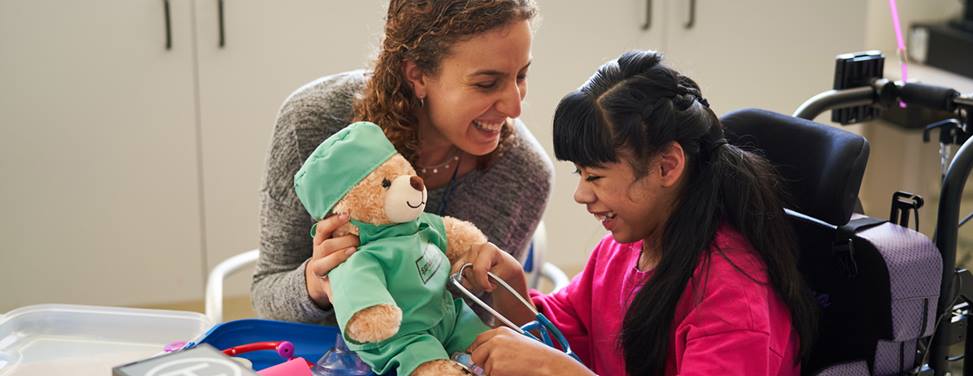





Feeling at home
From bedside bingo to therapy dogs, we're here to help kids smile and feel more like themselves.
Visit Child Life services




Here to serve you
Explore our network of care for kids, from the tiniest to teens and young adults.




World-class docs
We'll help you find the best provider for your child.




Stress-free visits
Accommodations. Admission. Discharge. Procedure prep. We've got you covered.




Extraordinary kid care
Our specialists handle conditions ranging from the common to the most rare.




Referrals made easy
Contacts and resources to get your patients to our pediatric specialists




Best in Northern CA
We're ranked #1 in pediatric cancer, heart surgery, cardiology & more.





Hemophilia is a disorder that prevents blood from clotting properly, resulting in bruising and bleeding. Caused by a defective gene, it affects about one in 5,000 boys born in the United States. Although hemophilia typically is inherited, a third of cases may result from a new genetic mutation. In children with hemophilia, one of the 11 blood clotting factors — proteins that help stop bleeding — is missing or reduced.
The most common type of hemophilia, caused by a lack of clotting factor VIII, is called Hemophilia A or classic hemophilia. The second most common type is caused by a lack of clotting factor IX and is called Hemophilia B or Christmas disease, named for Stephen Christmas, the first person diagnosed with the factor IX deficiency. Hemophilia A and B almost always occur in boys. A third, very rare type of hemophilia, called Hemophilia C, is caused by a lack of clotting factor XI and can occur in both girls and boys.
Hemophilia is caused by a mutation in the gene for factor VIII or factor IX. This occurs on the X chromosome, the chromosome inherited from the mother. If there is a family history of hemophilia, the mother is a carrier and her son will have the same type of hemophilia as her relatives. If there is no family history of hemophilia, the child's hemophilia is due to a new mutation and the mother may or may not be a carrier.
At UCSF Benioff Children's Hospital, the pediatric Hemophilia Treatment Center offers the most comprehensive care for children with hemophilia throughout Northern California. Through our research, we also provide the latest advances in treating complications of the disease. UCSF is also a federally designated Hemophilia Comprehensive Care Center, designated by the Centers for Disease Control and Prevention, that cares for both adult and pediatric patients.
Children with hemophilia may qualify for coverage of medical expenses through California Children's Services and the Genetically Handicapped Persons' Program, and if severely disabled, for financial support from the Social Security Administration. A social worker at the Hemophilia Treatment Center can refer you to the appropriate resources.
To request an appointment, give us a call.
Hemophilia may occur in mild, moderate and severe forms, based on both the child's symptoms and the level or amount of clotting factor in the blood.
A person's severity of hemophilia does not change over time. If a person's cells cannot make clotting factor during childhood, they will not have the ability to make clotting factor during adulthood.
The most common symptom of hemophilia is bleeding, especially into the joints and muscles. When a child with hemophilia is injured, he does not bleed faster than a child without hemophilia. He bleeds longer. He may also start bleeding again several days after an injury or surgery. Small cuts or surface bruises usually are not a problem, but deeper injuries may result in bleeding episodes that can cause serious problems and lead to permanent disability unless treated promptly.
Symptoms of hemophilic bleeding depend on where the bleeding occurs. Infants may have bleeding from their mouth when they are cutting teeth, bite their tongue or tear tissue in their mouth. Toddlers and older children commonly have bleeding into muscles and joints. Symptoms of bleeding include pain, swelling, loss of range of motion and an inability to move or use the affected arm or leg. Usually there is no bruising or discoloration of the skin to indicate that the swelling and pain are due to blood.
Another symptom of hemophilia is easy bruising. Children with hemophilia may have many bruises of different sizes all over their bodies. Other symptoms of bleeding may be a prolonged nosebleed or vomiting of blood.
The diagnosis of hemophilia is made by blood tests to determine if clotting factors are missing or at low levels, and which ones are causing the problem. If you have a family history of hemophilia, it is important to tell your child's doctors which clotting factor your relatives are missing, since your child will be missing the same one.
If you know you are a carrier, the diagnosis of hemophilia can be made in your newborn soon after birth. Tests to determine if your baby has hemophilia can be run on blood obtained from the umbilical cord or drawn from the newborn's vein. You will be advised to delay some procedures, such as circumcision, until after you learn whether your child has hemophilia.
Some families with a history of hemophilia may want to request prenatal testing, or testing before birth. This testing can be done early in pregnancy, allowing your family to make informed decisions and preparations. UCSF Benioff Children's Hospital has genetic counselors who are available to help you make family planning decisions and arrange for prenatal testing, if desired.
If you are pregnant and think you could be a carrier, or if you have a child diagnosed with hemophilia and you are expecting another child, it is important that you tell your obstetrician that you are at risk for having a child with hemophilia. There are three ways to test if you are a carrier:
The present goal of therapy is to raise factor levels, decrease the frequency and severity of bleeding episodes and prevent the complications of bleeding. This is done by injecting the missing clotting factor into your child's vein soon after he has injury or shows signs of bleeding.
Clotting factor concentrate, also called "factor," is a dried powder form of the clotting factor. It is mixed with water to form a liquid before it is given. Some clotting factor products, called plasma-derived factor, are made from donated human blood plasma. Others, called recombinant factor, are made in a laboratory and do not use human blood proteins. Because recombinant products do not contain human blood, they are much safer since they avoid potential transmission of a virus from donated blood.
When clotting factor is administered, it immediately circulates in the blood so the body can use it to form a blood clot. Once the blood clot is established and the bleeding has stopped, the body begins to reabsorb the blood that has leaked into the tissues and joints.
If your child does not receive prompt treatment, extra blood can pool in the joint or soft tissue and cause pain and swelling that takes longer to go away. Over time, repeated bleeding into a joint can lead to severe joint damage and arthritis. Early treatment will minimize the risk of joint damage.
At first, your child may only need to be treated episodically for bleeding disorders, that is, each time he or she experiences a bleeding episode. However, as the child gets older and becomes more active, the frequency of bleeding episodes may increase. Doctors may recommend giving factor replacement treatments every other day, a therapy regimen called prophylaxis, to prevent most bleeding. Prophylaxis reduces the number of bleeds, but does not prevent all bleeding. The goal of prophylaxis is to make a person with severe hemophilia reach factor VIII or factor IX levels similar to patients with moderate hemophilia, about 1 percent to 5 percent.
Treatments include home therapy, over-the-counter medications and gene therapy.
All factor treatments are infused or injected intravenously into a child's vein. At first, a child will be treated at a hemophilia treatment center, his doctor's office or an emergency room. Later, parents may be taught how to give the factor at home. Devices, called ports, can be surgically inserted under the skin in the chest area to make it easier to administer clotting factor products.
At first, it is helpful to have your child evaluated and treated for each bleed by your doctor. As your child grows, especially if he has severe hemophilia and bleeds frequently, you may want to learn how to give the factor-replacement treatments at home. Most families find home therapy a fast, easy way to treat a child with frequent bleeds. Moreover, most children who receive treatment at home eventually learn how to do the infusions for themselves. If you have questions or would like to try home therapy, talk to your doctor.
Whether or not your child is on home treatment, you should always have factor concentrate at home to take to the emergency room when your child needs a treatment. If the decision is made to infuse factor to treat your child's bleeding episode, the most important thing you can do is to give it as soon as possible. If there is a delay, however, you can apply ice to help shrink the size of the leaking blood vessels, limit the amount of bleeding into joints or tissues and prevent a small bleed from becoming a larger one. To avoid ice burn, place a cloth, such as a washcloth or a clean diaper, between your child's skin and the ice.
After your child receives factor treatment for a joint bleed, "rest, ice, compression and elevation" or RICE is required. Your child may also benefit from support devices, such as crutches, following a bleed into the knee or ankle or a sling following a bleed into a muscle or joint in the arm. Depending on the site of the bleed, your child may have to limit his activities for a few days after a bleed. Our health care team can help you decide what is right for your child.
Acetaminophen, sold under the brand names Tempra and Tylenol, is recommended as a safe pain reliever for children with hemophilia. Follow the directions carefully and be sure to give your child only the recommended amount of the medicine.
However, never give your child any product with aspirin, or acetylsalicylic acid, in it. Aspirin can interfere with clotting. Many common household remedies, such as Alka-Seltzer, contain aspirin, so read labels very carefully before you give your child any medication. Ibuprofen, such as Advil, Aleve and Motrin, also may interfere with clotting and should not be used by your child. If you have any questions about what is or is not safe for your child to take, talk to your doctor or hemophilia medical staff.
In addition, if your child has a head injury or symptoms of a head injury, do not give him any pain medicine unless your doctor instructs you to do so. Pain medicine can mask symptoms and make it difficult for the doctor to make a diagnosis about the seriousness of the injury.
With modern treatment, children born with hemophilia can expect to live a long, full life. Until the 1990s, this was not necessarily the case. But with safe recombinant clotting factors and with the prospect of gene therapy on the horizon, children born today can expect to live into their 70s or 80s.
Unfortunately, there is not yet a cure for hemophilia, though new developments may make a cure possible in the next five to 10 years. Technically, hemophilia can be cured through a liver transplant, but the risks involved in the surgery and the requirement for lifelong medications to prevent rejection of the new liver may outweigh the benefits.
Researchers are currently working on a way to insert the factor VIII or factor IX gene into the cells of patients with hemophilia to produce some clotting factor. People treated with this gene therapy should have fewer bleeding episodes. The present goal of gene therapy is to raise factor levels enough to decrease the frequency and severity of bleeding episodes and to prevent the complications of bleeding. Gene therapy does not replace the altered factor VIII or IX gene on the male's X chromosome. So, the daughters of a man with hemophilia still will be carriers, even if he is treated with gene therapy.
UCSF Benioff Children's Hospitals medical specialists have reviewed this information. It is for educational purposes only and is not intended to replace the advice of your child's doctor or other health care provider. We encourage you to discuss any questions or concerns you may have with your child's provider.
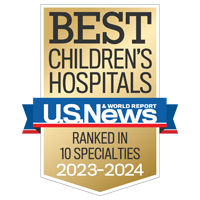
Ranked among the nation's best in 10 specialties
Feeling at home