






Learning never stops
Our classroom and bedside classes help kids get credit and keep learning during treatment.
See our school program




Here to serve you
Explore our network of care for kids, from the tiniest to teens and young adults.




World-class docs
We'll help you find the best provider for your child.




Stress-free visits
Accommodations. Admission. Discharge. Procedure prep. We've got you covered.




Extraordinary kid care
Our specialists handle conditions ranging from the common to the most rare.




Referrals made easy
Contacts and resources to get your patients to our pediatric specialists




Best in Northern CA
We're ranked #1 in pediatric cancer, heart surgery, cardiology & more.





Neutropenia is a rare disorder that causes children to have lower than normal levels of neutrophils, a type of white blood cell that destroys bacteria in the blood and helps protect your child from infections. Neutropenia can be a very serious condition because without enough neutrophils, your child is susceptible to bacterial infections that can become life-threatening.
Among children, neutropenia has a number of causes, including:
To request an appointment, give us a call.
There are several forms of neutropenia:
Children with neutropenia tend to develop infections easily because their white blood cell count is too low to ward off bacteria. Most infections occur in the lungs, mouth, throat, sinuses and skin. Some patients experience painful mouth ulcers, gum infections, ear infections, periodontal disease or disease of the tissues surrounding the teeth and infections of the urinary tract, colon, rectum or reproductive tract.
Other symptoms include:
If your child is experiencing symptoms of neutropenia, the doctor will request a complete blood count (CBC) to measure your child's neutrophil count. If the neutrophil count is lower than normal, additional CBC tests will be performed to determine if there is a pattern of low neutrophil counts. Your child also will undergo a blood test that looks for antibodies, to rule out the diagnosis of other possible disorders.
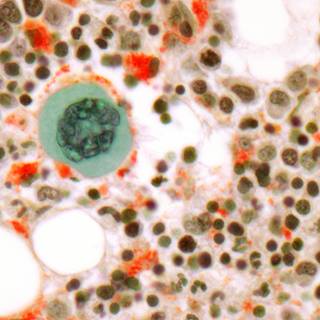
If blood tests indicate that your child has neutropenia, your child's doctor will request a bone marrow examination, called a bone marrow aspirate, to confirm the diagnosis.
The bone marrow aspirate involves obtaining a small amount of bone marrow tissue and fluid. The sample is typically taken from the back of your child's pelvic bone. The bone is numbed and your child is given medication to reduce pain or possibly induce sleep. A needle is put through the outer bone into the marrow and a sample is removed. This will help determine what type of neutropenia your child has and to what extent it has developed.
The two primary treatments for neutropenia are antibiotics to fight infection and drugs that help the bone marrow make neutrophils. In some cases, a bone marrow transplant may be an option.
With severe neutropenia, children often develop fever. When they do, they are given antibiotics to fight infection and may need to be hospitalized. Repeated use of antibiotics, however, could have side effects such as the development of drug-resistant bacteria, diarrhea or enterocolitis, an inflammation of the intestines. Some antibiotics may have adverse effects on kidney and liver function.
New drugs have been developed that help the bone marrow make neutrophils and restore the body's defense against infection. These drugs are known as granulocyte colony-stimulating factors. They help keep neutrophils in the blood above the danger level all or most of the time. The shorter the time the neutrophil count is low, the less chance there is of your child developing fever or infection. These drugs may decrease the number and severity of infections and reduce hospitalizations.
In some cases, a bone marrow transplant is an option. Bone marrow transplantation is a procedure in which healthy bone marrow is given to replace defective bone marrow. The transplant may be autologous, which means using the patient's own marrow that was removed and possibly treated to kill any defective cells; allogeneic, which means using marrow from a healthy "matched" donor, usually a brother or sister; or syngeneic, which means using marrow from an identical twin.
UCSF Benioff Children's Hospitals medical specialists have reviewed this information. It is for educational purposes only and is not intended to replace the advice of your child's doctor or other health care provider. We encourage you to discuss any questions or concerns you may have with your child's provider.

Ranked among the nation's best in 10 specialties
Learning never stops