



























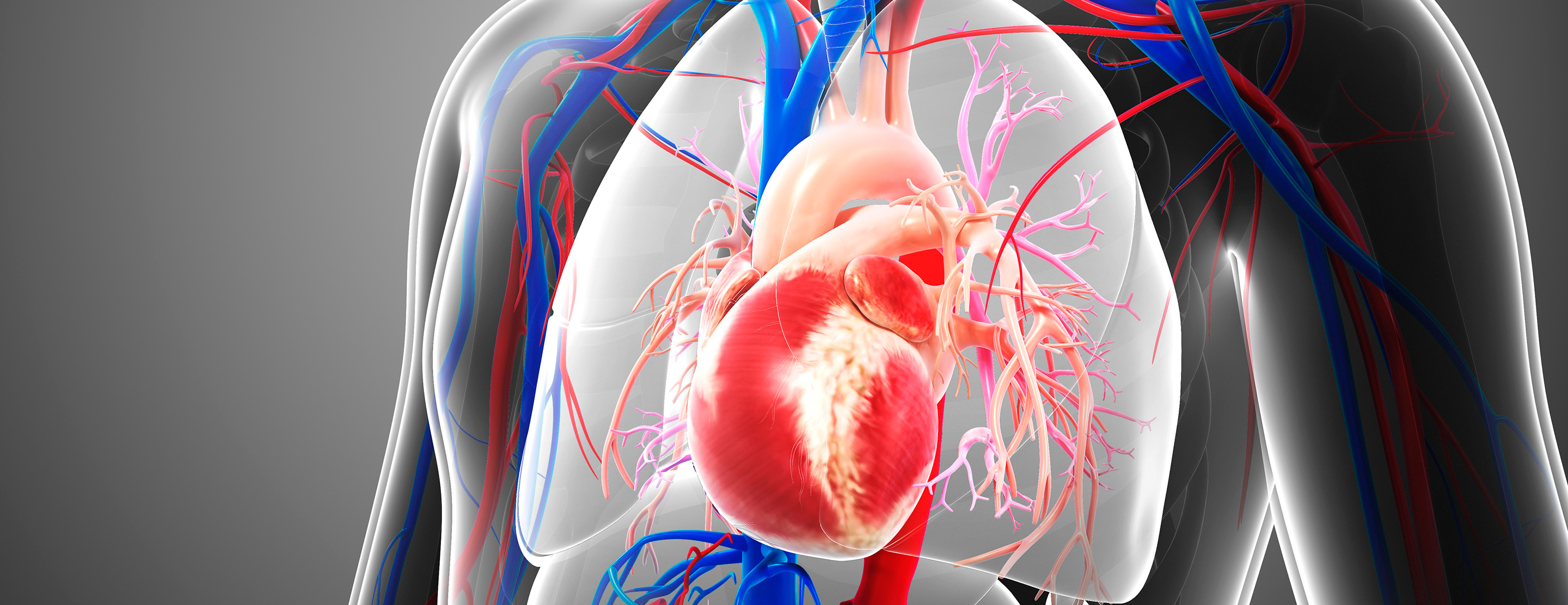
The heart is a hollow muscle that is a little larger than a person's fist. Think of it as a pump, made up of four compartments or chambers, with two upper chambers called the atria, which receive blood from the body and lungs. This blood travels through valves to the two lower chambers, called the ventricles. The ventricles pump the blood to the lungs and throughout the body.
In order for the heart to squeeze and pump blood, it needs a sort of spark plug, an electrical impulse, to start a heartbeat. The electrical impulse starts on the right side of the upper chamber in an area called the sinus node. The sinus node is the normal pacemaker of the heart and controls the heart rate. The heart normally beats faster when you are exercising or excited and it beats more slowly when you are at rest or sleeping.
The impulse leaves the sinus node and travels a set path through the upper chambers, the atria, causing them to contract and squeeze blood into the lower chambers.
The electrical signal then reaches the atrioventricular (AV) node. The AV node is in the middle of the heart, between the atrium and the ventricle. The signal is delayed in the AV node and then spreads through the lower chambers. The ventricles contract, sending blood throughout the body. The entire heartbeat starts again, beginning with an impulse in the sinus node.
The electrical impulses in the heart can be too slow, causing a decrease in heart rate. This is called bradycardia; "brady" means slow and "cardia" means heart. Or, the impulses can be abnormally fast, which is called tachycardia; "tachy" means rapid or quick.
Tachycardias
In many children with abnormally fast heartbeats, there is an extra electrical path in addition to the normal path. The extra pathway is either separate from or within the AV node. In the first case, this is called an accessory pathway, sometimes referred to as WPW or Wolff-Parkinson-White syndrome.
When the extra pathway is within the AV node, this is called AV node reentry or dual AV node pathways.
In either case the extra electrical pathway between the atria and ventricles causes the abnormally fast heartbeat by allowing the electrical impulse to make a continuous loop. The impulse flows down the normal path from the atrium to the ventricle, then returns back to the atrium along the extra pathway. Each time the impulse completes a circuit, the heart beats. This may result in a very rapid heartbeat.
In other cases, instead of an extra pathway in the heart, there is an abnormal "focus," which can act like a second sinus node or natural pacemaker, causing the heart to go much faster than the sinus node would normally go. This focus may be located in either the upper or lower chambers.
Bradycardias
Certain conditions are associated with a slow heartbeat, or bradycardia. One of the causes of bradycardia is heart block, which occurs when the electrical signal that starts in the upper portion of the heart cannot get through to the lower chambers. The heart beat and pumping action may not be adequate, causing symptoms such as fatigue, dizziness, near fainting or even fainting.
Another form of bradycardia may be caused when the heart's normal "pacemaker," the sinus node, does not work with regularity. This is known as sinus node dysfunction and may cause a heartbeat that is too slow.
Bradycardias may be something that your child is born with, or something that develops with time. On occasion, bradycardia can be the result of open heart surgery.
Frequently, the treatment for heart block or sinus node dysfunction is a permanent pacemaker. Fortunately, this is a good and reliable solution to this problem.