
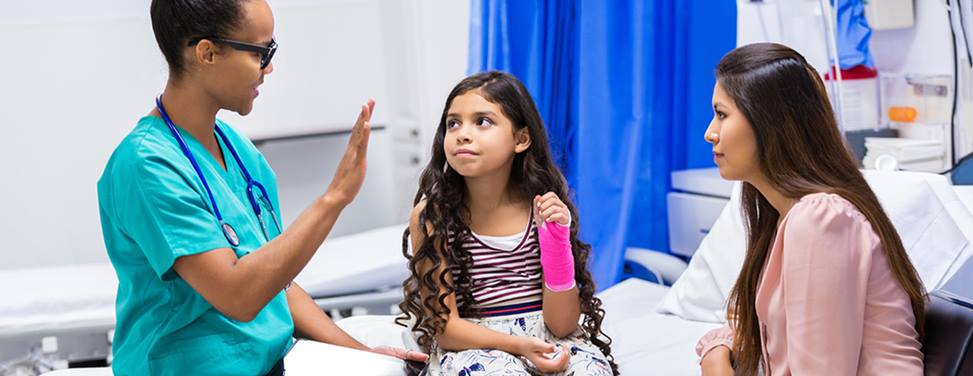

Learning never stops
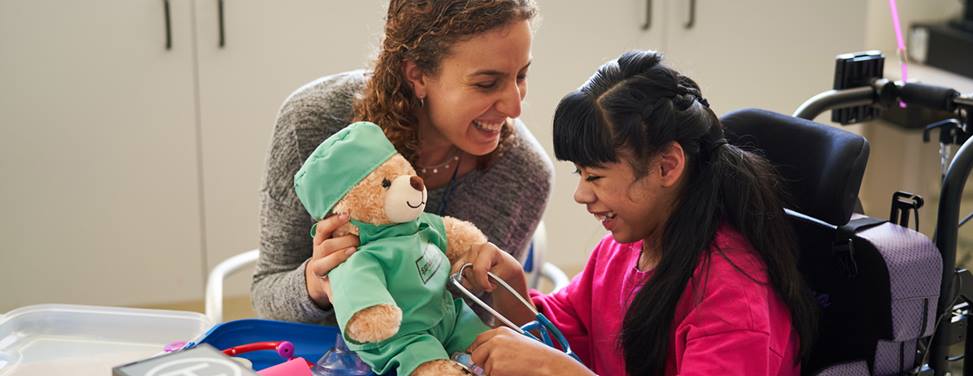
Our classroom and bedside classes help kids get credit and keep learning during treatment.
See our school program




Here to serve you
Explore our network of care for kids, from the tiniest to teens and young adults.




World-class docs
We'll help you find the best provider for your child.
Stress-free visits
Accommodations. Admission. Discharge. Procedure prep. We've got you covered.

Extraordinary kid care
Our specialists handle conditions ranging from the common to the most rare.



Referrals made easy
Contacts and resources to get your patients to our pediatric specialists




Best in Northern CA
We're ranked #1 in pediatric cancer, heart surgery, cardiology & more.

Cerebral palsy is a group of chronic disorders that damage areas of the brain controlling movement. The word "cerebral" refers to the brain and "palsy" is a condition that impairs control of movement and posture. These disorders usually appear in the first few years of life and don't worsen over time. Although children with severe cerebral palsy may have life-long disabilities, children with mild forms may manage very well on their own.
Cerebral palsy doesn't appear to be an inherited disease. There is not yet a cure, but treatments continue to improve through research. At UCSF Benioff Children's Hospital, we are at the forefront of research on cerebral palsy. Our neurologists are specially trained to treat the condition, using the latest imaging, technical equipment and therapies.
Cerebral palsy is caused by the abnormal development of areas of the brain that control movement and posture or damage to those areas caused by head injury or disease, such as bacterial meningitis, rubella and viral encephalitis. Only 10 to 20 percent of cerebral palsy is acquired after birth. There are four general types of cerebral palsy:
Some infants are at higher risk for developing cerebral palsy. Risk factors for developing the condition include:
Infants also have a higher risk for developing cerebral palsy if their mothers have the following conditions:
Even if your child has one or more of these risk factors, it doesn't mean that he or she will develop cerebral palsy.
Symptoms of cerebral palsy vary for each child. Symptoms may change over time, and may be affected by other medical conditions. Your child may experience the following:
During your child's visit to the Child Neurology clinic at UCSF Benioff Children's Hospital, our doctors and other health professionals will evaluate your child. We will ask you about your child's medical history as well as your family medical history. If your child's pediatrician has provided medical records, we will review this information.
Be sure to tell your child's neurologist about medications your child is using, including over-the-counter medications, vitamins, nutritional supplements or herbal remedies.
Our doctors will check your child's motor skills and reflexes, and look for symptoms of cerebral palsy. We may conduct tests or procedures to rule out other conditions that could cause your child's movement problems.
Your child may need one or more specialized procedures that test for cerebral palsy:
Working with your child's primary care doctor, we will design a treatment plan tailored to your child's condition. Your child may need more than one kind of treatment or treatments that require several visits to UCSF Benioff Children's Hospitals. We also may refer your child to additional specialists or other medical professionals.
Because cerebral palsy can't be cured, treatment is an ongoing process focused on managing the disease's effects and improving your child's quality of life. Your child's neurologist will explain possible side effects and complications from the treatments your child will receive.
We may prescribe medications to control seizures and muscle spasms. Some medications, including the muscle relaxant called baclofen (Gablofen, Lioresal), can be administered intrathecally – directly into the spinal fluid. Intrathecal baclofen therapy can improve muscle spasms and stiffness but requires a procedure to implant a pump that delivers the medication.
For some patients, we may recommend surgery on the lower spinal cord. One procedure, called selective dorsal rhizotomy, can reduce spasticity in the legs by cutting some of the sensory nerves that are causing abnormal muscle tone.
Mechanical aids help some children, including special braces that can improve muscle balance. In addition, physical, speech and behavioral therapy may be elements of your child's treatment plan.
Feel free to ask us questions about your child's treatments. If your child is prescribed new medication, be sure it's taken exactly as instructed. It's also important to keep all follow-up appointments with our doctors and other medical staff.
Members of your child's care team may include:
UCSF Benioff Children's Hospitals medical specialists have reviewed this information. It is for educational purposes only and is not intended to replace the advice of your child's doctor or other health care provider. We encourage you to discuss any questions or concerns you may have with your child's provider.
 3
3
 9
9
One of the nation's best in neurology & neurosurgery
in NIH funding among U.S. neurology programs
Ranked among the nation's best in 10 specialties
Learning never stops