





Tender wagging care
Our therapy dogs spread joy and smiles at the bedside and throughout the hospital.
Visit Child Life services




Here to serve you
Explore our network of care for kids, from the tiniest to teens and young adults.




World-class docs
We'll help you find the best provider for your child.




Stress-free visits
Accommodations. Admission. Discharge. Procedure prep. We've got you covered.




Extraordinary kid care
Our specialists handle conditions ranging from the common to the most rare.




Referrals made easy
Contacts and resources to get your patients to our pediatric specialists




Best in Northern CA
We're ranked #1 in pediatric cancer, heart surgery, cardiology & more.





Chiari malformation, also called Arnold-Chiari malformation, is a condition where part of the brain called the cerebellum protrudes through an opening in the back of the skull and into the spinal canal. The condition is often a birth defect. It also can be related to disorders such as myelomeningocele, a form of spina bifida where the bones of the spine don't form properly and membranes protrude out of a child's back.
Chiari malformation occurs in about one in every 1,000 births. For some children born with the condition, symptoms don't emerge until adolescence or adulthood, when injury, aging or other changes trigger symptoms such as vomiting, muscle weakness in the head and face, difficulty swallowing and varying degrees of mental impairment.
At UCSF Benioff Children's Hospital, our pediatric neurosurgeons are experts in procedures to repair the skull and membranes or implant shunts to treat Chiari malformation and related conditions, such as hydrocephalus.
The exact cause of Chiari malformation is unknown, but it may be genetic.
The term "Chiari Type I" refers to conditions in which brain tissue extends into the spinal canal without a myelomeningocele or a visible sac-like protrusion on the mid to lower back.
"Chiari Type II" describes a brain malformation with a visible protrusion, which occurs with spina bifida. Generally, the symptoms of Chiari Type II are worse than those of Type I.
Symptoms most often begin during infancy, although in many cases they don't emerge until a person reaches adolescence or adulthood. Symptoms may include:
Your child will be evaluated thoroughly by our doctors and other health professionals and look for symptoms of Chiari malformation. We also will rule out other conditions that might be causing your child problems.
Our staff will ask you about your child's medical history as well as your family medical history. If your child's pediatrician has sent any medical records, we will review this information. Be sure to tell your child's neurologist about any medications your child is using, including over-the-counter medications, vitamins, nutritional supplements or herbal remedies.
Your child's evaluation probably will include magnetic resonance imaging (MRI), which creates images of the brain using a magnetic field and radio waves instead of X-rays, as well as other imaging techniques to produce a detailed picture of your child's brain and spinal cord.
Other tests may be conducted to measure any impaired coordination your child is experiencing. Tests to evaluate if your child has any sensory loss or other physical problems may also be conducted.
Your child's neurologist, along with your child's primary care doctor, will design an individualized treatment plan that may include more than one kind of treatment, including surgery. You also may be referred to additional doctors or other medical professionals.
Infants with very severe malformations may have life-threatening complications. Some children may have prolonged periods of relative stability. Untreated, however, the chronic crowding of a child's brainstem and spinal cord can lead to very serious consequences, including paralysis.
The malformation can lead to the development of a cyst, called a syrinx, which expands and over time destroys the center of the spinal cord.
Chiari malformation often is treated with the following surgeries:
Your medical team will explain any possible risks or complications. Feel free to ask your child's doctors, nurses and therapists any questions you have. If your child's treatment includes medication, be sure he or she takes it exactly as instructed.
Remember to keep all of your child's follow-up appointments.
UCSF Benioff Children's Hospitals medical specialists have reviewed this information. It is for educational purposes only and is not intended to replace the advice of your child's doctor or other health care provider. We encourage you to discuss any questions or concerns you may have with your child's provider.
 9
9
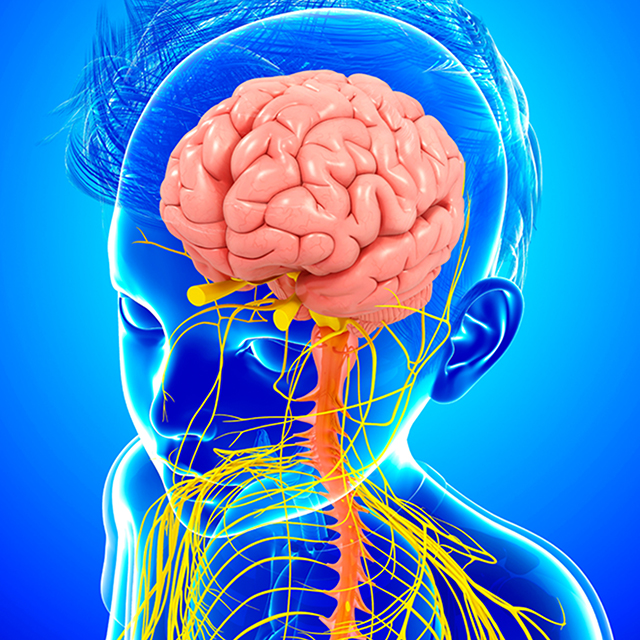
One of the nation's best in neurology & neurosurgery

Ranked among the nation's best in 10 specialties
Tender wagging care