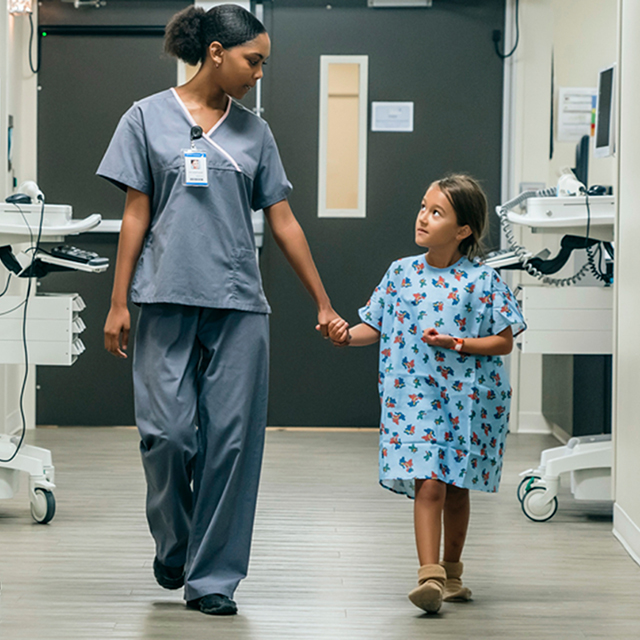
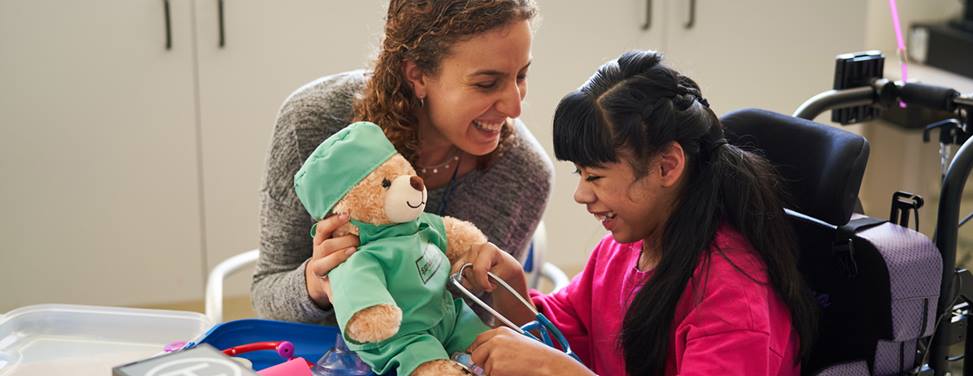

Stress-free visits
Accommodations. Admissions. Procedure prep. Get the info you need for smoother hospital stays.
Prepare for your child's stay




Here to serve you
Explore our network of care for kids, from the tiniest to teens and young adults.




World-class docs
We'll help you find the best provider for your child.


Stress-free visits
Accommodations. Admission. Discharge. Procedure prep. We've got you covered.



Extraordinary kid care
Our specialists handle conditions ranging from the common to the most rare.



Referrals made easy
Contacts and resources to get your patients to our pediatric specialists




Best in Northern CA
We're ranked #1 in pediatric cancer, heart surgery, cardiology & more.




Pectus excavatum is the most common chest wall deformity in children. Its cause is unclear. The condition is often apparent in the years preceding adolescence and typically becomes more severe over time. It occurs more frequently in boys than in girls.
For most children, this deformity doesn't pose a serious health risk. If necessary, a surgical repair is done to improve heart and lung function as well as chest appearance. One to three years after surgical repair, the patient needs a follow-up procedure to remove the implanted corrective device. Removing these devices can be done without an overnight stay.
Pectus excavatum is generally repaired in one of two ways. The traditional approach, called the modified Ravitch procedure, involves a long incision across the chest to remove the deformed cartilage. The sternum is then moved forward and secured in the right position with metal struts. This operation takes about three hours.
Another approach, known as the Nuss procedure, involves making a small incision on each side of the chest. A stainless steel "pectus bar" is inserted through one of these incisions and placed under the sternum, raising the sternum. The bar is then secured to the chest wall using metal stabilizers on each side. This operation takes about two hours.
To lessen postoperative pain, a technique called cryoanalgesia is performed during the surgery. This involves freezing the nerves that supply sensation to the front part of the chest. The area remains numb while the pain resolves, usually in about a month. Sensation to the chest returns in two to three months. With this technique, most patients can go home one day after the operation.
In both operations, all stitches are placed under the skin. These stitches dissolve over time, so they don't have to be removed later on. Your child's incisions will be covered with small bandages.
With the Ravitch repair, the metal struts are removed a year after insertion. A presurgical visit is required. Removal takes about an hour and is performed as an outpatient procedure, so you and your child can return home the same day.
After the Nuss procedure, we remove the pectus bar – or bars, if more than one was used – two to three years after insertion. This outpatient procedure takes about an hour.
Pectus excavatum repair is a painful procedure. The length of your child's hospital stay will depend on the pain level experienced after the operation. Most children stay in the hospital for about five days after the operation if a traditional method of pain management is used. In the traditional method, an epidural catheter (placed in the back) is used to give continuous pain medication for several days, when pain is greatest. While the epidural is in place, your child will also have a urinary catheter in place. In addition, your child may be given oxygen with a small tube under the nose. If cryoanalgesia is used for pain control, most patients can go home one day after the operation and a urinary catheter isn't needed.
You can help speed your child's recovery by encouraging deep breathing, walking and sitting in a chair as soon as possible after the operation.
After bringing your child home, please keep the following in mind:
If all goes well, your child will have a scheduled follow-up visit with us between two and four weeks after leaving the hospital.
If you have any concerns once your child is home, please call the Pediatric Surgery Clinic at (415) 476-2538 (San Francisco clinic) or (510) 428-3022 (Oakland clinic). You should also call if your child develops any of the following:
UCSF Benioff Children's Hospitals medical specialists have reviewed this information. It is for educational purposes only and is not intended to replace the advice of your child's doctor or other health care provider. We encourage you to discuss any questions or concerns you may have with your child's provider.
One of the nation's best in orthopedics
Ranked among the nation's best in 10 specialties
Stress-free visits