



























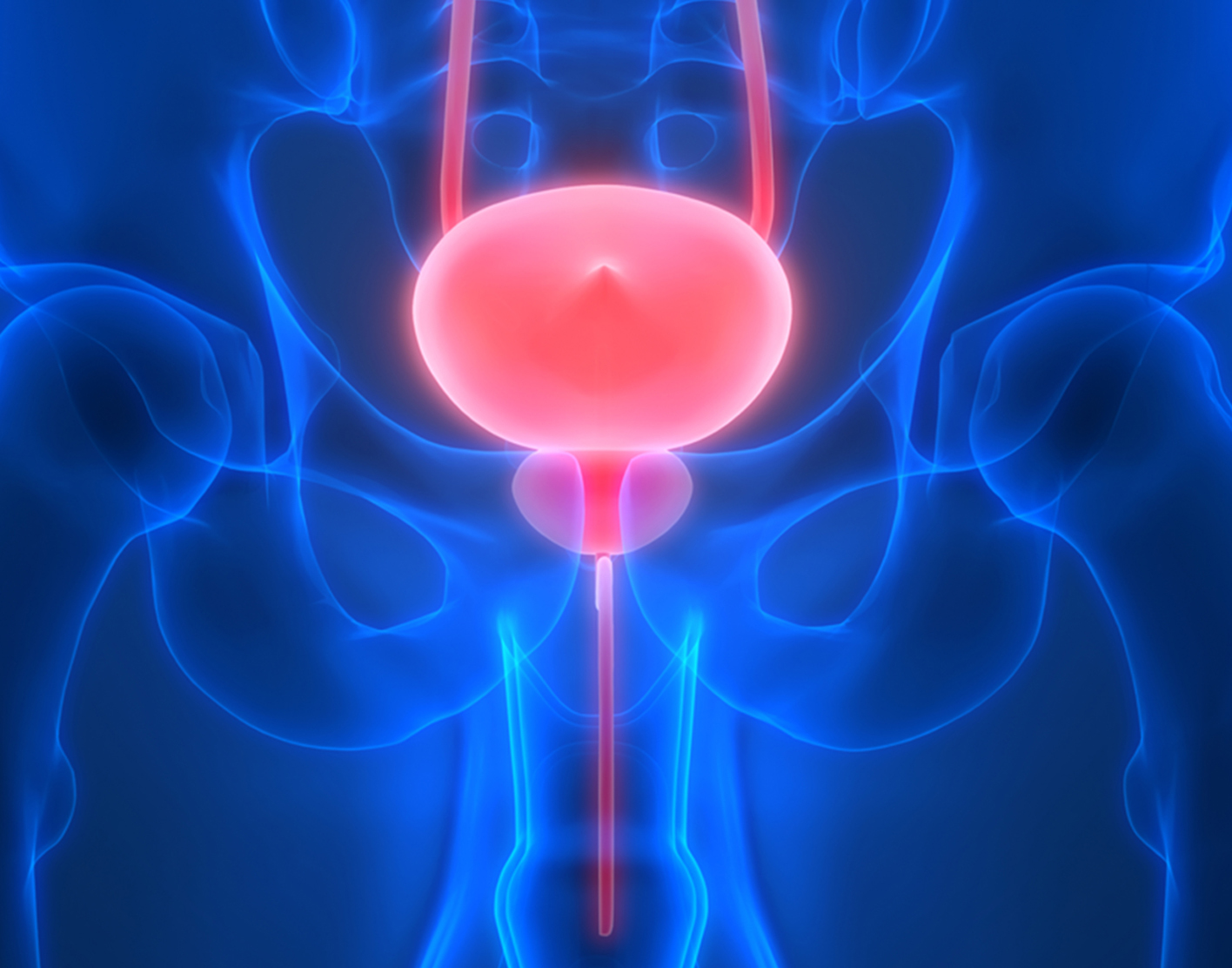
Voiding cystourethrogram
Definition
A voiding cystourethrogram is an
Alternative Names
Cystourethrogram - voiding
How the Test is Performed
The test is performed in a hospital radiology department or in a health care provider's office.
You will lie on your back on the x-ray table. A thin, flexible tube called a catheter will be inserted into the urethra (the tube that carries urine from the bladder to the outside of the body) and passed into the bladder.
Contrast dye flows through the catheter into the bladder. This dye helps the bladder show up better on x-ray images.
The x-rays are taken from various angles while the bladder is full of contrast dye. The catheter is removed so that you can urinate. Images are taken while you empty your bladder.
How to Prepare for the Test
You must sign a consent form. You will be given a gown to wear.
Remove all jewelry before the test. Inform the provider if you are:
- Allergic to any medicines
- Allergic to x-ray contrast material
- Pregnant
How the Test will Feel
You may feel some discomfort when the catheter is placed and while your bladder is full.
Why the Test is Performed
This test may be done to diagnose the cause of urinary tract infections, especially in children who have had more than one urinary tract or bladder infection.
It is also used to diagnose and evaluate:
- Difficulty emptying the bladder
- Birth defects with the bladder or urethra
- Narrowing of the tube that carries urine out of the bladder
(
urethral stricture ) in males - Urinary reflux from the bladder up into the kidney
Normal Results
The bladder and urethra will be normal in size and function.
What Abnormal Results Mean
Abnormal results may indicate the following:
- Bladder does not empty properly because of a brain or nerve problem
(neurogenic bladder) Enlarged prostate gland - Narrowing or scarring of the urethra
- Pouch-like sacs (diverticula) on the walls of the bladder or urethra
Ureterocele Urinary reflux nephropathy
Risks
You may have some discomfort when urinating after this test because of irritation from the catheter.
You may have bladder spasms after this test, which may be a sign of an
You may see blood in your urine for a couple of days after this test.
References
Bellah RD, Tao TY. Pediatric genitourinary radiology. In: Torigian DA, Ramchandani P, eds. Radiology Secrets Plus. 4th ed. Philadelphia, PA: Elsevier; 2017:chap 88.
Elder JS. Vesicoureteral reflux. In: Kliegman RM, St. Geme JW, Blum NJ, Shah SS, Tasker RC, Wilson KM, eds. Nelson Textbook of Pediatrics. 21st ed. Philadelphia, PA: Elsevier; 2020:chap 554.
Stanasel I, Peters CA. Ectopic ureter, ureterocele, and ureteral anomalies. In: Partin AW, Dmochowski RR, Kavoussi LR, Peters CA, eds. Campbell-Walsh-Wein Urology. 12th ed. Philadelphia, PA: Elsevier; 2021:chap 41.
Review Date: 01/01/2023
The information provided herein should not be used during any medical emergency or for the diagnosis or treatment of any medical condition. A licensed physician should be consulted for diagnosis and treatment of any and all medical conditions. Call 911 for all medical emergencies. Links to other sites are provided for information only -- they do not constitute endorsements of those other sites. Copyright ©2019 A.D.A.M., Inc., as modified by University of California San Francisco. Any duplication or distribution of the information contained herein is strictly prohibited.
Information developed by A.D.A.M., Inc. regarding tests and test results may not directly correspond with information provided by UCSF Health. Please discuss with your doctor any questions or concerns you may have.