


























Profiles |
 |
 |
A B C D F H I K L M N O P All Documents
Jennifer McGee
Fetal Surgery Successfully Removes Tumor
By Abby Sinnott
In Jennifer McGee's 18th week of pregnancy, a routine ultrasound revealed a large growth on her fetus' neck. She was referred to a high-risk pregnancy specialist at St. Louis Children's Hospital, where her fetus was diagnosed with a cervical teratoma -- a giant, benign tumor that was blocking the fetus' airway.
Weekly ultrasounds detected that the fetus' tumor was growing faster than he was, causing his heart to pump more than normal because of the heavy blood flow to the tumor. McGee's doctor told her that he had only seen one case like this before and the outcome was not good. The fetus had also developed a severe case of hydrops, a buildup of fluid that threatens the life of both mother and baby. Fetuses that develop hydrops caused by tumors have an extremely low survival rate.
"At the time, the doctor was not very optimistic that I would make it that far in my pregnancy," remembers McGee. "He suggested termination and said there was nothing more that he could do."
But McGee was not willing to give up so easily. So her doctors contacted the renowned UCSF Fetal Treatment Center, where the world's first open fetal surgery was performed over two decades ago. The center has more experience in fetal surgery and endoscopic fetal intervention than any other institution in the world. McGee and her husband flew to San Francisco the next morning, where UCSF fetal surgeon Dr. Hanmin Lee explained open fetal surgery as an option for removing the fetus' tumor.
"I was scared because I was told that there was a chance that the baby and I would not survive and that there was a high-risk of side effects to the baby," says McGee. "We didn't know what to expect."
Without surgery, McGee was told that the chance of survival for her fetus was essentially zero, so she decided to go ahead with the procedure. A team of fetal surgery experts led by Lee successfully removed the fetus' giant benign tumor while sparing his trachea and other essential structures in his neck. Afterwards, they stitched up the fetus' wound, replaced him safely back into his mother's womb and stitched up her uterus and abdomen.
McGee spent two and a half weeks at UCSF and was then able to return to St. Louis to deliver her baby. On Dec. 7, 2002, Isaac McGee was delivered by an EXIT procedure, a special type of C-section delivery developed at UCSF, in which the umbilical cord remains attached in order to allow the baby to continue to receive oxygenated blood. The doctors were then able to put a breathing tube into Isaac's trachea to ensure that he would get adequate gas exchange, without having a period of low oxygen. The EXIT procedure was performed under the supervision of Dr. George Mykaliskia, a pediatric surgeon who had trained at UCSF.
"I was told that Isaac wouldn't weigh more than 3 pounds, but when he was born he was 6 and a half pounds and breathing on his own," says McGee, although Isaac's lungs were premature, causing subsequent breathing problems. He was placed in the Neonatal Intensive Care Unit (NICU) at St. Louis Children's Hospital, where he received oxygen through a ventilator.
After one month, Isaac was taken off of the ventilator and able to breathe on his own. McGee says that the medical advances in fetal treatment saved Isaac's life. "We were told that if Isaac had been born two years earlier before any of this technology was available, he wouldn't have made it."
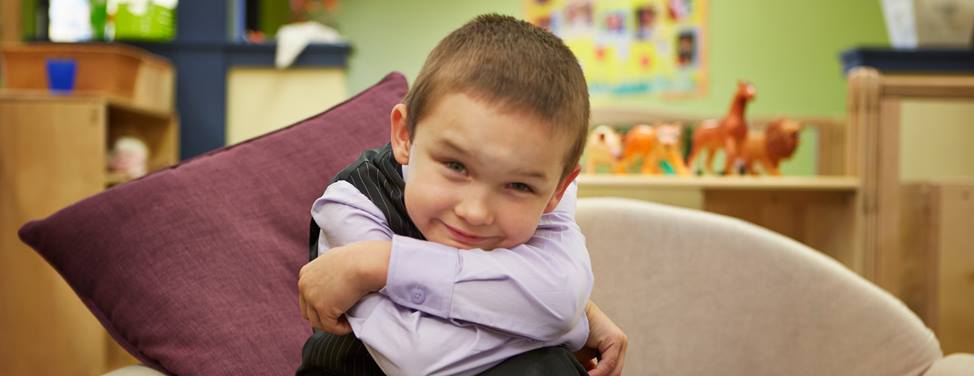
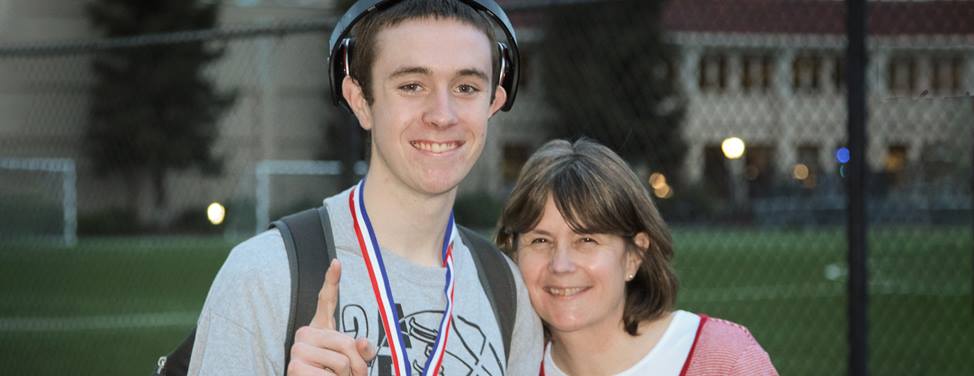
Now, Isaac is a happy and healthy 4-year-old boy, who loves to fish and ride his four-wheeler around the McGee's two and a half acres of land in Tulsa, Okla. "I can't imagine having listened to those doctors who told us to terminate the pregnancy," says McGee. "My husband and I always say we wish we would have been able to look into the future and see Isaac, and know that it was all worth it."
Lee adds that aside from a faint scar on Isaac's neck, there are no traces of the serious medical challenges he has faced. He also says that while Isaac is the protagonist of the story, Jennifer is the real hero. "It is because of Jennifer's love, courage, and self-sacrifice that Isaac made it," says Lee. "It was our privilege to help take care of this wonderful family, and it has been such a joy to hear about how full of life Isaac is."
Story written in June 2006.
Abby Sinnott is a freelance writer in San Francisco.
For More Information:
|