
Your Oxygen Equipment

- How do I choose the right oxygen equipment for me?
- What type of equipment is available?
- Where do I get my oxygen and equipment?
- Who will pay for my oxygen and equipment?
- How do I maintain my equipment?
How do I choose the right oxygen equipment for me?
You, your health care provider and your oxygen supplier should all work together to choose the oxygen system that is right for you — one that takes into account your lifestyle and activities, as well as the amount of oxygen you need. The goal is to have oxygen equipment that you can and will wear, so you can keep enjoying your usual activities.
Some of the factors to consider when choosing your system and equipment are listed below:
- The amount of oxygen your doctor has prescribed for you (written as liter flow of oxygen per minute, such as 2 liters/min)
- How often and for how long you leave your house
- What activities you do while you are out
- Your size, strength and endurance versus the weight of the equipment
- The size and layout of your home (for instance, whether your house has two or more stories)
- Whether you breathe through your nose or your mouth
- Your dexterity
- Your personal preferences
What type of equipment is available?
The three types of oxygen systems currently available are:
- Compressed gas systems
- Portable oxygen concentrators (POCs)
- Liquid oxygen systems
The compressed gas system consists of a stationary concentrator, to be used in the home, and a small oxygen tank, to be used outside the home. The liquid oxygen system consists of a stationary concentrator or reservoir to use while you are in your home and an ambulatory tank to use when you go out. The portable oxygen concentrator can serve as both the ambulatory device and the stationary concentrator in certain circumstances.
| Type of system | Ambulatory component | Stationary component |
| Compressed gas system | Small, pre-filled tanks delivered to you on a weekly basis, depending on how much oxygen you are using, or tanks that fill overnight at home (aka a home-fill system) from your concentrator.
These small tanks must be used in conjunction with an oxygen conserving device or regulator (OCD) that delivers the oxygen in pulses, so that the oxygen supply lasts longer. |
Oxygen concentrator with 50-foot tubing |
| Liquid oxygen system | Small, refillable tank that you fill from the reservoir as needed | Oxygen reservoir with 50-foot tubing |
| Portable oxygen concentrator (POC) | A small electric device that can be worn on the back or wheeled around, runs on regular electricity or a battery, is easily recharged even in a car, and requires no tanks or filling. The maximum tubing length for proper delivery of oxygen is 7 feet. These units can be taken onto airplanes. | |
Ambulatory versus portable oxygen equipment
While the terms portable and ambulatory oxygen equipment are often used interchangeably, there is an important difference. In 1999, the 5th Oxygen Consensus Conference differentiated between portable and ambulatory oxygen systems.
Portables are defined as easily moved devices that are not designed to be carried and weigh more than 10 pounds. Ambulatory devices are defined as weighing less than 10 pounds, available for daily use, designed to be carried by the patient, and lasting four to six hours at a setting of 2 liters per minute. They are normally small aluminum cylinders or liquid oxygen containers equipped with oxygen conserving devices (OCDs).
E tanks are the larger, older metal tanks that are wheeled around. They can be the right choice for some people and situations, but are generally not considered to be ambulatory devices. They are often used as back-up systems in the home, should the electric power in the home fail.
Oxygen conserving device (OCD)
The oxygen conserving device (OCD) is the device on your small compressed gas tank that makes the oxygen supply last longer. It causes the oxygen to be delivered only when you take a breath. Not all OCDs deliver the same amount of oxygen as a continuous flow would, so it is important that your oxygen saturation be tested at rest and with activity while you are using the OCD, to make sure you are getting enough oxygen.
Accessories
Several accessories come with your oxygen equipment. In addition, there are other accessories to make wearing or carrying your oxygen more comfortable. Below are examples of a few basic accessories.
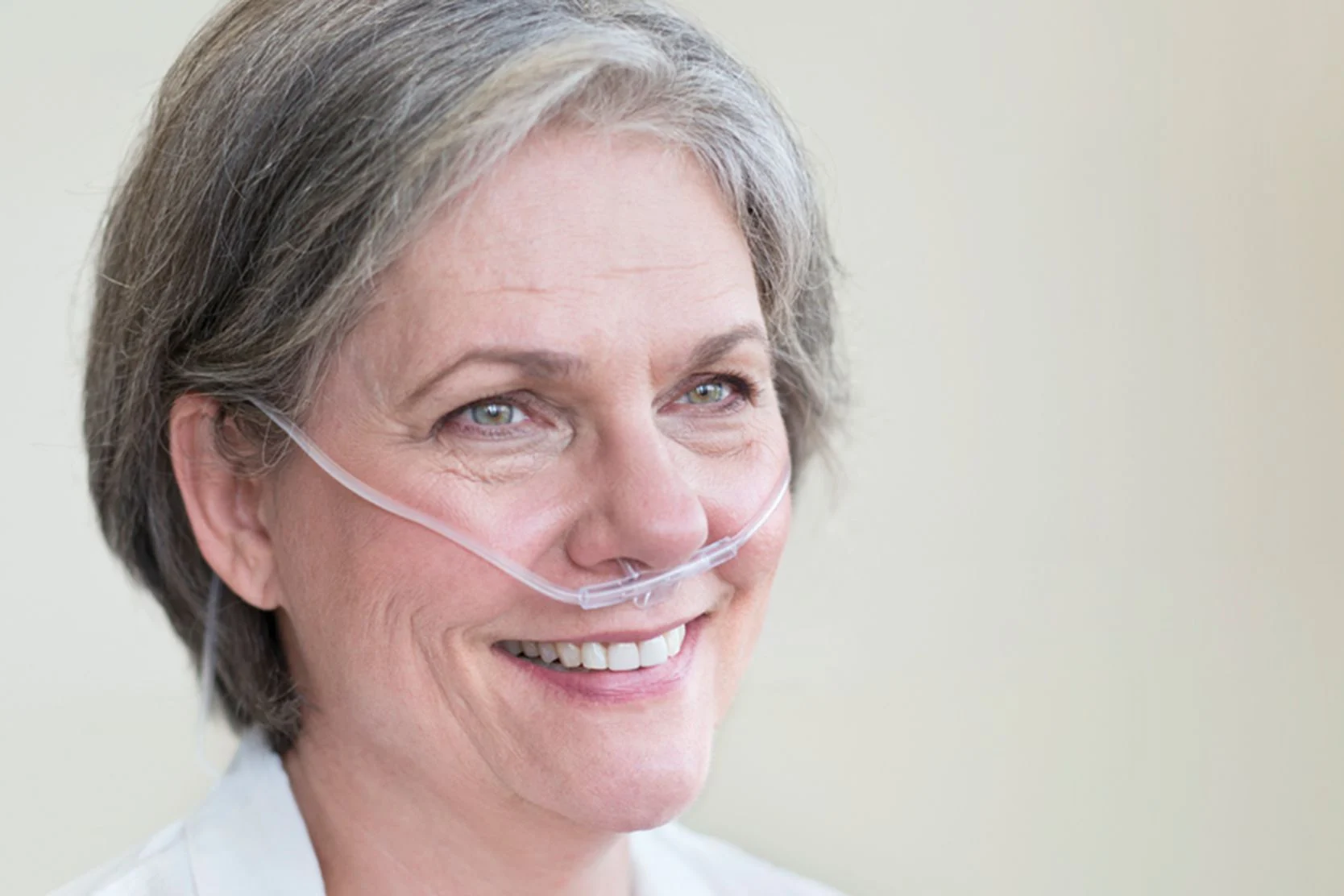
- Nasal cannula. Oxygen is generally delivered through tubing and a nasal cannula, sometimes called nasal prongs. The nasal cannula end of the tubing fits into your nose, and is the most common delivery accessory.
The stationary equipment for home use comes with 50-foot tubing, so you can freely move about the house. The ambulatory equipment comes with shorter tubing. - Oxygen masks. Oxygen masks can also be used for higher oxygen needs. The Oxymask is a comfortable version.
- Reservoir tubing. An Oxymizer mustache or pendant can increase the amount of oxygen delivered or make the oxygen last longer.
- Humidifier bottle. Higher oxygen settings can be drying to the lining of the nose. A humidifier attached to your stationary oxygen equipment can help prevent this dryness.
- Carrying cases, carts. Ambulatory oxygen tanks can be rolled in small carts, carried in backpacks and sometimes even worn as a waist pack. Portable oxygen concentrators are rolled in their own cases, worn in a backback on the back or slung over the shoulder.
Higher oxygen flows
Rates of 4 liters/minute or greater are considered higher oxygen flow.
- Liquid systems deliver higher flows of oxygen for longer periods of time. Unfortunately, it is getting more difficult to obtain liquid oxygen systems.
- Oxygen-conserving devices may not deliver enough oxygen. Continuous flows are better for flow rates above 4 liters/minute.
- There are high-flow stationary concentrators that go up to 10 liters/minute.
- For oxygen settings higher than 6 liters/minute, a high flow nasal cannula is needed.
- Certain oxygen face masks and reservoir cannulas can boost the delivery of oxygen and make high oxygen flows more comfortable.
- For irritated nasal passages due to high flow oxygen, try RoEzIt.
- Due to the increase in back pressure and resistance to flow, disposable humidifier bottles are not recommended for flows greater than 6 liters/min.
Where do I get my oxygen and equipment?
Your provider can help you choose an oxygen company, or you may choose any company you want. Some insurance policies dictate which oxygen company you must use.
Who will pay for my oxygen and equipment?
Most insurance policies cover supplemental oxygen when the medical necessity for oxygen is demonstrated. This necessity is based on the oxygen saturation or the arterial blood gas measurements.
Generally, if your O2 saturation falls below 89 percent, or your paO2 falls below 60 mm Hg — whether at rest, with activity or during sleep — then you qualify for supplemental oxygen. For more information, see The Need for Supplemental Oxygen.
How do I maintain my equipment?
Your oxygen supply company will give you instructions for cleaning your equipment. Some basics are listed below:
- The nasal cannula should be changed every week.
- The long tubing attached to your stationary equipment should be changed monthly. Neither the nasal cannula nor the long tubing from your stationary equipment should be washed.
- If an oxygen face mask is used, it should be cleaned twice weekly with warm soapy water.
- Oxygen concentrators usually require a weekly filter cleaning with warm soapy water.
- If you are using a humidifier, empty it at least once a day, wash the bottle with soap and warm water, making sure all the soap is rinsed out, and then refill the bottle with distilled water. Do not use tap water, as the minerals in it can damage your equipment.
For more information about setting up, using and maintaining your oxygen equipment, see this educational guide created by UCSF experts.
Next:
Supplemental Oxygen Index:
Recommended reading
Supplemental Oxygen
Explore our comprehensive guide to using supplemental oxygen, including safety information and travel recommendations.
FAQ: Cyclophosphamide
Cyclophosphamide is a medication that suppresses the immune response and reduces lung inflammation. Find answers to common cyclophosphamide questions.
FAQ: Methotrexate
Find answers to common questions about methotrexate, an immunosuppressant, including what to know before taking the drug and potential side effects.
FAQ: Mycophenolate
Get answers to questions about mycophenolate, an immunosuppressant, including what to know before taking the drug, side effects and necessary monitoring.
FAQ: Prednisone
Get information about prednisone, a medication to treat lung inflammation, including precautions, side effects and necessary monitoring.
ILD Nutrition Manual
Check out our nutrition guide for people with interstitial lung disease (ILD). Eating well can help prevent infection and keep your respiratory system healthy.
ILD Patient Resources
Stay informed with these interstitial lung disease (ILD) resources, including support groups, medication information, associated conditions and more.
GERD in ILD Patients
Interstitial lung disease (ILD) may be linked to gastroesophageal reflux disease (GERD). Understand the symptoms of GERD, how it’s diagnosed and treatments.
Pulmonary Hypertension and Interstitial Lung Disease
Pulmonary hypertension (PH) is common in patients with interstitial lung disease (ILD). Get information on PH, including diagnosis and treatments.
Pulmonary Rehabilitation for ILD
Our respiratory therapists provide pulmonary (lung) rehabilitation for people with ILD in the Bay Area. We help reduce symptoms and improve quality of life.
UCSF Health medical specialists have reviewed this information. It is for educational purposes only and is not intended to replace the advice of your doctor or other health care provider. We encourage you to discuss any questions or concerns you may have with your provider.