



University of California San Francisco | About UCSF | UCSF Benioff Children's Hospital
Search Site | Find a Doctor

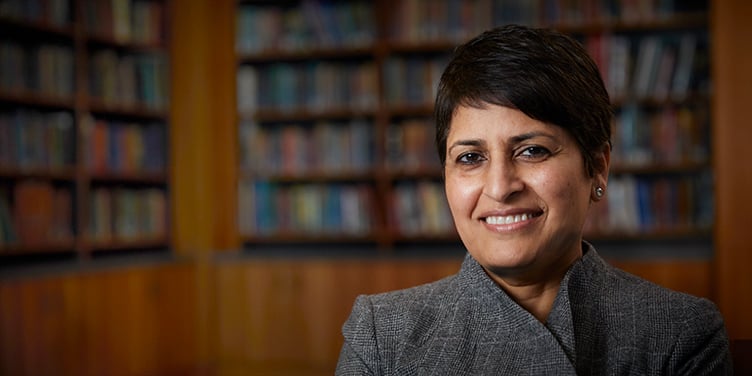
Edward F. Chang, M.D.

Neurosurgeon

Dr. Edward Chang is a neurosurgeon with expertise in treating intractable epilepsy, movement disorders and brain tumors in adults. He specializes in advanced brain mapping methods, including awake speech and motor mapping, to safely perform surgery in the brain. He also has extensive training in deep brain stimulation for movement disorders and implantable devices for neuromodulation.

In his research, he studies neurophysiological technologies to preserve and restore speech, movement and cognition. He is a member of the Keck Center for Integrative Neuroscience, and has a secondary appointment in the Department of Physiology. He co-directs the Center for Neural Engineering at UCSF and UC Berkeley, which brings together engineering, neuroscience, neurology and neurosurgery to develop devices to restore function for patients with neurological disabilities such as paralysis and speech disorders. He earned a medical degree and completed neurosurgery residency training at UCSF. He has received several national awards and National Institutes of Health grants for his contributions to neurosurgery and neuroscience. Chang is an assistant professor of Neurological Surgery and Physiology at UCSF.

Read a Q&A with Chang about surgical treatments for epilepsy.

Conditions & Treatments

Clinics

Epilepsy Center
400 Parnassus Ave., Eighth Floor
San Francisco, CA 94143
Phone: (415) 353-2437
Fax: (415) 353-2837

Hours: Monday to Friday
8 a.m. – 5 p.m.

Neurosurgery Clinic
400 Parnassus Ave., Eighth Floor
San Francisco, CA 94143
Phone: (415) 353-7500
Fax: (415) 353-2939

Hours: Monday to Friday
8 a.m. – 4:30 p.m.

More about Edward F. Chang

Education

UCSF School of Medicine 2004

Residencies

UCSF Medical Center, Neurosurgery 2010

Selected Research and Publications

  1. Potts MB, Chang EF, Young WL, Lawton MT. Transsylvian-Transinsular Approaches to the Insula and Basal Ganglia: Operative Techniques and Results With Vascular Lesions. Neurosurgery. 2012 Apr; 70(4):824-834.
  2. Englot DJ, Han SJ, Berger MS, Barbaro NM, Chang EF. Extent of surgical resection predicts seizure freedom in low-grade temporal lobe brain tumors. Neurosurgery. 2012 Apr; 70(4):921-8.
  3. Englot DJ, Berger MS, Chang EF, Garcia PA. Characteristics and Treatment of Seizures in Patients with High-Grade Glioma: A Review. Neurosurg Clin N Am. 2012 Apr; 23(2):227-235.
  4. Englot DJ, Ouyang D, Garcia PA, Barbaro NM, Chang EF. Epilepsy surgery trends in the United States, 1990-2008. Neurology. 2012 Mar 21.
  5. Rolston JD, Englot DJ, Wang DD, Shih T, Chang EF. Comparison of seizure control outcomes and the safety of vagus nerve, thalamic deep brain, and responsive neurostimulation: evidence from randomized controlled trials. Neurosurg Focus. 2012 Mar; 32(3):E14.
  6. Southwell DG, Garcia PA, Berger MS, Barbaro NM, Chang EF. Long-Term Seizure Control Outcomes After Resection of Gangliogliomas. Neurosurgery. 2012 Feb 17.
  7. Rowland NC, Englot DJ, Cage TA, Sughrue ME, Barbaro NM, Chang EF. A meta-analysis of predictors of seizure freedom in the surgical management of focal cortical dysplasia. J Neurosurg. 2012 Feb 10.
  8. Englot DJ, Wang DD, Rolston JD, Shih TT, Chang EF. Rates and predictors of long-term seizure freedom after frontal lobe epilepsy surgery: a systematic review and meta-analysis. J Neurosurg. 2012 Feb 3.
  9. Pasley BN, David SV, Mesgarani N, Flinker A, Shamma SA, Crone NE, Knight RT, Chang EF. Reconstructing speech from human auditory cortex. PLoS Biol. 2012 Jan; 10(1):e1001251.
  10. Chang EF, Barbaro NM. Epilepsy surgery: the emerging field of neuromodulation. Neurosurg Clin N Am. 2011 Oct; 22(4):ix-x.
  11. Englot DJ, Chang EF, Auguste KI. Efficacy of vagus nerve stimulation for epilepsy by patient age, epilepsy duration, and seizure type. Neurosurg Clin N Am. 2011 Oct; 22(4):443-8, v.
  12. Englot DJ, Berger MS, Barbaro NM, Chang EF. Factors associated with seizure freedom in the surgical resection of glioneuronal tumors. Epilepsia. 2012 Jan; 53(1):51-7.
  13. Sughrue ME, Chang EF, Gabriel RA, Aghi MK, Blevins LS. Excess mortality for patients with residual disease following resection of pituitary adenomas. Pituitary. 2011 Sep; 14(3):276-83.
  14. Englot DJ, Chang EF, Auguste KI. Vagus nerve stimulation for epilepsy: a meta-analysis of efficacy and predictors of response. J Neurosurg. 2011 Dec; 115(6):1248-55.
  15. Englot DJ, Han SJ, Lawton MT, Chang EF. Predictors of seizure freedom in the surgical treatment of supratentorial cavernous malformations. J Neurosurg. 2011 Dec; 115(6):1169-74.
  16. Chang EF, Wang DD, Barkovich AJ, Tihan T, Auguste KI, Sullivan JE, Garcia PA, Barbaro NM. Predictors of seizure freedom after surgery for malformations of cortical development. Ann Neurol. 2011 Jul; 70(1):151-62.
  17. Englot DJ, Berger MS, Barbaro NM, Chang EF. Predictors of seizure freedom after resection of supratentorial low-grade gliomas. A review. J Neurosurg. 2011 Aug; 115(2):240-4.
  18. Englot DJ, Chang EF, Larson PS. Lead cap localization using ultrasound in deep brain stimulation surgery: technical note. Minim Invasive Neurosurg. 2011 Feb; 54(1):48-9.
  19. Chang EF, Cheng JS, Richardson RM, Lee C, Starr PA, Larson PS. Incidence and management of venous air embolisms during awake deep brain stimulation surgery in a large clinical series. Stereotact Funct Neurosurg. 2011 Apr; 89(2):76-82.
  20. Chang EF, Wang DD, Perry DW, Barbaro NM, Berger MS. Homotopic organization of essential language sites in right and bilateral cerebral hemispheric dominance. J Neurosurg. 2011 Apr; 114(4):893-902.

Publications are derived from MEDLINE/PubMed and provided by UCSF Profiles, a service of the Clinical & Translational Science Institute (CTSI) at UCSF. Researchers can make corrections and additions by logging on to UCSF Profiles.