



University of California San Francisco | About UCSF | UCSF Benioff Children's Hospital
Search Site | Find a Doctor

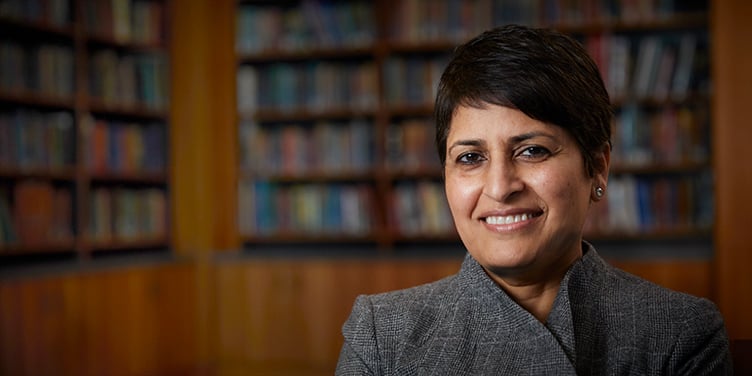
Gary Abrams, M.D.

Neurologist

An expert in neurology, Dr. Gary Abrams is the director of the Neurorehabilitation Clinic at UCSF Medical Center. He specializes in the treatment of conditions associated with chronic neurological disorders or injuries. He has a special interest in the late effects of stroke and traumatic brain injury and conducts research on novel methods of stroke and cognitive rehabilitation.

Abrams received his medical degree from the University of Pittsburgh and his neurological training at the New York Neurological Institute at Columbia University. He was a member of the neurology faculty at the Columbia College of Physicians and Surgeons and served as the medical director of the Helen Hayes Rehabilitation Hospital prior to joining the faculty at UCSF in 1995. He is a professor of clinical neurology at UCSF and rehabilitation section chief at the San Francisco VA Medical Center.

Clinics

Neurovascular Disease and Stroke Center
400 Parnassus Ave., Eighth Floor
San Francisco, CA 94143
Phone: (415) 353-8897
Fax: (415) 353-8705

Hours: Monday to Friday
8:30 a.m. – 5 p.m.

UCSF Neurorehabilitation Program
400 Parnassus Ave., Eighth Floor
San Francisco, CA 94143
Phone: (415) 353-2273
Fax: (415) 353-2898

Hours: Monday to Friday
8:30 a.m. – 4:30 p.m.

Conditions & Treatments

More about Gary Abrams

Education

University of Pittsburgh School of Medicine 1974

Residencies

Columbia University Hospital, Neurology 1978

Selected Research and Publications

  1. Waung MW, Abrams GM. Combat-related headache and traumatic brain injury. Curr Pain Headache Rep. 2012 Dec; 16(6):533-8.
  2. Ganguly K, Abrams GM. Management of chronic myelopathy symptoms and activities of daily living. Semin Neurol. 2012 Apr; 32(2):161-8.
  3. Kim H, Miller LM, Fedulow I, Simkins M, Abrams GM, Byl N, Rosen J. Kinematic data analysis for post-stroke patients following bilateral versus unilateral rehabilitation with an upper limb wearable robotic system. IEEE Trans Neural Syst Rehabil Eng. 2013 Mar; 21(2):153-64.
  4. Kim H, Miller LM, Byl N, Abrams GM, Rosen J. Redundancy resolution of the human arm and an upper limb exoskeleton. IEEE Trans Biomed Eng. 2012 Jun; 59(6):1770-9.
  5. Novakovic-Agopian T, Chen AJ, Rome S, Abrams G, Castelli H, Rossi A, McKim R, Hills N, D'Esposito M. Rehabilitation of executive functioning with training in attention regulation applied to individually defined goals: a pilot study bridging theory, assessment, and treatment. J Head Trauma Rehabil. 2011 Sep-Oct; 26(5):325-38.
  6. Dunn LB, Cooper BA, Neuhaus J, West C, Paul S, Aouizerat B, Abrams G, Edrington J, Hamolsky D, Miaskowski C. Identification of distinct depressive symptom trajectories in women following surgery for breast cancer. Health Psychol. 2011 Nov; 30(6):683-92.
  7. Wang Y, Bontempi B, Leinekugel X, Hu D, Liu Z, Lesburg E, Weinstein PR, Zhao J, Abrams GM, Liu J. Am. J. Neuroprotec Neuroregen. Environmental enrichment promotes hippocampal diaschisis and cognitive impairment in experimental stroke. 2011; 3(1):66-76.
  8. Chen AJ, Novakovic-Agopian T, Nycum TJ, Song S, Turner GR, Hills NK, Rome S, Abrams GM, D'Esposito M. Training of goal-directed attention regulation enhances control over neural processing for individuals with brain injury. Brain. 2011 May; 134(Pt 5):1541-54.
  9. Abrams GM. Journal Watch Neurology. Commentary/Review - Fluoxetine for motor recovery after acute ischemic stroke (FLAME): a randomised placebo-controlled study. 2011.
  10. Abrams GM, Wakasa M. UpToDate.com. Chronic spinal cord injury. 2011.
  11. Parko K, Abrams GM, Campbell J, Glass G. Continuum - Lifelong Learning in Neurology. MIld Traumatic Brain Injury and Sleep. 2010; 16:110-127.
  12. Parko KL, Abrams GM, Campbell JS, Glass GA. Epilepsy, sleep disturbances, and psychiatric consequences. Continuum (Minneap Minn). 2010 Dec; 16(6 Traumatic Brain Injury):110-27.
  13. Gorman SL, Radtka S, Melnick ME, Abrams GM, Byl NN. Development and validation of the Function In Sitting Test in adults with acute stroke. J Neurol Phys Ther. 2010 Sep; 34(3):150-60.
  14. Byl NN, Pitsch EA, Abrams GM. Functional outcomes can vary by dose: learning-based sensorimotor training for patients stable poststroke. Neurorehabil Neural Repair. 2008 Sep-Oct; 22(5):494-504.
  15. Wang Y, Bontempi B, Hong SM, Mehta K, Weinstein PR, Abrams GM, Liu J. A comprehensive analysis of gait impairment after experimental stroke and the therapeutic effect of environmental enrichment in rats. J Cereb Blood Flow Metab. 2008 Dec; 28(12):1936-50.
  16. Abrams GM, Neylan T, Marmar C, Ashford J, Zhan W, Schuff N, Weiner MW. Mil Med Tech. High field MRI investigations of mild traumatic brain injury and PTSD. 2008; 12.
  17. Chen AJ, Abrams GM, D'Esposito M. Functional reintegration of prefrontal neural networks for enhancing recovery after brain injury. J Head Trauma Rehabil. 2006 Mar-Apr; 21(2):107-18.
  18. Piper M, Abrams GM, Marks WJ. Deep brain stimulation for the treatment of Parkinson's disease: overview and impact on gait and mobility. NeuroRehabilitation. 2005; 20(3):223-32.
  19. Byl N, Roderick J, Mohamed O, Hanny M, Kotler J, Smith A, Tang M, Abrams G. Effectiveness of sensory and motor rehabilitation of the upper limb following the principles of neuroplasticity: patients stable poststroke. Neurorehabil Neural Repair. 2003 Sep; 17(3):176-91.
  20. Seliger GM, Abrams GM, Horton A. Irish brogue after stroke. Stroke. 1992 Nov; 23(11):1655-6.

Publications are derived from MEDLINE/PubMed and provided by UCSF Profiles, a service of the Clinical & Translational Science Institute (CTSI) at UCSF. Researchers can make corrections and additions by logging on to UCSF Profiles.