
Cochlear Implants
On this page
Overview
A cochlear implant is a small electronic device that can help improve the hearing of people with severe, irreversible hearing loss. Although a cochlear implant does not restore normal hearing, it can allow a person to hear and understand more speech than was possible with a hearing aid.
For a child, this could mean an opportunity to develop listening and speech skills and the potential to attend school with hearing peers. For adults, a cochlear implant could reduce social isolation and improve communication. To learn more about cochlear implants, how they work and what to expect from the surgery, please see some common questions and answers.
The implant
The cochlear implant, developed in the 1970s and approved by the federal Food and Drug Administration, is a medical prosthesis that is placed in the inner ear. UCSF was instrumental in the development of the first cochlear implants and today uses the most advanced cochlear implants. We offer two cochlear implant systems – the Clarion made by Advanced Bionics Corp. and the Nucleus made by Cochlear Corp.
The implant system has three primary parts:
- Microphone and transmitter. The headpiece and transmitter is about the size of a quarter and is worn above the ear to pick up sounds. These sounds are sent to a speech processor.
- Speech processor. A speech processor is worn externally, either on a belt like a pager or behind the ear like a large hearing aid, to convert sound into a digital code that is transmitted to an implanted stimulator.
- Implanted stimulator. The implanted stimulator is a small component placed under the skin behind the ear. It receives a digital code from the speech processor and sends it to the auditory or hearing nerve. The brain interprets this signal and it is recognized as sound.
The small headpiece and transmitter is held in place by a magnet coupled the implanted stimulator, under the skin.
The evaluation
Your audiologist will determine if you or your child is a candidate for a cochlear implant. Patients are selected based on medical and hearing histories and test results as well as findings and recommendations from a psychological interview.
Evaluation generally takes two days. Your audiologist will discuss in detail the components of the cochlear implant device, its functions, benefits and limitations as well as the surgical process. The evaluation, which differs slightly for children and adults, includes the following:
- Medical evaluation. Conducted by the implant surgeon who will take your medical history, examine your ears and explain the surgical process to you. Implant surgeons are part of the Otolaryngology department at UCSF Health.
- CT scan. This computerized tomography (CT) scan produces a two-dimensional X-ray of your inner ear. It allows the surgeon to evaluate the ear's internal structure, recommend which ear to implant and may provide information as to the cause of deafness.
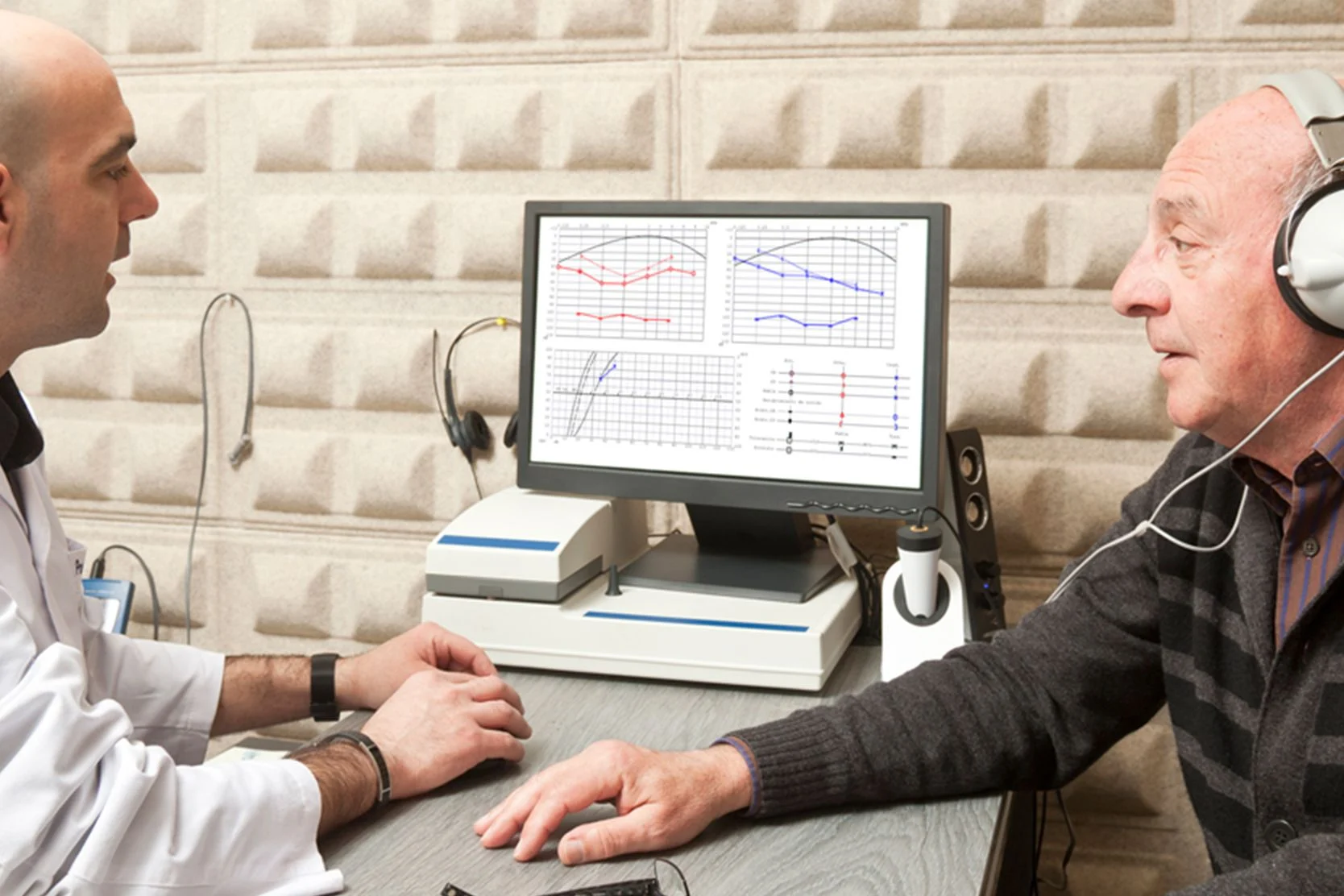
- Audiological evaluation. This evaluation involves a hearing test to confirm the type and degree of your hearing loss, hearing aid evaluation to assess the benefit provided by a hearing aid and aided speech recognition testing to determine if a hearing aid might provide greater benefit than an implant.
- Psychological screening. This screening is conducted by psychologists at the UCSF Center on Deafness to assess your feelings about hearing loss and the cochlear implant, such as your reasons for seeking the implant and your expectations.
- Cochlear implant counseling. At this time, you will find out if you qualify for an implant, based on the results of the entire evaluation. If you qualify, possible benefits and limitations will be explained and you will be provided with information to select your device.
- School visit. For a child, the purpose of the school visit is to establish an ongoing relationship with his or her school, teacher and therapists prior to implant surgery and to provide in-service training to the professionals working with your child to ensure mutual support and shared goals.
Surgery
Before your surgery, you will meet with an anesthesiologist and hospital admitting personnel and complete any necessary tests. Tours of the hospital also can be arranged. Surgery usually is performed the following day.
Patients generally remain in the hospital overnight and return home the day after surgery.
Implant surgery is performed under general anesthesia and takes about three hours. During the operation, a surgeon will anchor a receiver-stimulator device in the temporal bone in the skull and insert what is called an "electrode array" into the cochlea, the small snail-shaped structure in the inner ear that contains the hearing organ.
First, an incision is made behind the ear to expose the temporal bone. The surgeon then positions the implant component against the bone. A hole is made in the temporal bone with a microscopic drill, allowing the surgeon access to the cochlea. A small hole is made in the wall of the cochlea and the electrode array is gently guided into the cochlea.
The internal receiver is secured in place on the skull bone with sutures and the incision is closed. A sterile dressing is placed on the incision.
To qualify for a cochlear implant, patients must meet the following criteria:
Adults age 18 and older have:
- Overall good health
- Severe hearing loss in both ears
- Limited benefit from conventional hearing aids determined by a trial period, when appropriate, of about three months
- Psychological and emotional stability
- Realistic expectations of the implant
- No ear conditions or other medical conditions that would interfere with surgery
- Ability to participate fully in a follow-up program
Children age 1 to 17 must have:
- Overall good health
- Severe hearing loss in both ears
- Limited benefit from conventional hearing aids
- Realistic expectations of the cochlear implant
- No ear conditions or other medical conditions that would interfere with surgery
- Family commitment to comply with all evaluations before and after surgery
- Enrollment in a post-operative rehabilitative and educational program that supports the use of cochlear implants and the development of hearing skills
Follow-up
Following surgery, you will return home for four weeks to allow time for swelling and soreness to subside and the incision to heal. After several days, the incision may be wet during bathing or showering.
Device programming
The externally worn speech processor is activated about four weeks after surgery. The processor converts speech into a special code for each user. The activation and programming is performed at the implant center. Programming for each implant is customized for the patient and takes about six hours over a two-day period.
Testing
You will be asked to return to the UCSF Cochlear Implant Center at regular intervals for device checks and re-evaluation. During these visits, the implant and equipment are checked and performance is measured. Re-testing generally occurs at one, three and six months and one year following the initial device fitting.
Then, semi-annual or annual evaluations are performed. Each session for adults involves about three hours.
Outcomes
Benefit from a cochlear implant usually improves with time but can't be guaranteed. Rehabilitation after surgery is key to maximizing the benefits of the cochlear implant. Most people with these implants are able to engage in hearing activities, such as listening to a Walkman, enjoying a movie, using a phone and participating in social activities.
Your motivation is critical to the success of the implant. We encourage our patients to:
- Use the device during all waking hours
- Listen, speak and interact with others as much as possible
- Utilize visual cues when adjusting to the implant, but gradually decrease the use of visual cues when ready
- Ask others to identify unfamiliar sounds so they become familiar
Recommended reading

FAQ: Cochlear Implants
Read our FAQs about cochlear implants, including questions about advances in device technology and daily life with a cochlear implant.
UCSF Health medical specialists have reviewed this information. It is for educational purposes only and is not intended to replace the advice of your doctor or other health care provider. We encourage you to discuss any questions or concerns you may have with your provider.