
Spinal Fusion Surgery for Scoliosis
On this page
Overview
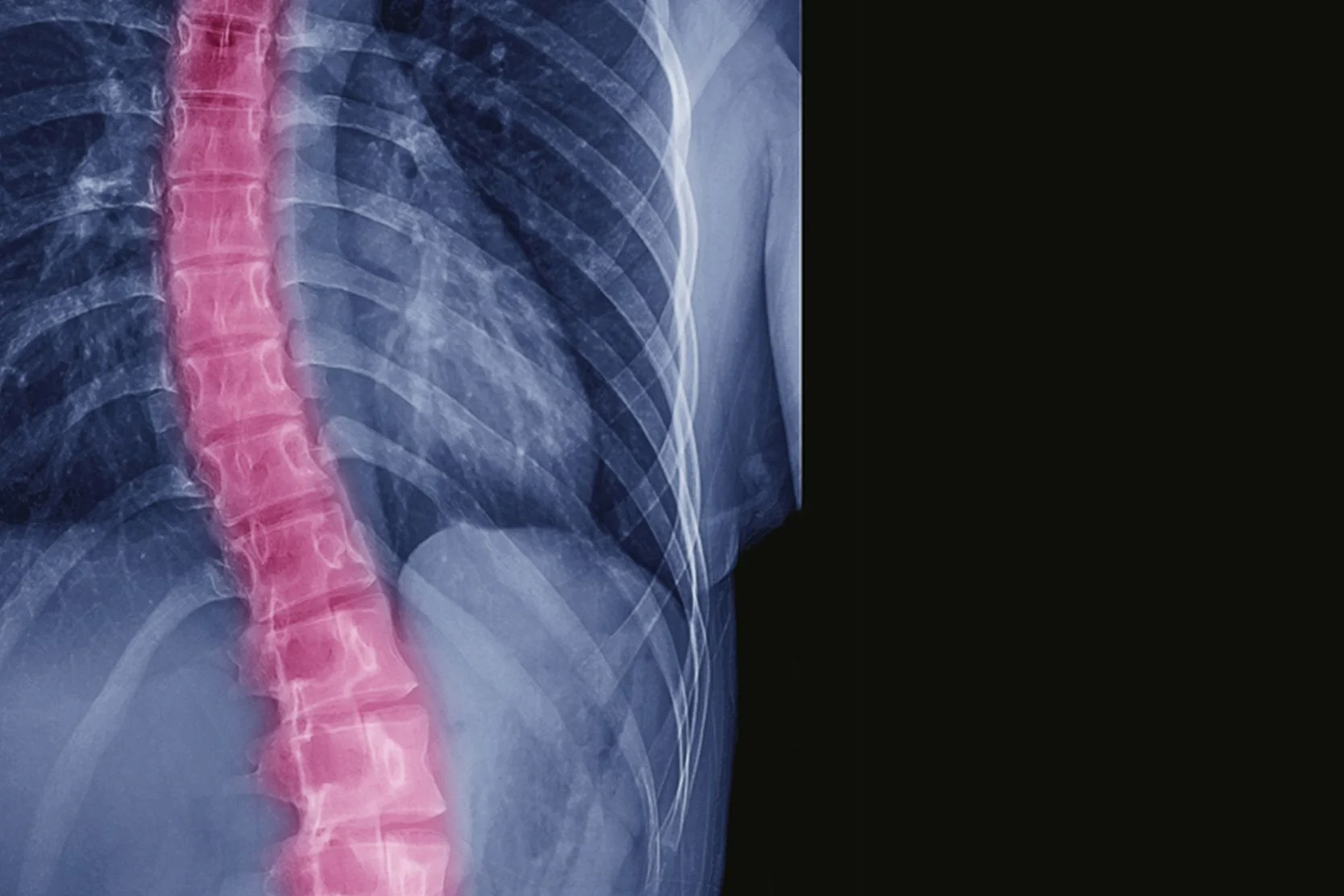
The goal of spinal surgery for scoliosis is to fuse the vertebrae so the spine cannot bend and to correct deformity. The doctor will try to correct the curve by 50 percent or more.
Preparing for surgery
An assistant from the Spine Center will contact you to schedule the operation. A clinic appointment will be scheduled within a month of the operation date. During the appointment:
- The orthopedic surgeon will go over the details of the operation and address your questions or concerns.
- X-rays will be obtained if there are no recent films or if additional films are needed.
- The patient will be evaluated by the anesthesiologist, who will discuss managing pain both during and after the operation. A general anesthetic is required for spinal fusion. An epidural catheter (a thin, flexible tube) may be inserted into the back at the conclusion of the operation to help control pain.
- A blood sample will be drawn for analysis, including a blood count.
- A nurse will take you through the hospital admissions and discharge procedures.
About the surgery
An incision is made in the middle of the back. The muscles are moved to the side to expose the spine. The joints between the vertebrae are removed to loosen them up. The vertebrae are roughened up so that the body responds by producing new bone. The new bone eventually bridges the gaps between the vertebrae and makes them fuse together. Metal implants – rods, screws, hooks or wires – are put in to hold the spine still while the vertebrae fuse.
Bone grafts
The fusion is augmented with bone graft. This may be obtained from the patient – known as "autogenous" bone graft and harvested typically from the pelvis, or it can be from a bone bank from a donor – known as "allogenous." Advantages of autogenous bone graft include more rapid incorporation with the rest of the vertebrae and safety. Disadvantages of autogenous grafts include surgery, which can cause pain and carries its own set of operative risks. The principal risk of allogenous bone graft is the risk of infection, in particular hepatitis at the rate of 1 in 1 million and AIDS at the rate of 1 in 10 million. The patient or the patient's parents decide on whether to go ahead with the surgery after a careful discussion of the benefits and risks with the orthopedic surgeon.
Surgery length
Spinal fusion surgery usually takes four to six hours, but the time varies according to the individual patient. The surgeons will take as long as they need to do the job well.
Potential complications
The potential complications of surgery include:
- Bleeding. This is controlled by cauterizing bleeding vessels during the operation and by using a device that allows the return of blood lost back to the patient at the conclusion of the operation. If it is anticipated that a patient will lose a significant amount of blood, and there is a high likelihood for transfusion, the patient will be asked to donate two units of blood within the month before surgery.
- Infection. This is a risk whenever the skin is cut for any operation. Sterile precautions are taken in the operating room and the patient is given antibiotics before the operation and for 24 hours after. In addition, the incision is washed with a pressurized system before it is closed.
- Nerve injury. The extent of possible nerve injury can range from a minor injury, such as numbness from compression of a nerve that supplies sensation to the front of the thigh, to a major injury, including paralysis. The risk of major neural injury is well under 1 percent, but it is not zero, so it is essential to have an open and honest dialogue with your orthopedic surgeon about this. The electrical activity of the nerves that transmit signals for sensation and muscle action through the spinal cord is monitored during the procedure. This gives feedback to the surgeon so that the necessary steps can be taken to remedy the problem if it occurs.
- Pseudarthrosis. This means that occasionally – up to 1 percent of the time in children but more often adults – the fusion doesn't take, or the vertebrae don't stick together completely. It can take several months or a few years to become apparent. The patient may complain of persistent back pain, there may be progression of the scoliosis after the operation or the implants may fail. When the fusion doesn't take, motion over the long term will cause the metal implants to wear out and ultimately break. Treatment for pseudarthrosis includes exploration of the spine, additional bone grafts and replacement of the implants.
In the hospital
Each patient's hospital stay may vary, depending on the individual condition. A typical stay is four days but may vary between three to seven days. Generally, the orthopedic team includes a surgeon, senior resident surgeon, registered nurse and physician assistant.
An epidural catheter is inserted in the back to control pain and usually is removed by the third day after surgery. A catheter also is placed in the bladder so that the patient does not have to walk to the bathroom during the first few days after surgery. This is removed on the third day, shortly after the epidural is removed.
A physical therapist assists the patient to walk after surgery. On the first day, the goal is to get out of bed to a chair. On the second day, the goal is to walk out of the room. By the third day, the patient may walk as tolerated. On the fourth day, the patient begins climbing stairs.
Before being discharged, spinal X-rays are taken to make sure that there are no early problems with the implants or spinal alignment. A nurse assists with discharge planning to ensure all the needs of the patient are met before going home.
The dressing covering the incision shouldn't be disturbed until a follow-up clinic visit, unless there is a concern about a wound, as determined by your surgeon during the operation or the early recovery period in the hospital.
Returning home
Generally, during the first two weeks after the operation, the patient shouldn't go to school or work or participate in organized activity. This is a time to heal, both physically and mentally. During this time, the dressing on the wound should not be disturbed. This means sponge bathing only until the follow-up clinic appointment in two weeks.
At the follow-up appointment, the surgeon will inspect the wound and change the dressing or bandage.
Over the course of a year, the patient's activities will return to normal:
- First six months. No strenuous physical activity. Activities are limited to those of daily living, meaning personal care, bending and walking. No heavy lifting, meaning nothing heavier than a dinner plate. In addition, no running or jumping is allowed.
- Six to eight months. At six months, a physical examination, including X-rays, is performed. If all is well, more activity, such as swimming, will be allowed.
- Eight to 10 months. Around eight months, the patient begins "closed chain kinetic exercises," which means that the foot is planted or fixed in place as the lower limb moves during exercise. An example is bicycling, where the foot is on a pedal as the lower limb rotates.
- Ten to 12 months. Running, jumping and solo sports are allowed.
At 12 months, the patient will visit the surgeon for a third postsurgical appointment. X-rays will be taken. If all is well, the patient will be allowed to return to unrestricted activities.
Awards & recognition

Among the top hospitals in the nation

Best in Northern California and No. 6 in the nation for orthopedic care

Rated high-performing hospital for spinal fusion surgery
Related conditions & treatments
Conditions
Treatments
- Spine Fusion
- Spine Deformity Correction Surgery
UCSF Health medical specialists have reviewed this information. It is for educational purposes only and is not intended to replace the advice of your doctor or other health care provider. We encourage you to discuss any questions or concerns you may have with your provider.