
Obesity
On this page
Overview
An estimated 60 percent of Americans aged 20 years and older are considered overweight and one-quarter are considered obese. Being overweight means that you have an excess amount of body weight, including muscle, bone, fat and water. Being obese means that you have an excess amount of body fat.
Obesity significantly increases your risk of developing life-threatening conditions, such as heart disease, stroke, high blood pressure, type 2 diabetes and some forms of cancer. Each year, approximately 280,000 adults die from an obesity-related condition in the United States. Additionally, studies have shown that people who are overweight often suffer from societal discrimination, which may lead to depression, self-esteem and body issue problems.
Our approach to Obesity
UCSF offers both surgical and nonsurgical programs for safe, effective weight management. Our team includes physicians, dietitians and psychologists with experience and special training in treating patients with obesity, including those with other complicating medical conditions.
Our offerings include nutritionally sound dietary plans and guidance on adopting new eating and exercise habits, as well as support groups and educational classes. We can customize any plan, and we collaborate as needed with other UCSF specialists to ensure each patient gets the most effective care possible.
For patients considering weight loss surgery, we offer a comprehensive bariatric surgery program with the expertise to handle the most complex and challenging cases. We're able to use minimally invasive techniques for the vast majority of patients. After surgery, we provide follow-up care to help patients maintain their weight loss and enjoy a healthier, longer life.
Causes of obesity
Obesity is a complex and chronic disease with many causes. It is not simply a result of overeating. Research has shown that genetics can play a significant role in determining a person's body weight, particularly for morbidly obese people. Diet and exercise may have a limited ability to provide effective, long-term relief for obese people.
Genetics
Research has shown that a person's genes play an important role in their tendency to gain weight. Just as some genes determine eye color or height, others affect appetite, ability to feel full or satisfied, metabolism, fat-storing ability and even natural activity levels.
Environment
Environmental and genetic factors are closely intertwined. If you have a genetic predisposition towards obesity, the modern American lifestyle and environment may make controlling weight more difficult.
Fast food, long days sitting at a desk and suburban neighborhoods that require cars exacerbate hereditary factors such as metabolism and efficient fat storage. For those suffering from morbid obesity, anything less than a total change in environment usually results in failure to reach and maintain a healthy body weight.
Metabolism
We used to think that a person could lose weight if they burned more calories than they consumed. Now we know that for some people, it's not that simple.
Obesity researchers now refer to a theory called the "set point," a sort of thermostat in the brain that makes people resistant to either weight gain or loss. If you try to override the set point by drastically cutting your calorie intake, your brain responds by lowering metabolism and slowing activity. You then gain back any weight you lost.
Eating Disorders
Many obese and morbidly obese people suffer from eating disorders. In these cases, behavior and diet modification therapy are recommended to help treat the eating disorder before weight loss surgery is considered.
There also are certain medical conditions, such as hypothyroidism, that can cause weight gain and may be treated with medication.
Evaluation
If you are obese or morbidly obese, you are at risk for developing a number of serious health problems. The most common conditions include:
- Depression Depression is very common after repeated failure with dieting and disapproval from family, friends and the public.
- Diabetes Obese individuals develop a resistance to insulin, which regulates blood sugar levels. Over time, high blood sugar can cause type 2 diabetes that can lead to serious damage to the body.
- Gastroesophageal Reflux or Heartburn When acid escapes from the stomach into the esophagus through a weak or overloaded valve, can occur, causing "heartburn" and acid indigestion. Gastroesophageal reflux disease can lead to Barrett's esophagus, a pre-cancerous change in the lining of the esophagus and a cause of esophageal cancer.
- High Blood Pressure and Heart Disease Excess body weight strains the heart. This may lead to high blood pressure, which can cause strokes as well as heart and kidney damage.
- Incontinence In obese people, a large, heavy abdomen may cause the valve on the urinary bladder to weaken, leading to urinary stress incontinence or the leakage of urine with coughing, sneezing or laughing.
- Infertility Obese women may experience infertility — an inability or diminished ability to become pregnant.
- Menstrual Irregularities Morbidly obese women may experience disruptions of menstrual cycles as well as abnormal flow and increased pain.
- Osteoarthritis The weight placed on joints, particularly knees and hips, results in rapid wear and tear of joints as well as pain caused by inflammation, called osteoarthritis. Excess weight puts a strain on bones and muscles of the back, which can cause disk problems, pain and decreased mobility.
- Sleep Apnea and Respiratory Problems Fat deposits in the tongue and neck can cause intermittent obstruction of your air passage, called sleep apnea. Because the obstruction is more severe when sleeping on your back, you may wake frequently to reposition yourself. Loss of sleep often causes drowsiness and headaches.
Depending on your health, your doctor may recommend one or several treatment options, ranging from diet to medication to surgery.
Treatments
There are countless weight-loss strategies available but many are ineffective and short-term, particularly for those who are morbidly obese. Among the morbidly obese, less than 5 percent succeed in losing a significant amount of weight and maintaining the weight loss with non-surgical programs — usually a combination of dieting, behavior modification therapy and exercise.
People do lose weight without surgery, however, particularly when they work with a certified health care professional to develop an effective and safe weight-loss program. Most health insurance companies don't cover weight-loss surgery unless you first make a serious effort to lose weight using non-surgical approaches.
Many people participate in a combination of the following therapies.
Dietary Modification
Many of us have tried a variety of diets and have been caught in a cycle of weight gain and loss — "yo-yo" dieting — that can cause serious health risks by stressing the heart, kidneys and other organs.
Ninety percent of people participating in all diet programs regain the weight they've lost within two years. For people who have weight-loss surgery, dieting is an instrumental part of maintaining weight loss after surgery.
If you decide to go on a diet, we recommend that you work with a health professional who can customize a diet to meet your needs. A diet should greatly restrict your calorie intake, but maintain your nutrition. Calorie-restrictive diets fall into two basic categories.
- Low calorie diets (LCDs) are individually planned to include 500 to 1,000 calories a day less than you burn.
- Very low calorie diets (VLCDs) typically limit intake to only 400 to 800 calories a day and feature high-protein, low-fat liquids.
See information on the Weight Management Program at UCSF Medical Center.
Behavior Modification
The goal of behavior modification therapy is to change your eating and exercise habits to promote weight loss. Examples include:
- Setting realistic weight loss goals — short term and long term.
- Recording your diet and exercise patterns in a diary.
- Identifying high-risk situations and avoiding them.
- Rewarding specific actions, such as exercising for a longer time or eating less of a certain type of food.
- Adopting realistic beliefs about weight loss and body image.
- Developing a support network, including family, friends and co-workers, or joining a support group that can help you focus on your goal.
Although some people experience success with behavior modification, most patients achieve only short-term weight loss for the first year. If you plan on having weight-loss surgery, behavior therapy and dieting will be instrumental in helping you maintain your weight loss after surgery.
Surgery is a tool to get your body to start losing weight. Diet and behavior modification will determine your ultimate success.
Exercise
Exercise greatly increases your chance of long-term weight loss. It is a key component for any long-term weight management program, particularly weight-loss surgery.
Research shows that when you reduce the number of calories you consume, your body reacts by slowing your metabolism to burn fewer calories, rather than promote weight loss. Daily physical activity can help speed up your metabolism, effectively reducing the "set point" — a sort of thermostat in the brain that makes you resistant to either weight gain or loss — to a lower natural weight.
Starting an exercise program can be intimidating if you're morbidly obese. Your health condition may make any level of physical exertion extremely difficult. But you can learn strategies to help you start a realistic exercise routine. The following strategies can help you start exercising and can be incorporated into your daily routine.
- Park your car at the far end of parking lots and walk through them. Walking is considered one of the most effective forms of exercise. You can start slowly and build up over time.
- Reduce the time you spend watching television.
- Ride an exercise bike.
- Swim or participate in low-impact water aerobics.
- Take the stairs instead of the elevator.
- Walk briskly for five minutes in the morning and five minutes in the afternoon.
Medications
A variety of over-the-counter and prescription weight loss drugs are available. Some people find these drugs help curb their appetites. Studies show that patients on drug therapy lose around 10 percent of their excess weight, and that the weight loss plateaus after six to eight months. As patients stop taking the medication, weight gain usually occurs.
Weight loss drugs, approved by the U.S. Food and Drug Administration (FDA) for treating obesity, include:
- Beta-methyl-phenylethylamine (Fastin) This is a stimulant that increases fat metabolism.
- Orlistat (Xenical) This drug works by blocking about 30 percent of dietary fat from being absorbed. Alli is a lower-dose, over-the-counter formula of the same medication.
- Phentermine Phentermine, an appetite suppressant, has been available for many years. It is half of the "fen-phen" combination that remains available for use. The use of phentermine alone has not been associated with the adverse health effects of the fenfluramine-phentermine combination.
- Sibutramine (Meridia)This is an appetite suppressant approved for long-term use.
Medications are an important part of the morbid obesity treatment process but weight-loss drugs can have serious side effects. We recommend that you visit a certified health care professional who can prescribe appropriate medications. Before insurance companies will reimburse you for weight-loss surgery, you must follow a well-documented treatment plan that typically includes medications.
Surgery
Many people ,who are morbidly obese and who have been unsuccessful in losing and keeping off the weight, opt for bariatric or weight-loss surgery.
Bariatric surgery, which involves sealing off most of the stomach to reduce the quantity of food you can consume, can be an effective means for morbidly obese people to lose weight and maintain that weight loss.
To be considered for weight-loss surgery, you must meet at least one of the following qualifications:
- Be more than 100 pounds over your ideal, recommended body weight.
- Have a body mass index (BMI) of 40 or higher (20 to 25 is considered a normal). BMI is a number based on both your height and weight. Surgery may be considered with a BMI as low as 35 if your doctor determines that there's a medical need for weight reduction and surgery appears to be the only way to accomplish the targeted weight loss.
To qualify for surgery, you must complete a medical and psychological pre-evaluation process, and show how that you are committed to long-term, follow-up care after surgery. Most surgeons require that you demonstrate serious motivation and a clear understanding of the extensive dietary, exercise and medical guidelines that must be followed for the remainder of your life.
The UCSF Bariatric Surgery Center has performed surgical weight loss procedures since 1996. Various procedures involve different risks and advantages. During your initial consultation, your surgeon will discuss in detail the different options available to you, along with their associated risks and advantages.
The most common bariatric surgeries are "restrictive" procedures that reduce the size of the stomach and limit the calories you can consume.
Learn more about bariatric surgery, and the advantages and disadvantages of each procedure.
Awards & recognition

One of the nation’s best for diabetes care & endocrinology
Accredited comprehensive center for bariatric surgery

Recommended reading

Behavior Modification Ideas for Weight Management
Explore behavior modification ideas for managing weight, including making small changes to your environment, mealtimes, food preparation and exercise routines.
Body Mass Index Chart
Use this chart to determine your body mass index (BMI). Your BMI is a number based on your height and weight that estimates the amount of body fat you have.
Dietary Guidelines After Bariatric Surgery
Your providers designed dietary guidelines to help you heal after bariatric (weight-loss) surgery. Follow these guidelines for fluids, protein and supplements.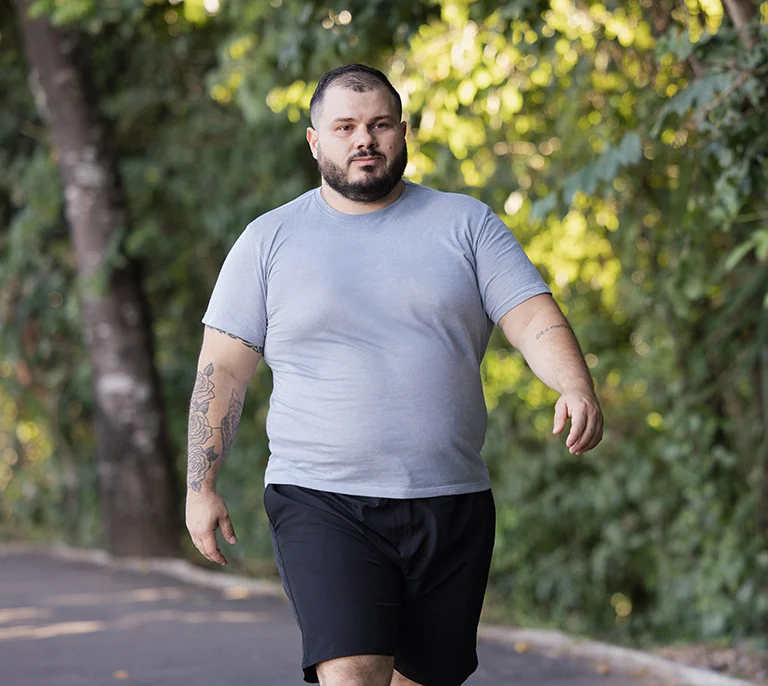
Bariatric Surgery Requirements and Evaluation
Find out if you are eligible for bariatric (weight-loss) surgery, what the evaluation process includes and what to expect at your new patient visit.
Guidelines for Losing Weight
Want to lose weight but don’t know where to start? Here are a few dietary changes that can help you reach your weight-loss goals.
Life After Bariatric Surgery
After bariatric (weight-loss) surgery, you may be wondering what’s next. Read our comprehensive guide to follow-up care, lifestyle, diet and more.
Recovering From Bariatric Surgery
Recovering from bariatric (weight-loss) surgery takes time. Here’s our comprehensive guide to help your body heal and support healthy weight loss.
Related services & treatments
Specialties
- Bariatric Surgery
- Bariatric Medicine
- Obesity Medicine
- Obesity and Weight Management Nutrition
- Behavioral Health
Conditions
- Weight Problem
Treatments
- Obesity and Weight Loss Therapy
- Diet and Exercise
- Weight Loss Counseling
Support services

Case Management and Social Work
Connect with a team that can help you find resources, solve problems and advocate for you during treatment at UCSF.
Mindfulness-Based Stress Reduction Class
This eight-week class teaches mindfulness practices that can reduce stress and improve your overall health, such as meditation and body awareness.
Patient Relations
We welcome feedback about your experience at UCSF Health. Find out how to contact us with comments, questions or concerns.
Spiritual Care at UCSF
Chaplains representing many faiths are available around the clock to provide support, comfort and counsel to patients, families and caregivers.
UCSF Health medical specialists have reviewed this information. It is for educational purposes only and is not intended to replace the advice of your doctor or other health care provider. We encourage you to discuss any questions or concerns you may have with your provider.