


























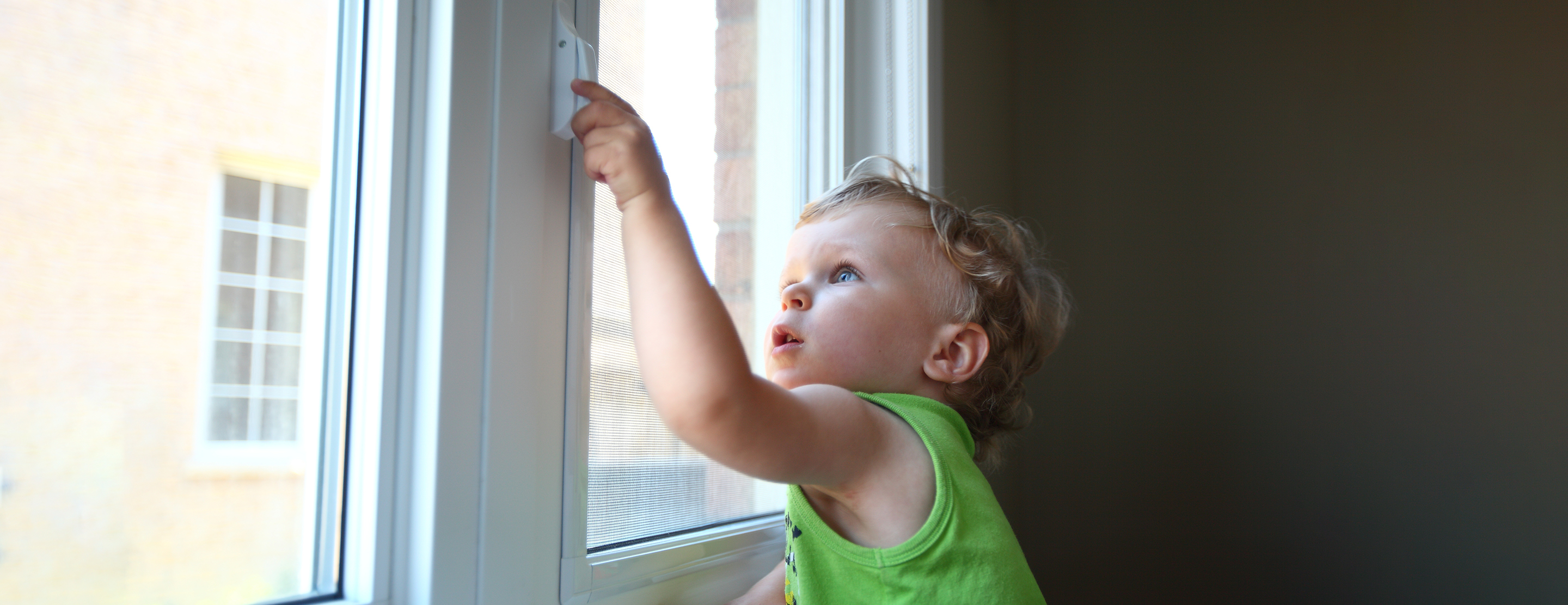
In the coming years, your child will depend on you to protect him or her from dangerous situations. Children cannot see the possible dangers, so it is up to you to make your home safe for your child. Begin by getting down on the floor and seeing your home from your baby's eye level.
Bathrooms
Bathrooms are extremely dangerous because:
- Babies can topple into the toilet or tub and drown.
- Babies can turn on the hot water faucet in the bathtub and get burned quickly.
- Many items kept in the bathroom, like mouthwash and nail polish remover, are poisonous.
You can make your bathroom safer or you can put a latch high up on the door to keep your baby out.
To childproof the bathroom:
- Keep hazardous items in high places, out of your baby's reach.
- Put a safety latch on the toilet seat.
- Put a safety cover on the faucet handle.
- Turn the hot water temperature in your home down to 120° F.
Kitchens
Kitchens have a number of potential safety hazards:
- Hot items on the stove can spill and burn your baby.
- Drawers and dishwashers may contain sharp objects like knives and scissors.
- Detergents, which are often kept under the sink, are poisonous.
You can either make your kitchen safer or you can put up a gate to keep your baby out of the area.
To childproof the kitchen:
- Place dangerous and poisonous objects up high, out of your baby's reach.
- Always keep dishwasher doors locked shut and don't leave sharp knives inside.
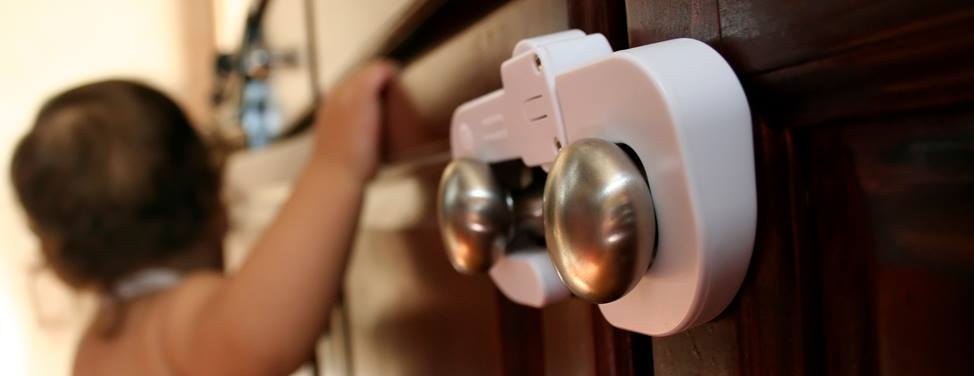
- Put safety latches on drawers and cupboard doors.
Electrical Cords and Outlets
Babies like to chew on cords and put their fingers in outlets. Cover or tape down cords and buy covers for outlets.
Garages and Storage Areas
Garages and other storage areas contain dangerous items, therefore it is important that you:
- Never leave pails around that are filled with water, for babies easily can fall in and drown.
- Put detergents, paints, oils, paint thinner, gasoline and other dangerous products up very high or in locked cabinets.
Earthquake and Emergency Preparedness
There are a number of ways to make your home safer in the event of an earthquake or other emergency.
- Is your water heater bolted?
- Is your foundation bolted?
- Is there a fire extinguisher easily accessible?
- Do you have emergency supplies of bottled water? You need enough to supply one gallon per person per day, for up to three days.
- Do you have emergency supplies of canned and dry foods?
- Do you have a battery operated radio and batteries?
- Do you have flashlights and extra batteries?
- Do you have a first aid kit?
- Do you have a crescent wrench to turn off the gas and water?
- Have you bolted large furniture to the wall?
- Are your beds removed from objects that could fall off walls or shelves and cause injury?
- Do you have a supply of blankets and warm clothes?
- Do you have a supply of large plastic bags for waste?