










Feeling at home
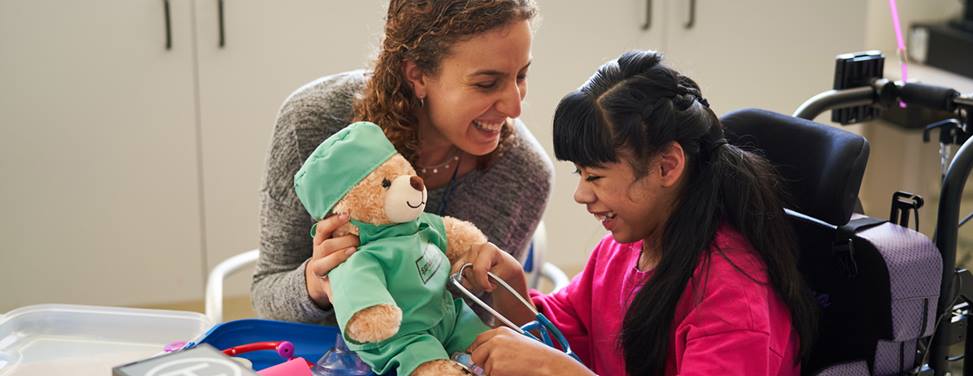
From bedside bingo to therapy dogs, we're here to help kids smile and feel more like themselves.
Visit Child Life services




Here to serve you
Explore our network of care for kids, from the tiniest to teens and young adults.




World-class docs
We'll help you find the best provider for your child.




Stress-free visits
Accommodations. Admission. Discharge. Procedure prep. We've got you covered.




Extraordinary kid care
Our specialists handle conditions ranging from the common to the most rare.




Referrals made easy
Contacts and resources to get your patients to our pediatric specialists




Best in Northern CA
We're ranked #1 in pediatric cancer, heart surgery, cardiology & more.





Lymphoma is the third most common childhood cancer. It is cancer of the lymphatic system, which is made up of thin tubes that branch like blood vessels into all parts of the body. These lymph vessels carry lymph, a colorless, watery fluid containing white blood cells called lymphocytes. Along the network of vessels are lymph nodes, groups of small, bean-shaped organs that make and store infection-fighting cells.
There are clusters of lymph nodes in the underarm, groin, neck and abdomen. The lymph system also includes the spleen, the thymus and the tonsils. Because the lymph system is so extensive, lymphoma can start in many locations and spread to almost any organ or tissue.
There are two types of lymphoma — Hodgkin's and non-Hodgkin's. The cause for both diseases is unknown and it occurs in one child in 10,000. Hodgkin's disease typically affects those age 14 and older.
Hodgkin's lymphoma often occurs in one or more groups of lymph glands, most commonly in the neck. The first symptom is usually swollen glands. Often, the cancer is limited to a small number of closely related glands. In half of the children affected, it spreads to the chest.
The disease occurs in three distinct forms:
Hodgkin's disease peaks in young adults and again in those over 50 years of age. It is slightly more common in males than females, and is more common in Caucasians. This disease is very rare in children younger than 5 and tends to cluster in families. The main malignant cell of Hodgkin's lymphoma is the "Reed-Sternberg" cell that originates from B or T cells, cells that contain antibody molecules. Several types of Hodgkin's disease also are associated with the Epstein-Barr virus, a member of the herpes virus family and one of the most common human viruses.
To request an appointment, give us a call.
Four types of Hodgkin's disease are:
The first symptom of Hodgkin's lymphoma is usually swollen lymph glands. In a minority of children, there is high fever, weight loss and night sweats. These symptoms are more common if the cancer is extensive.
Many of the symptoms of Hodgkin's lymphoma are general in nature and could be caused by other conditions such as infections.
Your child's doctor may request a number of diagnostic tests, including:
This diagnostic imaging procedure provides detailed images of the body, including the bones, muscles, fat and organs.
This is a nuclear medicine test in which a radioactive compound is injected and shows the areas of malignancy in the body.
A biopsy, which involves the removal of a sample of tissue to see whether cancer cells are present, is necessary to confirm the diagnosis. There are several kinds of biopsies. Your child's doctor will choose the one best suited for your child. The goal is to get enough tissue to make an accurate diagnosis as quickly as possible with the fewest side effects.
The following stages are generally used for childhood lymphomas:
The most common treatments for Hodgkin's disease are radiation or chemotherapy and sometimes a combination of the two. Treatments may vary depending on the stage of the cancer and whether your child has reached full growth. Chemotherapy uses drugs to kill cancer cells and shrink tumors. Radiation therapy involves high-dose X-rays or other high-energy rays to kill cancer cells and shrink tumors. Bone marrow transplantation is being tested in patient studies for those with advanced disease.
The prospect for curing children with stage I or II disease is about 90 percent, and more than 50 percent for those with widespread disease, even children with stage IV.
Chemotherapy uses drugs to kill cancer cells and shrink tumors. It may be taken orally or may be administered into a vein or muscle by needle. Chemotherapy is called a systemic treatment because the drugs enter the bloodstream and can kill cancer cells throughout the body. Chemotherapy also may be injected by needle into the fluid that surrounds the brain or back to treat certain types of lymphoma that spread to the brain.
Radiation therapy, which uses X-rays at high doses in a very focused beam to kill malignant cells, is very effective in treating lymphomas. The side effects of this treatment vary depending upon which area of the body is being radiated.
Bone marrow transplant (BMT) is a newer treatment for lymphoma. Sometimes lymphoma cells become resistant to treatment with radiation therapy or chemotherapy. Very high doses of chemotherapy may then be used to treat the cancer. Because the high doses of chemotherapy can destroy bone marrow, marrow is taken from the bones before treatment. The marrow is then frozen and high-dose chemotherapy with or without radiation therapy is given to treat the cancer. The marrow that was removed is then thawed and returned by needle into a vein to replace the marrow destroyed by chemotherapy. This type of transplant is called an autologous transplant. If the marrow is from another person, the transplant is called an allogeneic transplant.
UCSF Benioff Children's Hospitals medical specialists have reviewed this information. It is for educational purposes only and is not intended to replace the advice of your child's doctor or other health care provider. We encourage you to discuss any questions or concerns you may have with your child's provider.
 3
3
Best in Northern California for cancer care
Ranked among the nation's best in 10 specialties
Feeling at home