


Tender wagging care
Our therapy dogs spread joy and smiles at the bedside and throughout the hospital.
Visit Child Life services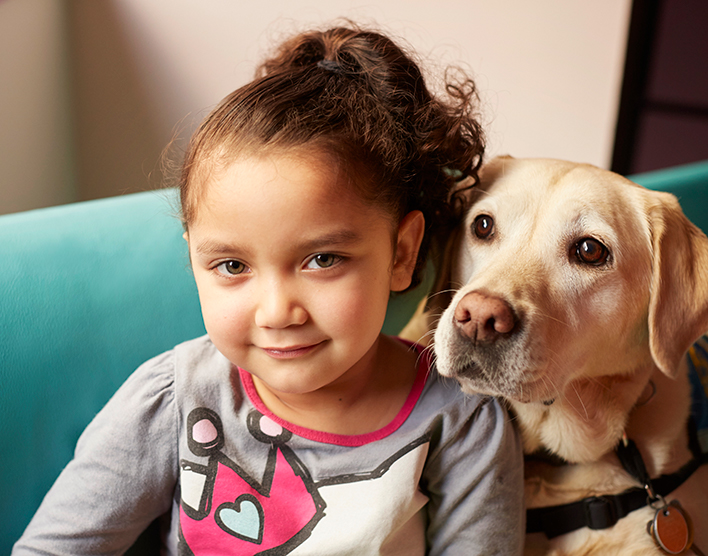




Here to serve you
Explore our network of care for kids, from the tiniest to teens and young adults.




World-class docs
We'll help you find the best provider for your child.




Stress-free visits
Accommodations. Admission. Discharge. Procedure prep. We've got you covered.



Extraordinary kid care
Our specialists handle conditions ranging from the common to the most rare.




Referrals made easy
Contacts and resources to get your patients to our pediatric specialists




Best in Northern CA
We're ranked #1 in pediatric cancer, heart surgery, cardiology & more.





In craniosynostosis syndromes, one or more bones of the skull and face fuse prematurely during fetal development. The skull is composed of multiple bones separated by sutures, or openings. If any of these close too early, the skull will expand in the direction of the open sutures, resulting in an abnormal head shape.
Premature closure of a single suture can be caused by space constraints in the womb, and is seen more often in twins than in a single fetus. Single suture closure usually isn't associated with a syndrome. Premature closure of multiple sutures, however, is often seen in children with a craniosynostosis syndrome.
In children with a craniosynostosis syndrome, bones that fuse prematurely in the skull result in abnormal head shapes. Bones in the face may also be fused together, resulting in a flat midface and protruding eyes.
The most common craniosynostosis syndromes are Crouzon, Pfeiffer and Apert.
Children with Apert, Crouzon and Pfeiffer syndrome usually have premature fusion of at least the coronal suture, an opening that extends across the top of the skull. Other sutures may also close.
These conditions are caused by genetic mutations in genes known as fibroblast growth factor receptor (FGFR) genes. They are autosomal dominant conditions, meaning a parent with the syndrome has a 50 percent chance of passing it on to each child.
Both single suture craniosynostosis and craniosynostosis syndromes are diagnosed through physical examination at birth. Tests such as CT scans and X-rays may be used to confirm the diagnosis, as well as genetic testing for mutations of one of the fibroblast growth factor receptor (FGFR) genes.
A baby with single suture synostosis that's not part of a syndrome usually doesn't have any functional problems, such as difficulty breathing or feeding. Surgical release of the closed suture may be necessary, and if so, would usually be done during the first year of life.
An infant with a craniosynostosis syndrome should be seen immediately after birth by a nurse from the Center for Craniofacial Anomalies to make sure the infant can adequately breathe and feed. Shortly after being discharged from the hospital, the child should be seen for a full team evaluation at the center. The skull abnormalities require early attention, although the timing varies. A surgical procedure to advance the forehead is usually done before the baby is 6 months old.
A surgical procedure called a midface advancement brings the cheekbones and upper jaw forward, providing greater protection for the eyes and improving the child's airway. Because the upper jaw is usually too small, children with these syndromes can have an underbite and severely crowded teeth. Orthodontic treatment with braces is therefore necessary in combination with surgical procedures. Timing for the midface advancement and orthodontics is based on a number of factors — they may be done early in life or after growth is completed, depending on the particular needs of the child.
In addition, children with Apert syndrome have syndactyly, or webbing, of the hands and feet, which usually requires early surgery to improve mobility and function.
It's important for children to be evaluated for a number of problems that are associated with craniosynostosis syndromes. A pediatric pulmonologist, or lung specialist, should address any breathing difficulties the child may have. Evaluation by an ophthalmologist, or eye specialist, is also important, especially if the eyelids don't adequately protect the eyes. Hearing tests and speech evaluations should be performed at intervals to make sure the child's speech and language development is on track.
A child with a craniosynostosis syndrome may encounter social and emotional challenges unique to these syndromes. Support organizations and resources are available for children and their families.
UCSF Benioff Children's Hospitals medical specialists have reviewed this information. It is for educational purposes only and is not intended to replace the advice of your child's doctor or other health care provider. We encourage you to discuss any questions or concerns you may have with your child's provider.
Ranked among the nation's best in 10 specialties
Tender wagging care