
Tinnitus
On this page
Overview
Tinnitus is a perception of sound often described as a ringing, buzzing or humming in the ears or head that affect millions of people. Usually accompanied by hearing loss, tinnitus has many causes including noise exposure, physical injury such as head trauma or whiplash, ear diseases, muscle spasms, circulatory changes, side effects from medication, nerve pathway irritation and central auditory system changes. Some 50 million Americans experience tinnitus, with more than 10 million seeking medical help.
For some, tinnitus symptoms are associated with depression, anxiety, sleep disturbance and interference with concentration.
Our approach to tinnitus
At UCSF, our audiologists and ear specialists provide state-of-the-art evaluation and treatment for tinnitus. When patients report hearing unwanted sounds in their ears or head, we work to identify and address any underlying cause, such as hearing loss. We also have a variety of treatment options to improve symptoms.
Often, the best treatment plan includes a combination of behavioral counseling and acoustic therapy. Counseling helps patients manage the depression, anxiety and distraction that can accompany tinnitus. Acoustic methods – such as sound maskers, hearing aids or music therapy – can decrease patients' sensitivity to the noise they hear. Some patients also get relief from antidepressant or anti-anxiety medications. Our team works with each patient to tailor a plan to individual needs.
Signs & symptoms
Tinnitus is one of the most elusive conditions that health care professionals face. It is an auditory perception not directly produced externally.
It is commonly described as a hissing, roaring, ringing or whooshing sound in one or both ears, called tinnitus aurium, or in the head, called tinnitus cranii.
The sound ranges from high to low pitch and can be a single tone, multi-tonal, or noise-like, having no tonal quality. Tinnitus may be constant, pulsing or intermittent. It may begin suddenly or progress gradually.
Tinnitus can be broadly classified into two categories: objective and subjective.
Objective tinnitus
This form is audible to an observer either with a stethoscope or simply by listening in close proximity to the ear. Objective tinnitus accounts for less than 5 percent of overall tinnitus cases and is often associated with vascular or muscular disorders. The tinnitus is frequently described as pulsatile, or synchronous with the patient's heartbeat. In many instances, the cause of objective tinnitus can be determined and treatment, either medical or surgical, may be prescribed.
Subjective tinnitus
This form is audible only to the patient and is much more common, accounting for 95 percent of tinnitus cases. Subjective tinnitus is a symptom that is associated with practically every known ear disorder and is reported to be present in over 80 percent of individuals with sensorineural hearing loss, which is caused by nerve and/or hair cell damage.
Because tinnitus, like pain, is subjective, two individuals may demonstrate identical tinnitus loudness and pitch matches yet be affected in significantly different ways. The severity of the tinnitus is largely a function of the individual's reaction to the condition. That said, many tinnitus sufferers:
- Have difficulty sleeping or concentrating
- Feel depressed or anxious
- Report additional problems at work or at home that may contribute to the distress caused by tinnitus
- Describe a correlation of tinnitus perception with stress
- It is often difficult to determine whether a patient's emotional state pre-existed, or is a result of the tinnitus.
Causes
Although the exact mechanism underlying tinnitus is unknown, it is likely that there are many related factors. Tinnitus usually, but not always, has to do with an abnormality of the hearing or neural system.
There are a number of causes linked with tinnitus including:
- Disorders in the outer ear, such as ear wax, a hair touching the eardrum, a foreign body or a perforated eardrum
- Disorders in the middle ear, such as negative pressure from eustachian tube dysfunction, fluid, infection, otosclerosis, allergies or benign tumors
- Disorders in the inner ear, such as sensorineural hearing loss due to noise exposure, aging, inner ear infection or Meniere's disease often accompanied by hearing loss and dizziness
Tinnitus also can temporarily result from certain medications, such as:
- Anti-inflammatories such as aspirin, ibuprofen, nonsteroidal anti-inflammatories and quinine
- Sedatives
- Antidepressants
- Certain antibiotics and chemotherapeutic agents
Other causes include:
- Systemic disorders such as high or low blood pressure, anemia, diabetes, thyroid dysfunction, glucose metabolism abnormalities, vascular disorders, growth on jugular vein, acoustic tumors and head or neck aneurysms
- Non-auditory disorders such as trauma to the head or neck, temporomandibular (jaw joint) disorders and neck misalignment
Current research suggests that even though tinnitus may initially be caused by an injury to the ear, ultimately an auditory pattern is established in the brain. Therefore, many treatment approaches are directed at the brain, not the ear.
Although the majority of tinnitus sufferers also have hearing loss, the presence of tinnitus does not indicate that one is losing hearing.
Diagnosis
If you think that you have tinnitus, consult your doctor to determine if a cause for the tinnitus can be found and subsequently treated. If medical treatment is not appropriate, ask if there is an audiologist in your area who has knowledge about tinnitus treatments.
The audiologist will assess a patient's hearing and counsel them regarding non-medical treatment options. Becoming educated about the nature of tinnitus may be extremely useful in relieving anxiety and seeking ways of coping with the condition.
Treatments
It is important to keep in mind that tinnitus is a symptom, not a disease. As such, the optimal treatment strategy should be directed toward eliminating the disease, rather than simply alleviating the symptom. Also, because tinnitus may be symptomatic of a more serious disorder, it is important to try to find the medical cause before deciding on treatment.
Preventing and minimizing tinnitus
Here are a few things patients can do to help prevent and minimize tinnitus:
- Reduce exposure to extremely loud noise
- Avoid total silence
- Decrease salt intake
- Monitor one's blood pressure
- Avoid stimulants such as caffeine and nicotine
- Exercise
- Reduce fatigue
- Manage stress
- Educate yourself
While there is no known cure for most forms of tinnitus, there are many management options available and most tinnitus sufferers can find varying degrees of relief from one or a combination of the following.
Medications
There is no single medication that works on all tinnitus patients. Some of the antidepressants and anti-anxiety medications available are helpful for certain tinnitus patients, however more research is needed in this area.
Auditory habituation or tinnitus retraining therapy
These techniques consist of two main components — directive counseling and low level sound generators.
- Directive counseling provides intensive, individualized education regarding the causes and effects of tinnitus on the ear, the brain, and the coping mechanism.
- Low-level sound generators produce broadband noise via hearing aid type devices at a soft enough level so that the brain perceives both the noise and the tinnitus. Eventually, the brain may relearn a pattern that will de-emphasize the importance of the tinnitus. These devices also may be helpful in desensitizing patients who are overly sensitive to sound.
Acoustic therapy
The use of an externally produced sound to either cover up or in some way inhibit or alter production of tinnitus can offer relief for some. There are six main methods of acoustic stimulation.
- A sound generator, sometimes called tinnitus masker: an ear-level electronic device housed in a hearing aid case that produces a white noise.
- A tinnitus instrument: a combination hearing aid and sound generator.
- Hearing aids: help to amplify speech as well as environmental noise and thus stimulate areas of the ear and brain that otherwise may not be receiving adequate stimulation because of the hearing loss.
- A tabletop or portable sound generator: these can be purchased at certain electronic suppliers such as the Sharper Image.
- Home masking: such as the use of electric fans, radios or television.
- Music therapy (see below).
Unfortunately, some tinnitus sufferers find that masking noise may merely be a substitute of one annoying sound for another. It is thus better to try to relegate the annoyance of tinnitus to the background of one's consciousness through habituation or retraining methods.
Music therapy
Many patients find that music, particularly classical passages that don't contain wide variations in loudness (ampliltude) can be both soothing to the limbic system (the emotional processor in the brain that is commonly negatively linked to a patient's reaction to tinnitus) and stimulating to the auditory cortex. If a hearing loss is present, it may be necessary to alter the spectrum of the music so that the cortical neurons.
Amplification
The use of hearing aids and a combination of hearing aids and maskers are often effective ways to minimize tinnitus. While it is not clear whether hearing aids help by amplifying background sounds that can mask out the tinnitus or by actually altering the production of tinnitus, most hearing aid wearers report at least some reduction in their tinnitus. This may be due to the reduction in contrast between tinnitus and silence, or because of the new stimulation provided to the brain.
Neuromonics Acoustic Desensitization Protocol
Neuromonics Acoustic Desensitization Protocol is a process that uses counseling as well as a body worn processor connected to high fidelity earphones that present pleasant music that is filtered in accordance with an individuals hearing loss.
Counseling or cognitive-behavioral therapy
Regardless of the cause of tinnitus, if a person is not bothered by the tinnitus, it ceases to be a problem. Psychological intervention aimed at successfully reducing the stress, distress and distraction associated with the tinnitus can be very productive and often produces the most attainable goals.
Stress management
The very high correlation between stress and tinnitus disturbance underscores the need to maintain one's composure and logic when trying to cope with tinnitus. Relaxation, guided imagery and self-hypnosis are examples of self-help methods used to help combat the stress, anxiety and sleep disturbances associated with tinnitus.
Other treatment pptions
Other options that may help patients with tinnitus include:
- Support groups. Local peer support groups offer emotional support to patients and a place to discuss and share treatment techniques.
- Dental treatment. Jaw joint disorders, called temporomandibular (TMD), may exacerbate tinnitus. Splints and exercises may relieve these problems.
- Nutritional counseling. All tinnitus patients should maintain a balanced diet.
- Biofeedback. Biofeedback is a technique of making unconscious or involuntary bodily processes detectable by the senses in order to manipulate them by conscious mental control. Biofeedback with counseling can help relieve stress patterns that can worsen the perception of tinnitus.
- Alternate approaches. Although there is no scientific data showing consistent benefit from approaches such as hypnosis, acupuncture, naturopathy, chiropractic care and many herbal preparations, some patients do perceive a benefit.
Awards & recognition

Among the top hospitals in the nation
Recommended reading

Active Listening Strategies
If you have hearing loss, active listening can help you communicate better. Try these active listening strategies to enhance your communication experiences.
Assistive Listening Devices
Find out how assisted listening devices (ALDs) can amplify sound you want to hear and block out unwanted noise in loud environments.
Cell Phones and Hearing Aids
If you wear hearing aids, these strategies can make it easier to use your cellphone.
Communicating with People with Hearing Loss
Discover how to effectively communicate with people with hearing loss, including ideal speaking patterns, environments and nonverbal cues.
Hearing Enhancement Devices
If you have hearing loss, there are devices that can help. Explore hearing device options, including television listening systems and amplified telephones.
Protect Yourself: Loud Music and Hearing
Hearing loss caused by noise or music can be temporary or permanent. Here’s how to protect your ears when attending a concert or using earbuds.
Signaling and Text Display Systems
Signaling and substitution systems convert sound into texts or flashing lights. Explore these systems and how they may benefit people with hearing loss.
More treatment info

Hearing Aids
Once hearing loss has been confirmed, a communication needs assessment is necessary in order to determine if or which hearing aids would be appropriate for you.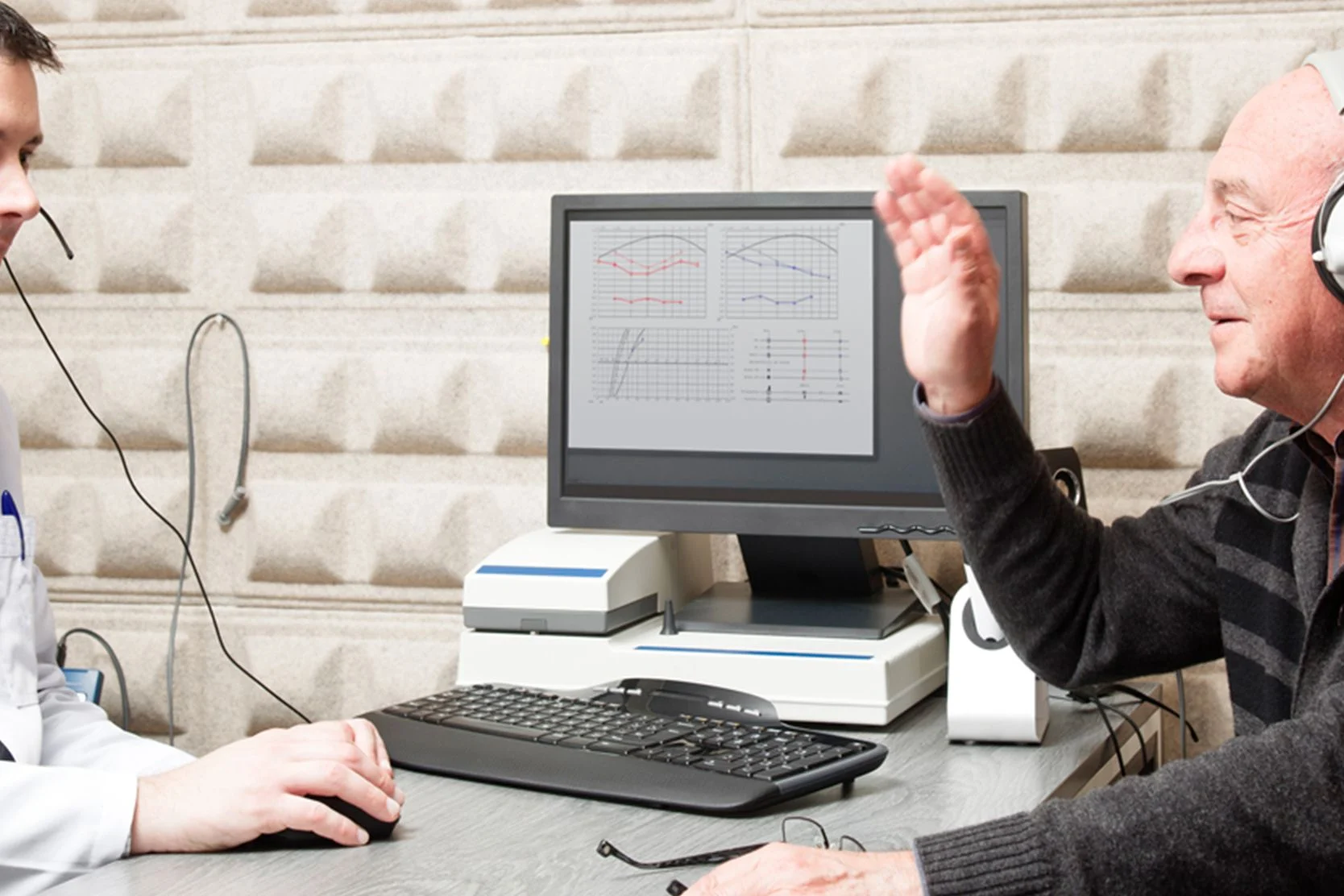
Neuromonics
The Neuromonics acoustic desensitization procedure involves extensive counseling and acoustic therapy. Find more treatment information here.
Related services & treatments
Specialties
Conditions
Treatments
- Hearing Aids
- Cognitive Behavioral Therapy
Support services

Case Management and Social Work
Connect with a team that can help you find resources, solve problems and advocate for you during treatment at UCSF.
Mindfulness-Based Stress Reduction Class
This eight-week class teaches mindfulness practices that can reduce stress and improve your overall health, such as meditation and body awareness.
Patient Relations
We welcome feedback about your experience at UCSF Health. Find out how to contact us with comments, questions or concerns.
Spiritual Care at UCSF
Chaplains representing many faiths are available around the clock to provide support, comfort and counsel to patients, families and caregivers.
UCSF Health medical specialists have reviewed this information. It is for educational purposes only and is not intended to replace the advice of your doctor or other health care provider. We encourage you to discuss any questions or concerns you may have with your provider.