
Ulcerative Colitis
On this page
Overview
Ulcerative colitis, often simply called colitis, is a chronic inflammatory disease of the large intestine (the colon) that affects its lining and causes small sores (ulcers) to form. The condition usually involves the lower colon and the rectum but can affect the entire large intestine. Ulcerative colitis is a type of inflammatory bowel disease (IBD).
Most people with colitis are diagnosed before the age of 30, although the condition can develop at any time of life, from childhood to middle age and beyond. Caucasians and Jews have a greater incidence of the disease than do other populations.
Ulcerative colitis occurs when the immune system attacks gut bacteria and the cells lining the colon, causing inflammation. The exact cause isn't yet determined. As in other types of IBD, heredity seems to play a role. About 12 percent of people with ulcerative colitis have a close relative who has either the same condition or Crohn's disease. It's also thought that environmental factors – such as viruses, bacteria or other antigens – may trigger the immune system activity that results in colitis.
Our approach to ulcerative colitis
UCSF provides comprehensive evaluations and advanced care for all types of IBD, including ulcerative colitis. Our team includes many types of specialists – such as gastroenterologists, surgeons, radiologists, pathologists, immunologists, nutritionists and psychologists – who work collaboratively, including with each patient, to devise treatment plans that optimize wellness and meet individual needs. Our overarching goal is to improve our patients' quality of life.
In addition to caring for patients, our doctors are active in research to develop new therapies for IBD and, ultimately, a cure. Interested patients may have the option to receive investigational treatments by participating in clinical trials.
Signs & symptoms
Commonly, the first symptom of colitis is a progressive loosening of stool, or diarrhea. The stool may be bloody and may occur with abdominal pain, cramps and a severe urgency to have a bowel movement. Skin lesions and pain in the joints also may occur. Colitis can be associated with problems such as:
- Arthritis
- Inflammation of the eye
- Liver disease such as hepatitis, cirrhosis and primary sclerosing cholangitis
- Osteoporosis
- Skin rashes
- Anemia
Diagnosis
Your doctor will ask about your medical history and perform a physical examination. Stool tests will then be performed to determine what is causing your diarrhea — colitis or something else. You will then undergo either a sigmoidoscopy or colonoscopy to exam your colon.
Sigmoidoscopy
For a sigmoidoscopy, the doctor uses a special instrument called a colonoscope, which is a long, flexible tube that is about as thick as your index finger and has a tiny video camera and light on the end, to exam your rectum and lower part of your colon. During the procedure, everything will be done to help you be as comfortable as possible. Your blood pressure, pulse and the oxygen level in your blood will be carefully monitored.
Your doctor will do a rectal exam with a gloved, lubricated finger; then the lubricated colonoscope will be gently inserted. As the scope is slowly and carefully passed, you may feel as if you need to move your bowels, and because air is introduced to help advance the scope, you may feel some cramping or fullness. Generally, however, there is little or no discomfort. Occasionally, some abdominal pressure, which may be provided by your nurse, or a change in position may be needed to avoid looping of the colonoscope within the abdomen. Your doctor will advance the scope until he or she has examined the left side of the colon. Afterwards, the scope is then carefully withdrawn while a thorough exam of the colon is performed. At this point in the exam, your doctor will use the colonoscope to look closely for any polyps or other problems that may require evaluation, diagnosis or treatment. The procedure typically takes between 10 and 15 minutes.
Colonoscopy
The term "colonoscopy" means looking inside the colon. The colon, or large bowel, is the last portion of your digestive tract. Its main function is to store unabsorbed food products prior to their elimination. Colonoscopies are performed by a gastroenterologist, a doctor specially trained in digestive disorders. Your doctor will be assisted by specially trained nurses and technicians.
The procedure is performed using a colonscope. This device is a long, flexible tube that is about as thick as your index finger and has a tiny video camera and light on the end. By adjusting the various controls on the colonscope, the gastroenterologist can carefully examine the inside lining of the colon from the anus to the cecum. The colonoscope contains a channel that allows instruments to be passed in order to take tissue or stool samples, remove polyps and provide other therapy.
The high quality picture from the colonoscope is shown on a television monitor. Colonoscopy provides the best imaging of the colon at present. It is a more precise examination than X-ray studies. This procedure also allows other instruments to be passed through the colonoscope. These may be used, for example, to painlessly remove a suspicious-looking growth or to take a biopsy, during which a small piece of tissue is obtained, for further analysis. In this way, colonoscopy help doctors assess whether surgery is necessary as well as what type of surgery may be needed.
Treatments
Currently, the only cure for colitis is surgery. However, treatments are available that can relieve symptoms and suppress the inflammatory process. Therapy varies depending on the seriousness of the disease. Most people will require long-term medication. In severe cases or if cancer is found, surgery may be required to remove the diseased colon.
Drug therapy
Drug therapy aims to improve the quality of life for people with colitis by inducing and maintaining remission, or symptom-free periods. There are three types of drugs most commonly prescribed to treat colitis. These include aminosalicylates, corticosteroids and immunomodulatory medicines.
Surgery
An estimated 25 percent to 40 percent of patients will require surgery. This may be because medications are ineffective, they become dependent on corticosteroids, they have dysplasia (early cancer) or cancer, or they develop complications of the disease, such as bleeding, rupture of the colon, or dilation of the colon. In these cases, surgery to remove the colon and rectum, called proctocolectomy, may be recommended. Unlike Crohn's disease, which can recur after surgery, colitis is cured once the colon has been removed. However, associated diseases associated with colitis may still develop or progress after surgery. For example, primary sclerosing cholangitis, a liver condition, and Ankylosing spondylitis, an inflammation of the lower back, will still progress after surgery. Surgery is followed by one of the following:
- Ileal pouch anal anastomosis. Also called a restorative proctocolectomy, this procedure preserves part of the anus, which allows the patient to have normal bowel movements. The surgeon removes the diseased part of the colon and the inside of the rectum, leaving the outer muscles of the anus. The surgeon then creates a pouch from the end of the ileum and attaches it to the inside of the anus. Waste is stored in the pouch and passed through the anus in the usual manner. Bowel movements may be more frequent and watery than before the procedure and inflammation of the internal pouch is a possible complication. This is known as pouchitis. However, patients who have an ileoanal anastomosis do not have to wear a permanent external ileostomy pouch.
- Ileostomy. During this surgical procedure, the surgeon creates a small opening in the abdomen, called a stoma, to which he or she attaches the end of the small intestine, called the ileum. Waste will travel through the small intestine and exit the body through the stoma, which is about the size of a quarter and is usually located in the lower right part of the abdomen near the beltline. A pouch is worn over the opening to collect waste, and the patient empties the pouch as needed.
Awards & recognition

Among the top hospitals in the nation
Best in Northern California and No. 8 in the nation for gastroenterology & GI surgery
More treatment info
Advanced Endoscopic Procedures
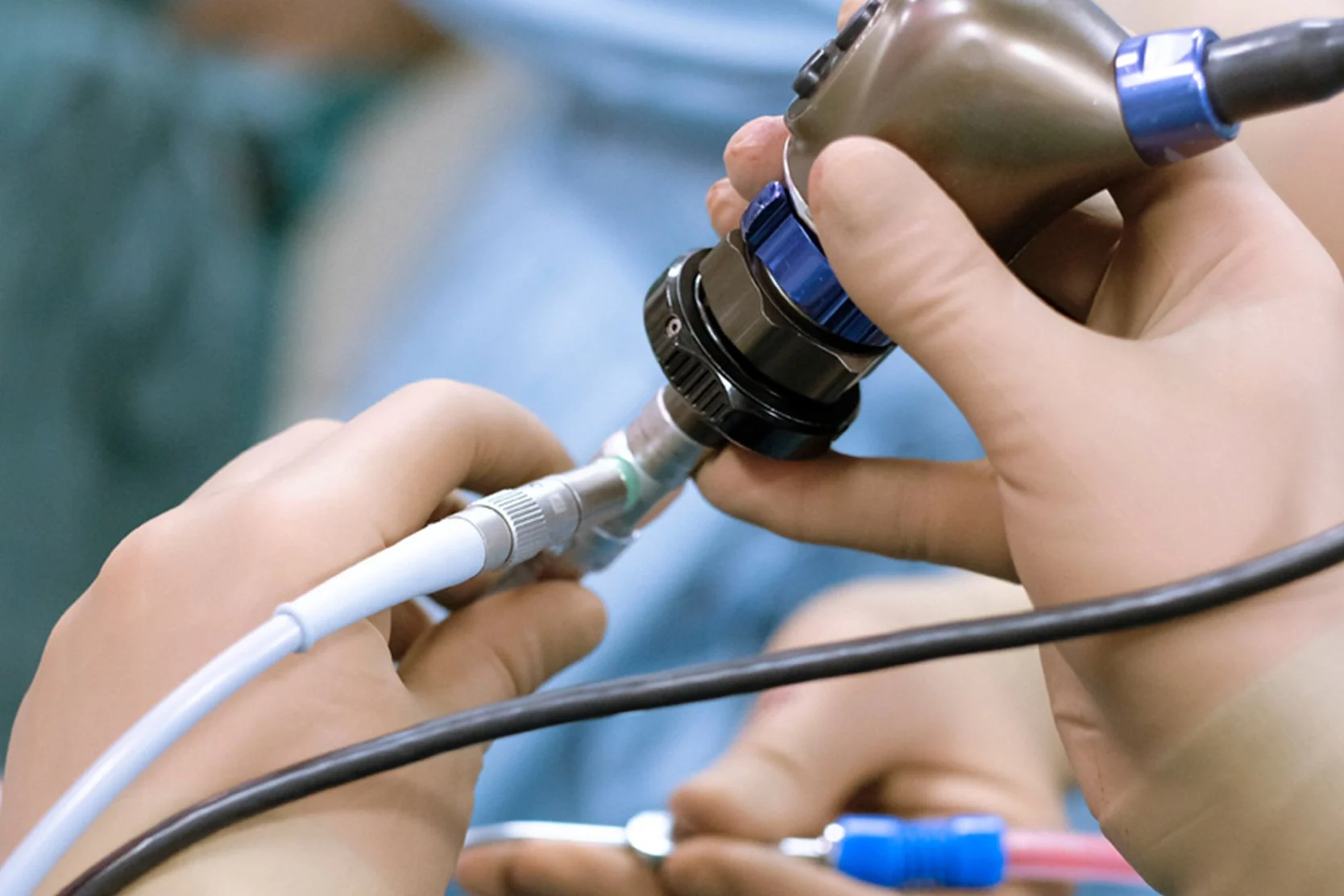
In addition to standard endoscopic procedures, UCSF Medical Center's digestive disorder specialists also offer advanced endoscopic procedures.
Related services & treatments
Specialties
- Gastroenterology
- Colorectal Surgery
- Gastrointestinal Pathology
Conditions
- Inflammatory Bowel Disease
- Crohn's Disease
Treatments
- Biologic Therapy for Gastrointestinal Disease
- Clinical Trials
- Ileoanal Anastomosis
- Ileostomy
- Colonoscopy
Support services

Case Management and Social Work
Connect with a team that can help you find resources, solve problems and advocate for you during treatment at UCSF.
Mindfulness-Based Stress Reduction Class
This eight-week class teaches mindfulness practices that can reduce stress and improve your overall health, such as meditation and body awareness.
Patient Relations
We welcome feedback about your experience at UCSF Health. Find out how to contact us with comments, questions or concerns.
Spiritual Care at UCSF
Chaplains representing many faiths are available around the clock to provide support, comfort and counsel to patients, families and caregivers.
UCSF Health medical specialists have reviewed this information. It is for educational purposes only and is not intended to replace the advice of your doctor or other health care provider. We encourage you to discuss any questions or concerns you may have with your provider.