
E. coli
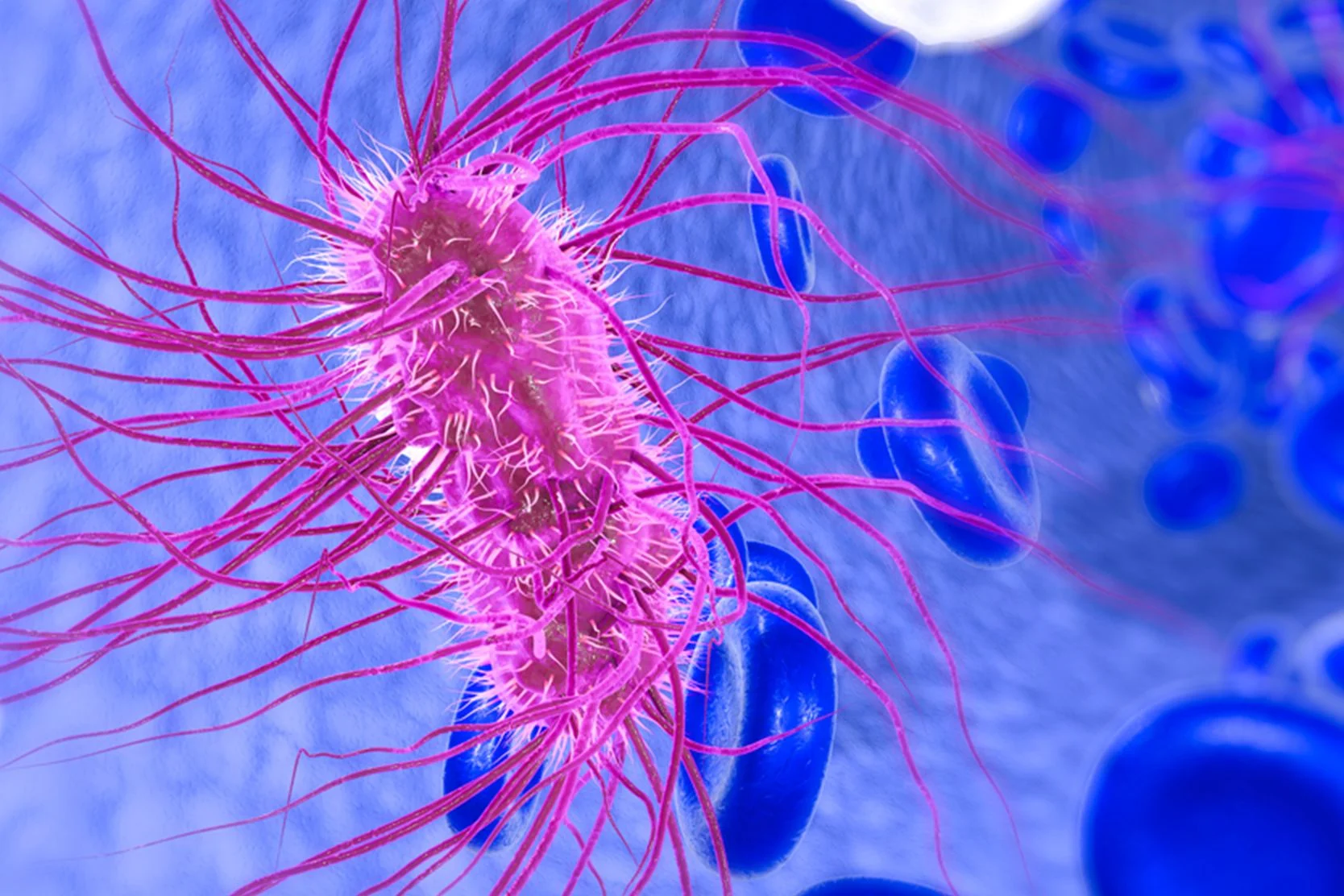
What is E. coli?
E. coli is a common bacteria that lives in the lower gastrointestinal tract of humans and animals. It also can be isolated from water and soil. Although most strains are harmless, some strains of E. coli are capable of producing powerful toxins that can cause severe illness.
How does E. coli infection spread?
Although E. coli can be spread by a variety of ways, it is estimated that 85 percent of current E. coli infections are food-borne.
Because the organism lives in the gastrointestinal tract of animals, animal to human transmission is possible. This can occur by direct contact with animals or by consuming contaminated animal products. Meat can become contaminated during slaughter or during processing. Infection can occur from eating contaminated undercooked meat, especially ground beef.
Other known sources of infection include drinking unpasteurized milk and juice, eating contaminated fresh leafy greens such as spinach, lettuce and alfalfa sprouts; eating contaminated salami; and by swimming in or drinking contaminated sewage water.
Without good hygiene and regular hand washing, E. coli can also be spread by person-to-person contact from bacteria in loose stools in homes, daycare centers, nursing homes and hospitals.
What are the symptoms of E. coli infection?
Symptoms of E. coli infection typically occur within two to eight days of eating contaminated food, with an average onset of three to four days.
The main symptoms are severe bloody diarrhea and stomach cramps. In some cases, the infection causes non-bloody diarrhea. Usually little or no fever develops. Healthy adults can typically recover completely from E. coli within one week without any medication.
However, in some people, especially children under the age of five and the elderly, E. coli infection can cause hemolytic uremic syndrome (HUS), a life-threatening condition in which the red blood cells are destroyed and the kidneys fail. In the U.S., E. coli related HUS is the main cause of kidney failure among children. The death rate for HUS is 3–5 percent.
If you think that you or your child has been infected by E. coli, contact your doctor immediately.
How is E. coli infection diagnosed?
E. coli is diagnosed by testing a person's stool for E. coli bacteria.
How is E. coli infection treated?
Most people recover from E. coli infection without treatment within five to 10 days. Antibiotics should not be used to treat this infection because they may lead to kidney complications. Antidiarrheal treatments should also be avoided.
People who develop hemolytic uremic syndrome (HUS) are usually treated in the intensive care unit (ICU) with blood transfusions and kidney dialysis.
How can E. coli infection be prevented?
There are a number of simple ways in which E. coli infection can be prevented.
Wash your hands
- Regularly and thoroughly wash your hands after going to the bathroom, changing diapers and before handling or eating food. It is especially important that people, particularly children, with diarrhea wash their hands thoroughly after going to the bathroom to prevent spreading infection.
- Wash your hands after contact with farm animals, animal feces and being in farm environments.
Cook and eat food that has been appropriately prepared
- Thoroughly cooking meat, especially ground beef, can destroy E. coli bacteria. Ground beef should be cooked until it is no longer pink and juices run clear. When cooking hamburgers, the meat thermometer should read 160 degrees in the thickest part of the hamburger patty and the patty should not be pink inside.
- When eating in a restaurant, order your hamburger medium or well-done. Make sure ground beef is thoroughly cooked and hamburgers are not pink in the middle.
- Thoroughly wash raw fruits and vegetables before eating.
- Defrost food in the refrigerator, in cold water or in the microwave. Food should be stored in a refrigerator that is 40 degrees Fahrenheit or a freezer that is 0 degrees Fahrenheit or colder.
Keep your kitchen and food preparation areas clean
- Thoroughly wash hands, counters, cutting boards, utensils and meat thermometers after use with hot soapy water.
- Never place cooked hamburgers or ground beef on the unwashed plate that held the raw patties.
- Keep raw meats separate from ready-to-eat foods.
Do not drink unpasteurized milk, juice or cider
- Unpasteurized milk, juice and cider may contain E. coli. To be safe, drink only pasteurized beverages and juice concentrates.
Drink municipal water that has been treated with chlorine or another effective disinfectant
Use caution when swimming
- Avoid swallowing lake or pool water when swimming.
- Anyone with diarrhea should not swim in public pools or lakes, share baths with others or prepare food for others to prevent spreading infection.
Stay informed
During an E. coli outbreak, such as the current spinach outbreak, stay informed of current Food and Drug Administration (FDA) or Centers for Disease Control and Prevention (CDC) recommendations. Presently, eating raw spinach is not recommended. Boiling fresh spinach or cooking fresh spinach until it reaches 160 degrees, usually for 15 seconds or more, will kill E. coli bacteria.
More information
For more information on E. coli infection, please visit the Food and Drug Administration (FDA) Web site at www.fda.gov or Centers for Disease Control and Prevention (CDC) Web site at www.cdc.gov.
UCSF Health medical specialists have reviewed this information. It is for educational purposes only and is not intended to replace the advice of your doctor or other health care provider. We encourage you to discuss any questions or concerns you may have with your provider.