


The UCSF Movement Disorder and Neuromodulation Center is the largest center for the surgical treatment of Parkinson's disease and other movement disorders in Northern California. Dr. Phillip Starr and Dr. Jill Ostrem, the center's co-directors, are pioneers in the use of deep brain stimulation (DBS) therapy to treat conditions such as Parkinson's disease, dystonia and essential tremor. The center is leading several clinical trials (studies with human volunteers) to improve the understanding and treatment of these and other movement disorders. DBS is also being investigated as a potential treatment for other conditions, including chronic pain.
Deep Brain Stimulation
Working similar to a heart pacemaker, the inserted DBS device (called a neurostimulator) sends electrical impulses to electrodes implanted in the brain, stimulating areas linked to specific disorders. When treating Parkinson's disease, for example, the neurostimulator sends impulses through a wire to the brain region that controls movement. The stimulation blocks abnormal activity there and relieves patients of tremors, rigidity and slowness of movement, and may help with other motor problems associated with their conditions.
DBS does not cure disorders, but it helps relieve symptoms. As a patient's condition changes, the electrode stimulation can be adjusted accordingly.
Procedure
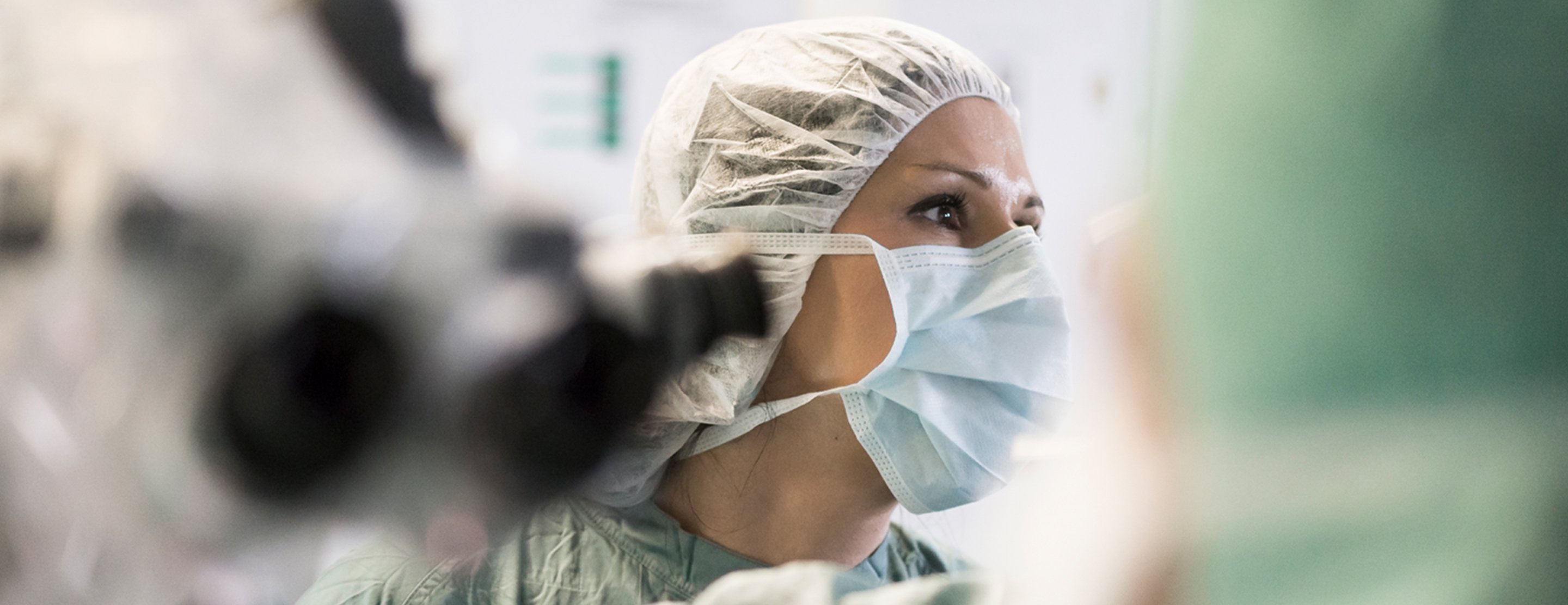
During surgery to implant the electrodes, patients can be either awake or asleep. (Some patients who don't opt for general anesthesia are sedated.) Local anesthetic is applied to the scalp and the collarbone area, and patients feel no pain from the actual insertion of the hair-thin wires. A wire is run through a small hole in the skull and connected to another wire that runs down to a small stimulator device, which is implanted under the collarbone.
The most serious potential risk associated with the procedure is bleeding in the brain, occurring in about 0.5 percent to 1 percent of cases. This complication can lead to stroke. There is also a risk of infection, affecting 1 percent to 3 percent of patients. This is usually not life-threatening, but treating the infection may require removal of the entire DBS system.
UCSF Health medical specialists have reviewed this information. It is for educational purposes only and is not intended to replace the advice of your doctor or other health care provider. We encourage you to discuss any questions or concerns you may have with your provider.

Minimally invasive treatments for epilepsy
Learn more about surgical treatment options for epilepsy from Dr. Edward Chang, chair of neurological surgery at UCSF.
Clinics we work with



Our experts
-

Ian O. Bledsoe
MD, MS
Movement Disorders Neurology -

Ethan G. Brown
MD
Movement Disorders Neurology, Neurology -

Deborah Cahn-Weiner
PhD
Movement Disorders Neurology, Neuropsychology -

Cameron Dietiker
MD
Movement Disorders Neurology -

Nick Galifianakis
MD, MPH
Movement Disorders Neurology -

Traci S. Hornbeck
PA-C, MS
Movement Disorders Neurology, Neurosurgery -

Simon Little
MBBS, PhD
Movement Disorders Neurology -

Nijee Luthra
MD, PhD
Movement Disorders Neurology, Neurology -

James Maas
MD, PhD
Movement Disorders Neurology -

Jill L. Ostrem
MD
Movement Disorders Neurology, Neurology -

Caroline Racine Belkoura
PhD
Movement Disorders Neurology, Neuropsychology -

Marta San Luciano
MD
Movement Disorders Neurology, Neurology -

Andreea L. Seritan
MD
Movement Disorders Neurology, Psychiatry -

Philip A. Starr
MD, PhD
Movement Disorders Neurology, Neurosurgery -

Tamara Stiep
MD
Movement Disorders Neurology, Neurology -

Monica Volz
NP, MSN
Movement Disorders Neurology -

Doris Wang
MD, PhD
Movement Disorders Neurology, Neurosurgery -

Rafael Zuzuárregui
MD
Movement Disorders Neurology, Neurology