
Living Donor Liver Transplant
A living donor liver transplant is a surgical procedure in which a healthy person donates part of their liver to someone in need. Learn how living liver donation works, who can donate and what to expect during the process.
On this page
What is a living donor liver transplant?
Livers for transplant may come from living or deceased donors. Living donation is possible thanks to the liver's remarkable ability to regenerate.
When a living person donates part of their liver (typically 40% to 60%), both the remaining portion and the donated portion begin growing almost immediately. Within eight weeks, both are nearly full-size. The donor’s and recipient’s livers continue to grow slowly over the following year until they are fully regenerated.
You can give this incredible gift to a relative, a friend or even a stranger as long as you and the recipient have compatible blood types.
Living donor liver transplantation began with adults donating to children. Surgeons later expanded the procedure to allow adults to donate to other adults. UCSF Health surgeons performed their first adult-to-child living donor liver transplant in 1992 and their first adult-to-adult transplant in 2000. We have performed hundreds of these procedures over the years.
Benefits of living liver donation
For someone with liver failure, a liver transplant can be lifesaving. Thousands of patients are on the waiting list for a deceased donor liver, and some will die before receiving one.
A living donor offers several advantages for the recipient:
- A shorter wait time for transplant
- Ability to plan the surgery
- A better chance of a successful transplant
The donated liver is also "fresher" because the donor and recipient are in nearby operating rooms, and the liver portion is transported within minutes.

Downloadable guide
First steps for liver donors
Check your eligibility
Start with our quick, confidential online health history questionnaire to see if you may be eligible to become a living liver donor.
Learn what to expect
Review detailed information about liver donation in our informed consent PDF, including risks and what to expect at each step.
Living liver donor eligibility requirements
You must meet certain basic requirements to be considered as a donor. First, you must want to make this gift. During the evaluation process, we make sure you are not being pressured or coerced in any way. You do not need to be related to the recipient, but you do need to be a good match medically, including having a compatible blood type.
Donors must be:
- 18 to 65 years of age
- In good health, with no major medical or psychiatric conditions
- A nonsmoker or able to quit at least six weeks before surgery
- Not pregnant
- Not overweight (candidates who lose weight may be considered)
- Not taking birth control pills or able to stop at least six weeks before surgery
- Able to follow instructions on surgery preparation and recovery
If living donation is a feasible option, the donor evaluation is done after the recipient's testing is complete. If the transplant team determines that the donation can proceed, a surgery date is scheduled for both the donor and recipient. This process usually takes up to four to six months.
Living liver donor evaluation process
The first step is to complete a confidential questionnaire about your family medical history, lifestyle and other information. We then request a blood test to confirm your blood type.
The full evaluation includes a series of tests and consultations:
- Lab work
- Abdominal CT scan with IV contrast
- Abdominal MRI scan with IV contrast
- Echocardiogram
- Treadmill stress test (for males age 35 or older; females age 45 or older; active smokers in the past five years; and patients with hyperlipidemia, diabetes or hypertension)
- Medical history and physical exam
- Living donor advocate consultation
- Social worker consultation
- Psychiatric consultation (depending on medical history)
To reach our team, please send us an email at [email protected]. You will receive a response within two business days.
Awards & recognition

Among the top hospitals in the nation
Best in Northern California and No. 8 in the nation for gastroenterology & GI surgery
#2
in the West for number of living donor liver transplants performed

More than 390 living donor liver transplants performed

Designated center of excellence
Patient stories
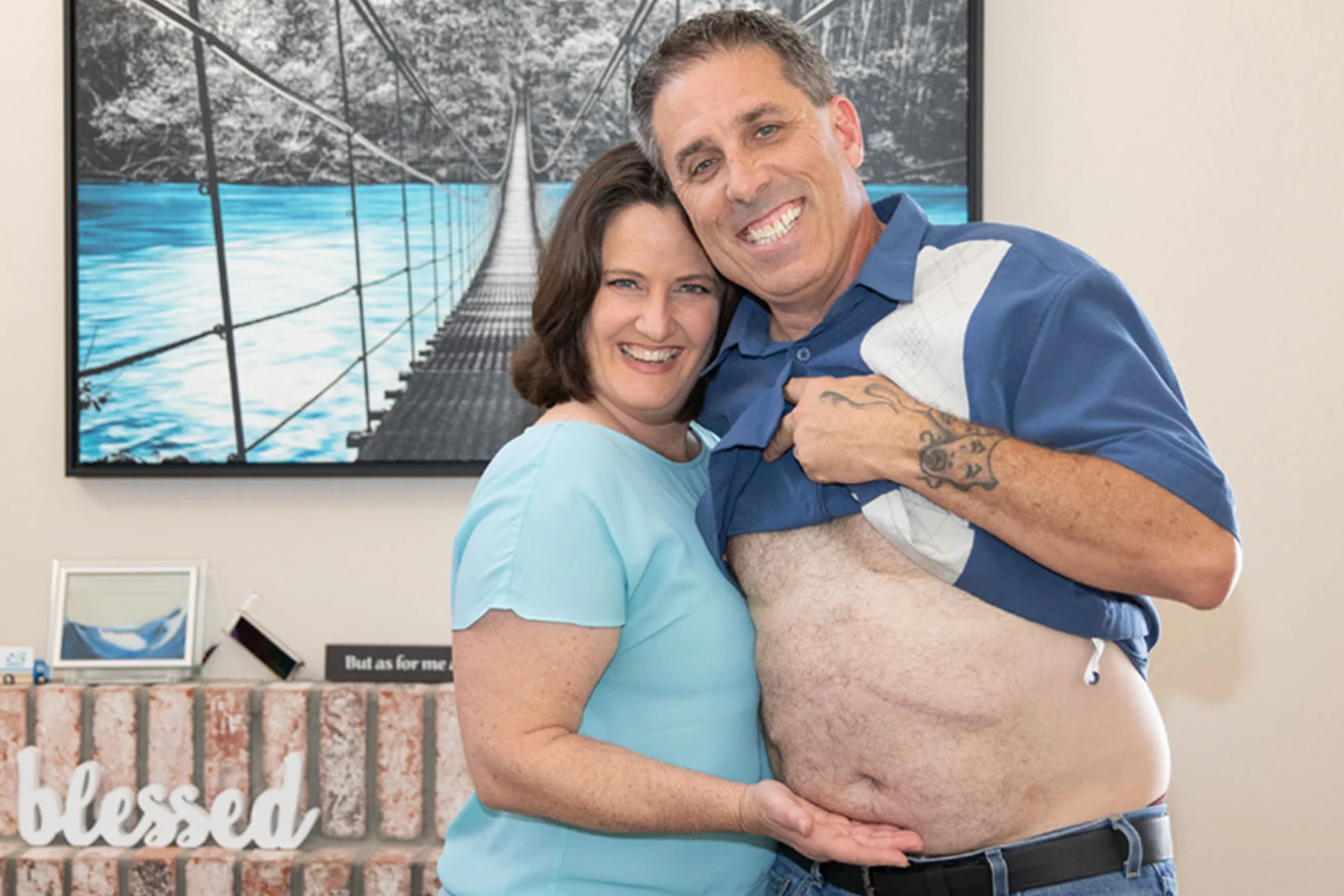
An Organ Donor's Story: So Fulfilling, He Did it Twice
Jason McCluney gave the gift of life twice by donating a kidney and a portion of his liver to two complete strangers.
Recommended reading

After Living Liver Donor Surgery
Find out what to expect following living liver donor surgery, including information about your hospital stay, pain management and when you can eat and drink.
FAQ: Living Liver Donor
Considering becoming a living liver donor? Get answers to common questions, including the evaluation process and what to consider before donating.
Evaluation to be a Living Liver Donor
Learn about the living liver donor evaluation process, including evaluation steps, timelines, insurance coverage and more.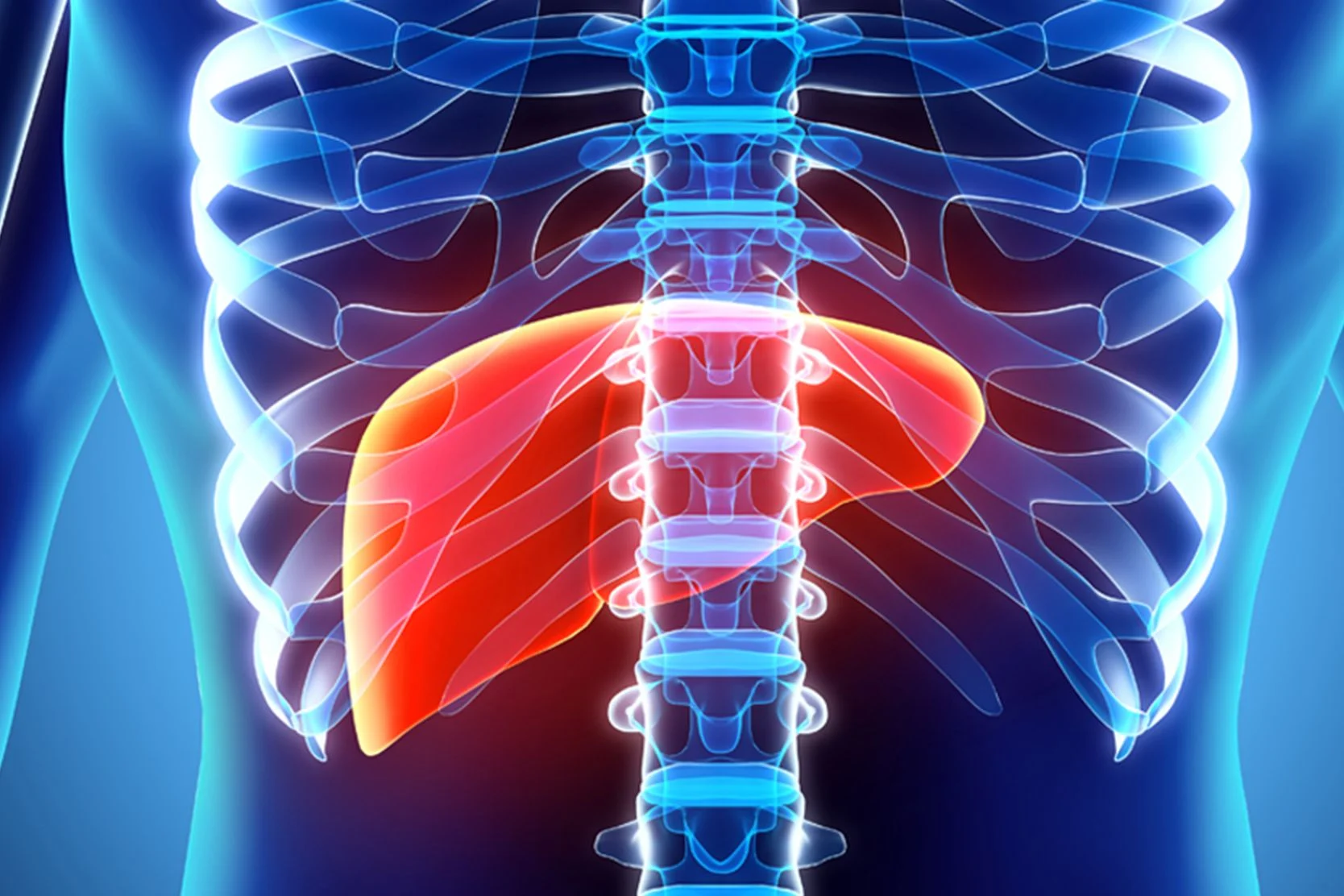
Liver Transplant Glossary
Use this glossary to understand the medical terms involved in liver transplant, including angiogram, sclerotherapy and T-tube.
UCSF Health medical specialists have reviewed this information. It is for educational purposes only and is not intended to replace the advice of your doctor or other health care provider. We encourage you to discuss any questions or concerns you may have with your provider.