
Sunscreen for Skin Cancer Prevention
What SPF to use
Sunscreen protects your skin by absorbing and reflecting ultraviolet rays from the sun. All sunscreens have a sun protection factor (SPF) rating that indicates how long a sunscreen remains effective on the skin.
You can determine how long sunscreen will be effective by multiplying the SPF factor by the length of time it takes you to develop a sunburn without sunscreen. For instance, if you normally develop a sunburn in 10 minutes without wearing a sunscreen, a sunscreen with an SPF of 15 will protect you for 150 minutes — 10 minutes multiplied by the SPF of 15.
Although sunscreen helps minimize sun damage, no sunscreen completely blocks all wavelengths of UV light. Wearing sun protective clothing and avoiding sun exposure from 10 a.m. to 3 p.m. also will help protect your skin from overexposure and minimize sun damage.
The American Association of Dermatology (AAD) recommends that a "broad spectrum" sunscreen (meaning it protects against ultraviolet A (UVA) and ultraviolet B (UVB) rays with an SPF of at least 15 that is applied daily to all sun exposed areas, then reapplied every two hours.
UVA are longer or weaker rays and UVB are medium or stronger rays.
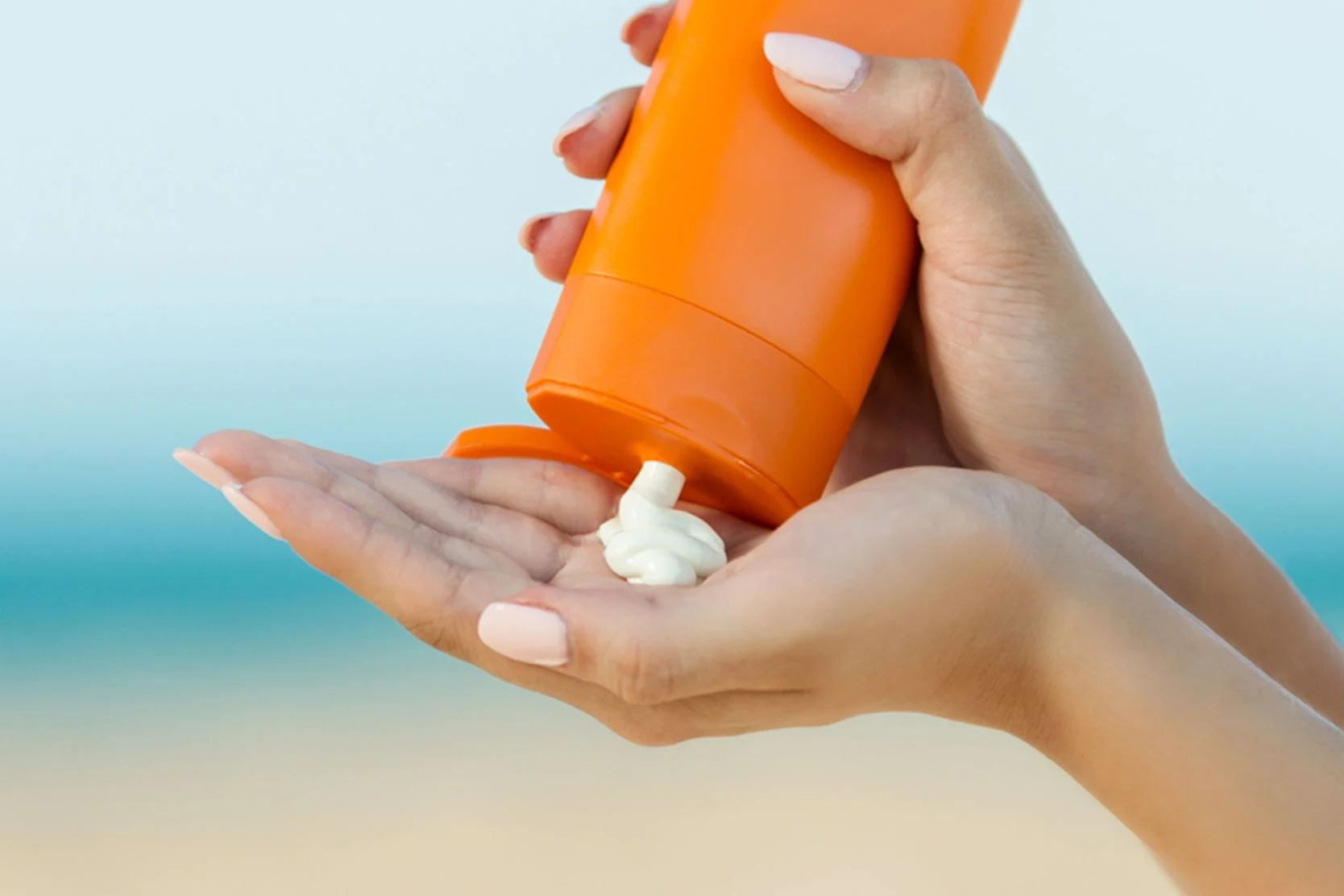
In some clinical trials, sunscreens with SPF 30 provided significantly better protection than sunscreens with SPF 15. At UCSF Medical Center, we recommend sunscreens with an SPF of at least 30. Adults should cover their bodies in enough sunscreen that would fill a shot glass and reapply every two hours.
Which sunscreen to choose
The best sunscreen to use varies by individual. We recommend broad spectrum sunscreen, which provides UVA and UVB protection, and an SPF rating of at least 30, in a form that is gentle enough for daily use.
Active ingredients of sunscreen vary by manufacturer, and may be a chemical or physical agent.
- Chemical sunscreens work by absorbing the energy of UV radiation before it affects your skin.
- Physical sunscreens reflect or scatter UV radiation before it reaches your skin.
Some sunscreens combine both chemical and physical sunscreens.
Two types of physical sunscreens are zinc oxide and titanium dioxide. Both provide broad spectrum protection and are gentle enough for everyday use. Because these are physical blocking agents and not chemicals, they are especially useful for individuals with sensitive skin, as they rarely cause skin irritation.
Most chemical sunscreens are composed of several active ingredients. This is because no single chemical ingredient blocks the entire UV spectrum (unlike physical sunscreens). Instead, most chemicals only block a narrow region of the UV spectrum. By combining several chemicals, with each one blocking a different region of UV light, one can produce a sunscreen that provides broad spectrum protection.
The majority of chemical agents used in sunscreen work in the UVB region. Only a few chemicals block the UVA region. Since UVA can also cause long-term skin injury, dermatologists at UCSF routinely recommends sunscreens that contain either a physical blocking agent (e.g. titanium dioxide or zinc oxide) or Avobenzone (also known as Parsol 1789).
Sunscreens comes in a variety of forms. Lotions, oils, sticks, gels, sprays and creams can all be effective sunscreens. Try several types to find the one which works and feels the best to you.
When to Apply
All sunscreens should be applied 15 to 20 minutes before sun exposure to allow a protective film to develop, then reapplied after water contact and sweating. Some sunscreens can lose effectiveness after two hours, so reapply frequently.
Spray lotions and gels are the least oily but also the ones that wash off more easily and need to be reapplied more frequently.
Water resistant sunscreens are available for active individuals or those involved in water sports.
- Water-Resistant sunscreen maintains the SPF level after 40 minutes of water immersion
- Very Water-Resistant sunscreen maintains the SPF level after 80 minutes of water immersion
Allergic reactions
If you develop a rash or other allergic response to a sunscreen, try a different brand or different form, such as lotion rather than oil. The most common allergic reactions occur with sunscreens that contain PABA-based chemicals.
Try a sunscreeen without PABA if you develop skin irritations. Sunscreens with titanium dioxide or zinc oxide provide very good broad spectrum UV protection and rarely cause allergic reactions.
Recommended reading
Skin Cancer Prevention
Find out how to protect your skin when you’re spending time outdoors, determine your skin cancer risk and recognize signs of melanoma.
Protective Clothing for Skin Cancer Prevention
Get trusted information about sun-protective clothing, which can help shield your skin from ultraviolet A (UVA) and ultraviolet B (UVB) rays.
UCSF Health medical specialists have reviewed this information. It is for educational purposes only and is not intended to replace the advice of your doctor or other health care provider. We encourage you to discuss any questions or concerns you may have with your provider.