
Microvascular Decompression
On this page
Overview
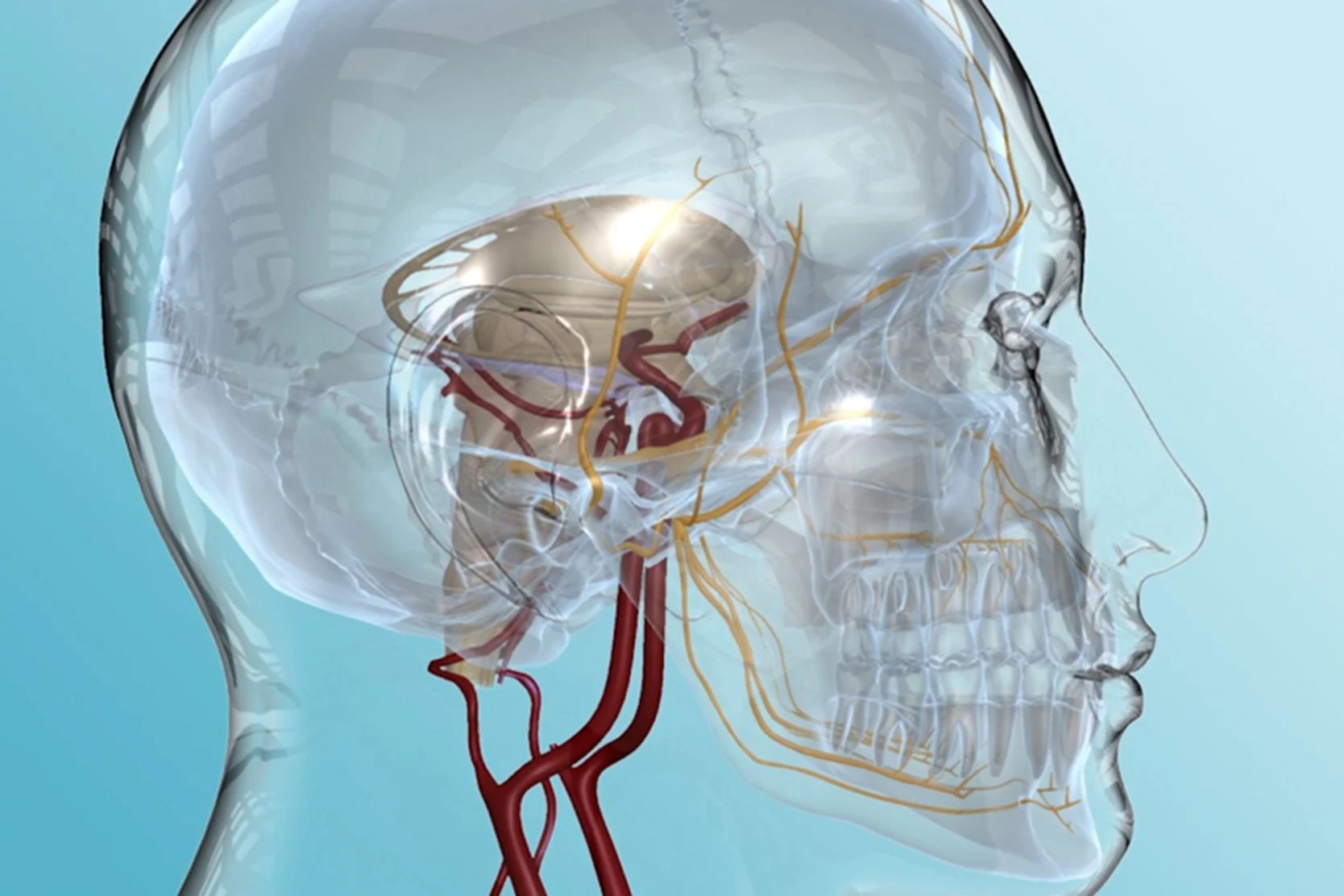
Microvascular decompression is a surgical procedure for treating intensely painful or spasming facial nerves when medications haven't brought relief. We provide this option for patients who have trigeminal neuralgia, glossopharyngeal neuralgia or hemifacial spasm. Any of these conditions can result from a vein or artery compressing one of the cranial nerves. When this occurs, every pulse of blood through the vessel irritates the nerve, triggering stabbing facial pain and muscle spasms.
Our first line of treatment is always medication. A variety of drugs can relieve the pain or spasms, but if they prove ineffective, the next step is surgery, and most often we turn to microvascular decompression. In this procedure, the surgeon moves the offending blood vessel away from the affected nerve and inserts a tiny Teflon pad between the two; this keeps them apart and buffers the nerve from the blood vessel's pulsations. Alternatively, the surgeon may insert a small sling to pull the blood vessel away from the nerve.
While considered the most invasive surgery for these conditions, microvascular decompression is also the best way to fix the underlying problem. It causes the least damage to the nerve and does the best job of freeing patients from pain or spasms and reliance on medication. About 80 percent of patients gain long-term relief from their symptoms.
UCSF's neurology and neurosurgery services are among the best in the country. Our Trigeminal Neuralgia Clinic is one of the largest referral centers for trigeminal neuralgia in the United States, with a team that specializes in diagnosing and treating the condition.
Evaluation
We consider performing microvascular decompression only for patients who have a confirmed diagnosis of trigeminal neuralgia, glossopharyngeal neuralgia or hemifacial spasm and whose symptoms persist despite treatment with the best medications. The procedure is best for patients aged 65 and younger who have no significant medical or surgical risk factors. We rarely offer the surgery to patients with facial pain that isn't related to one of these three conditions or with atypical trigeminal neuralgia; not only is the procedure less successful in these cases but it can actually make the pain worse or cause additional medical problems.
In scheduling evaluations for microvascular decompression, we prioritize patients with trigeminal neuralgia or glossopharyngeal neuralgia. The evaluation includes a thorough neurological exam and an MRI brain scan to obtain detailed images that allow doctors to rule out other possible causes of your symptoms.
In deciding whether to go forward with surgery, you and your doctor should discuss the severity of your pain, your goals for treatment and your personal degree of risk aversion.
The procedure
You will be under general anesthesia (completely asleep) during the surgery. The surgeon will make a small incision behind the ear on the side of your head where you are experiencing pain.
To access the nerve causing pain, the surgeon will make a small hole in your skull. Using an operating microscope and tiny instruments, the surgeon will navigate through the tissue to locate the affected nerve and the blood vessel pressing on it. The surgeon will then secure a small Teflon pad between the two to keep them from touching. The procedure takes two to three hours.
Most patients spend two days in the hospital. You may feel some post-op discomfort, such as headache, nausea or pain at the incision site. Let your nurse know if your pain isn't well-controlled.
Recovery
Many patients report immediate relief, though it can take a few weeks before symptoms are completely gone.
Pain and stiffness from the operation usually subside within a week, and you can begin to resume normal activities at your own pace. However, you should avoid physical exertion, including heavy lifting, for six weeks.
Risks
As with any major surgery, microvascular decompression carries risks. These include:
- Infection
- Hearing loss, facial numbness or facial weakness (usually temporary side effects)
- Spinal fluid leak
- Excessive bleeding
- Difficulty with speech or swallowing
- Stroke or hemorrhage (very rare)
Related services & conditions
Specialties
Conditions
- Facial Pain
UCSF Health medical specialists have reviewed this information. It is for educational purposes only and is not intended to replace the advice of your doctor or other health care provider. We encourage you to discuss any questions or concerns you may have with your provider.