
Two Weeks After Stroke and Back on His Bike
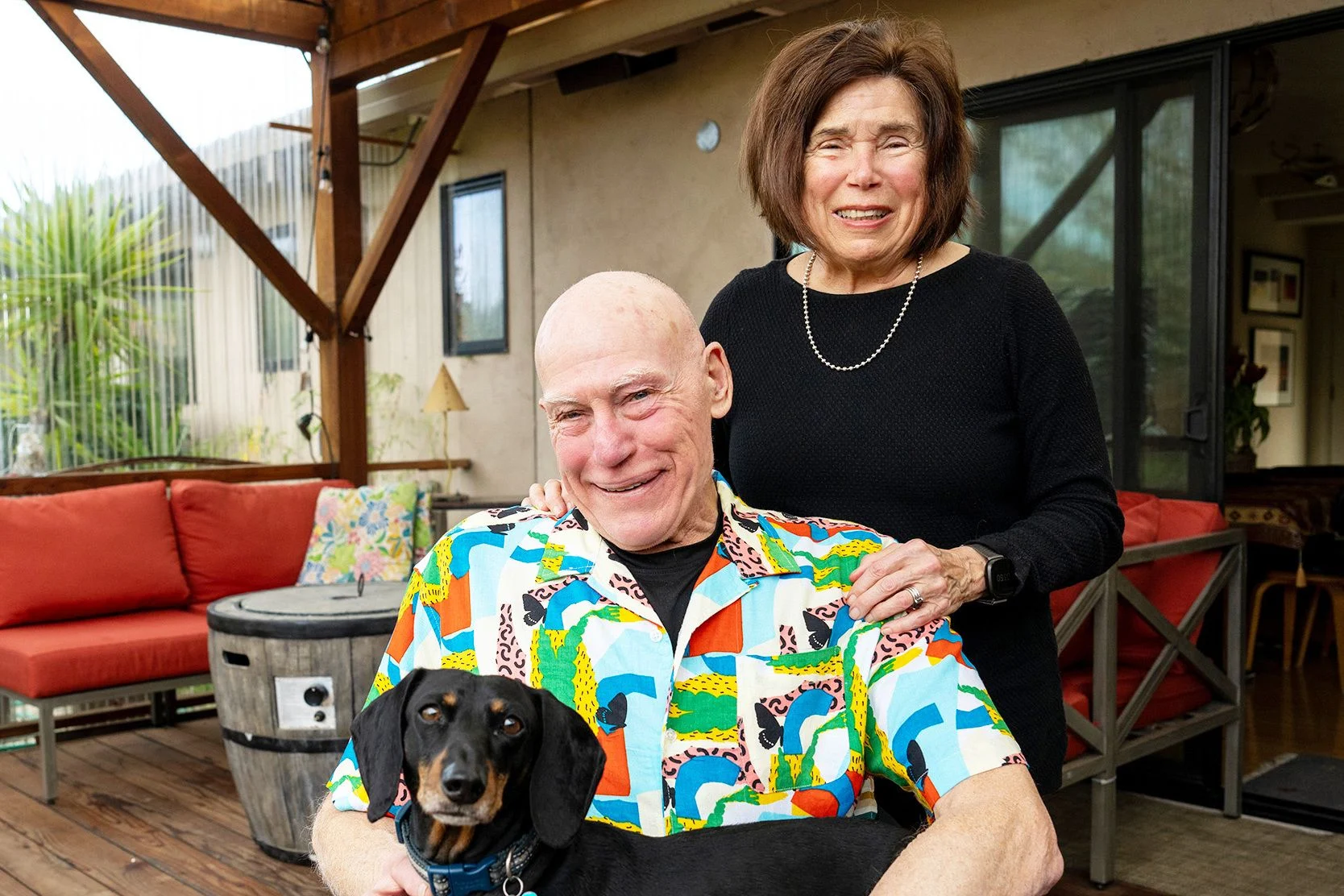
It was 5:30 a.m. when Claudia Sims awoke to the sound of wheezing. "Odd," she thought; her husband, Gary Seifer, hadn't had an asthma flare-up for years. Straining to listen, she realized that he was gasping as he struggled to pull himself up from a fall next to the bed. Bolting to her husband's side, she found him partially paralyzed, his mouth drooping and lopsided – a hallmark of a stroke.
Sims called 911.
At 75, Seifer was healthier than many of his peers, still taking on small construction projects and working out several times a week on an exercise bike. But he had a history of atrial fibrillation (A-fib), an irregular heart rhythm that raises the risk of blood clots and strokes. Years earlier, he had undergone two surgeries to correct his A-fib and reduce his stroke risk.
Removing the blood clot
When the ambulance arrived, Seifer was taken to nearby Sonoma Valley Hospital, an affiliate of UCSF Health, where he underwent a CT scan to confirm the stroke. The Sonoma team transferred him to UCSF, which has a comprehensive stroke center, the highest certification awarded to hospitals that can treat the most complex cases. "We deliver outstanding innovative care, from the emergency department to the in-hospital setting, to provide acute treatment, promote stroke prevention, and enhance recovery and rehabilitation," said the center's medical director, Dr. Anthony Kim, who would oversee Seifer's care.
When Seifer arrived at UCSF Helen Diller Medical Center at Parnassus Heights, a plan for his care was already in place.
By then, it was too late to use clot-dissolving drugs, explained Dr. Steven Hetts, co-chief of neuro-endovascular surgery. "Too many hours had elapsed between the time when he was last seen well. Generally, you have to get those medications within three to four-and-a-half hours of symptom onset."
Instead, Seifer underwent an embolectomy, in which a catheter (a thin, flexible tube) was threaded from an artery in his thigh to the clot in his brain. The clot was then removed using a device inserted into the catheter. "This was a life-threatening stroke or one that could have left Seifer with serious disabilities," said Dr. Luis Savastano, Hetts' co-chief of neuro-endovascular surgery, who performed the procedure. "Early recognition and transfer to our center changed his life."
We deliver outstanding innovative care, from the emergency department to the in-hospital setting, to provide acute treatment, promote stroke prevention, and enhance recovery and rehabilitation.
A consistent team, from ER to discharge
More than 1,000 embolectomies are performed each year by UCSF doctors, between UCSF Health hospitals and its public partner, Zuckerberg San Francisco General Hospital and Trauma Center. "This high volume of specialized interventions means we can take on the most challenging cases that other hospitals don't accept," said Dr. Anirudh Sreekrishnan, director of the stroke clinic and a vascular neurologist.
UCSF is recognized by U.S. News & World Report as a top hospital for stroke, ranking second in the nation for neurology and neurosurgery. It is part of a network of 25 regional centers recognized as leaders in stroke prevention, treatment and recovery.
"One unique feature is that patients see the same physicians on admission as they do during their stay in critical care and on the floor, as well as in the outpatient center," said Sreekrishnan. "This means they are more attuned to the [individual] patient's recovery and more likely to flag any decline."
Sims noted that her husband's team worked "in sync and fast" to get the procedure started.
"Afterwards, I was told that he would probably recover mobility and his cognition wouldn't be affected," she recalled.
Return to simple pleasures
Fortunately for Seifer, his recovery was impressive and faster than most. After spending two days in the hospital with his wife and son, Jason, by his side, Seifer was discharged with instructions to start a new blood-clot prevention medication – no follow-up hospital appointments required.
Back home that day, he went on a 1-mile walk with Sims and his loyal sidekick, Toby, the couple's dachshund, who had raised a ruckus when EMTs came into the house and seemingly kidnapped his favorite human.
Just two weeks later, Seifer was back on his exercise bike.
"I'm not obsessed with my health," admitted Seifer, who enjoys wine tasting, making paella on the grill and trips to Europe with his wife. "But the stroke made me realize that I have to continue to take good care of myself. Life's fun these days."