
Gamma Knife
On this page
Gamma Knife
What is Gamma Knife radiosurgery?
Despite its name, the Gamma Knife isn't a knife. It is a machine that delivers a single, finely focused, high dose of radiation to its target, while causing little or no damage to surrounding tissue. The Gamma Knife can treat small tumors and tiny areas of abnormal tissue without harming healthy tissue. Patients with serious disorders can be treated with this noninvasive procedure in one day and don't need to stay in the hospital overnight.
The Gamma Knife uses gamma rays – a form of high-energy electromagnetic radiation – to target specific areas of the body. The Gamma Knife is an advanced type of radiosurgery, a treatment technique that delivers precise and concentrated radiation doses.
This treatment is mainly used for brain disorders such as brain tumors, arteriovenous malformations, epilepsy, trigeminal neuralgia. Another radiosurgery device called the CyberKnife may be used for conditions that affect other areas of the body, like the spine or spinal cord.
Because radiation exposure to other parts of the body is extremely low in radiosurgery procedures, they're considered a good option for children and women of childbearing age. The Gamma Knife procedure is much the same for children as adults. But certain aspects such as anesthesia, imaging tests, recovery and treatment timeline, are tailored to their needs.
Our approach to Gamma Knife
UCSF launched our Gamma Knife Radiosurgery Program in 1991. Since then, we have treated thousands of patients using this technique.
If you're a potential candidate for Gamma Knife treatment at UCSF, your case will be reviewed at our weekly Gamma Knife conference. This review is done by a team of neurosurgeons, radiation oncologists, physicists, neuro-radiologists, neuro-oncologists, nurses and radiation therapists. If you undergo Gamma Knife treatment at UCSF, this group will review your follow-up scans to ensure you received the best care possible. Your primary doctor will be consulted throughout this entire process.
Evaluation for Gamma Knife
To determine if you are a good fit for Gamma Knife radiosurgery, your doctor will look at the following:
- Age
- General medical condition
- Location and size of the brain abnormality
- Previous treatments
If Gamma Knife is not right for your specific case, your doctor will discuss other treatment options.
Preparation for Gamma Knife
Before the procedure, you will visit the hospital for blood tests. During this appointment, you will also meet the medical team who will perform the procedure. This team will include your doctors, nurses and in some cases, a radiation oncologist or neurosurgeon. During this visit, the doctor will record your medical history, perform a physical examination and answer any questions you may have.
Learn more about preparing for the Gamma Knife procedure.
Procedure for Gamma Knife
The Gamma Knife is used to precisely target specific areas in your brain – a technique known as stereotactic radiosurgery. We'll first use imaging tools including computerized tomography (CT) scanning, magnetic resonance imaging (MRI) and angiography to help locate the areas requiring treatment. These images, combined with other computerized tools, provide 3-D views of the abnormal tissues and surrounding brain structures. Your doctor uses these views to zoom in on the abnormal tissues, then directs the gamma rays to target them.
Before the procedure, the doctor will fit a stereotactic frame on your head. The frame helps hold your head still during the procedure and guide the radiation beams precisely to their target. The neurosurgeon will numb your scalp and forehead with a local anesthetic. (Your head won't be shaved.) As the frame is attached, you may feel some pressure but this will subside.
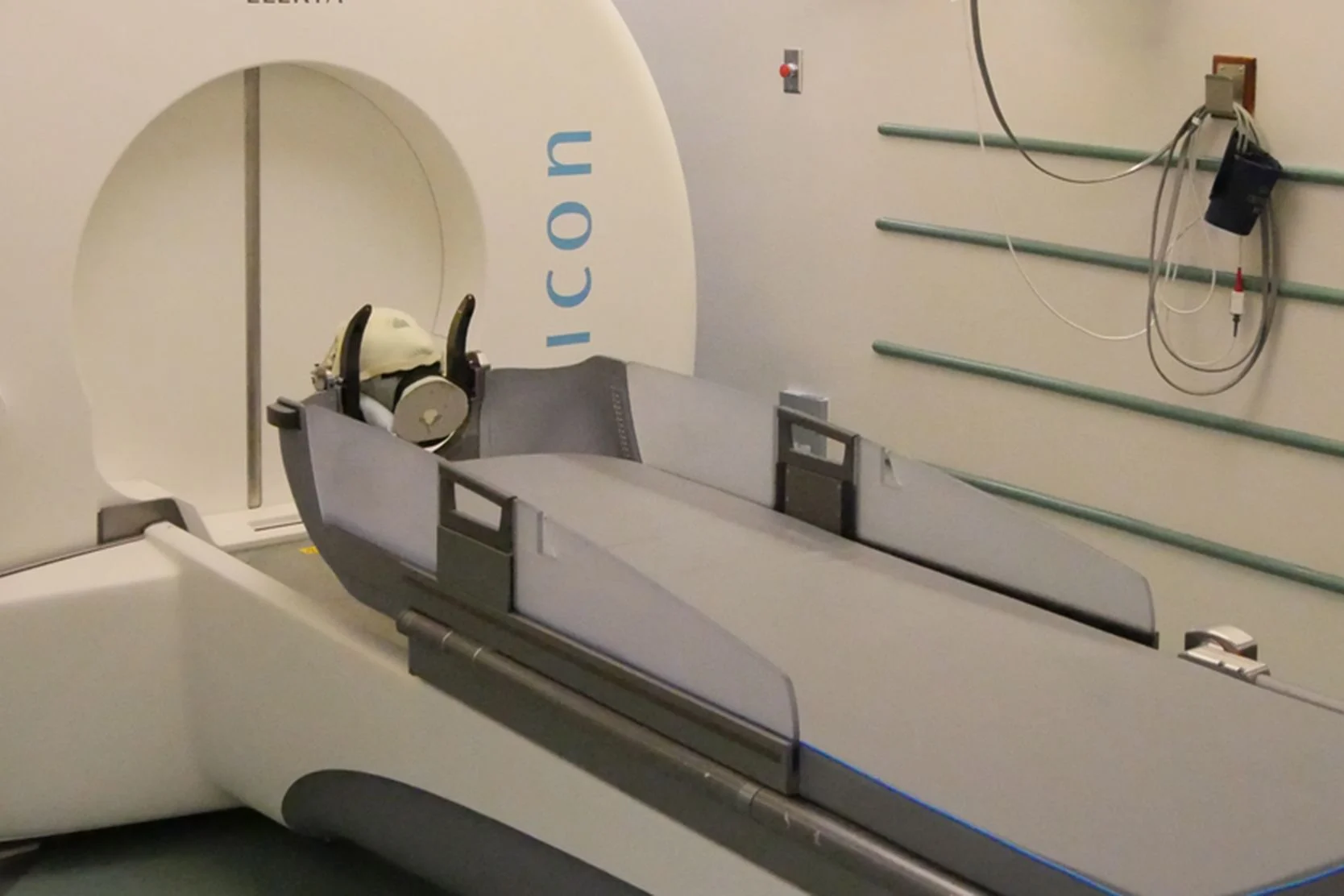
For the treatment, you'll lie down on a treatment couch with your head held in place as dozens of small radiation beams are focused simultaneously on the target. The length of the procedure will depend on your condition. The size of the focus area can be adjusted, and multiple focal spots can be combined to deliver a high radiation dose precisely to one or more areas. You won't feel any pain during the procedure.
Once the session is complete, we'll remove the stereotactic frame, and apply band aids to the spots where the frame was placed.
Recovery for Gamma Knife
You may be discharged shortly after the procedure. We'll explain the follow-up instructions, and you'll receive a handout with additional care information. It's normal to experience some side effects following a Gamma Knife procedure, including a mild headache, which can be treated with medication. Our nurse will call you the following day to check to see how you are doing and answer any questions you may have.
Related services and conditions
Specialties
- Neurosurgery
- Radiation Oncology
- Neuro-Oncology
- Radiology (Neuroradiology)
Conditions
- Brain and Spine Tumors
- Epilepsy
- Trigeminal Neuralgia
UCSF Health medical specialists have reviewed this information. It is for educational purposes only and is not intended to replace the advice of your doctor or other health care provider. We encourage you to discuss any questions or concerns you may have with your provider.