
Hepatic Artery Infusion Pump
On this page
Hepatic artery infusion (HAI) is a treatment for patients with colon or rectal cancer that has spread to the liver and for patients with bile duct cancer (cholangiocarcinoma) that can't be removed or has spread into the liver. When these tumors are numerous, can't be surgically removed, or can't be wiped out by standard chemotherapy methods, HAI may effectively treat them by delivering a concentrated chemotherapy agent directly to the liver. In addition, to improve outcomes for patients having surgery, we may use HAI as an additional treatment after the procedure or as a bridge to surgery.
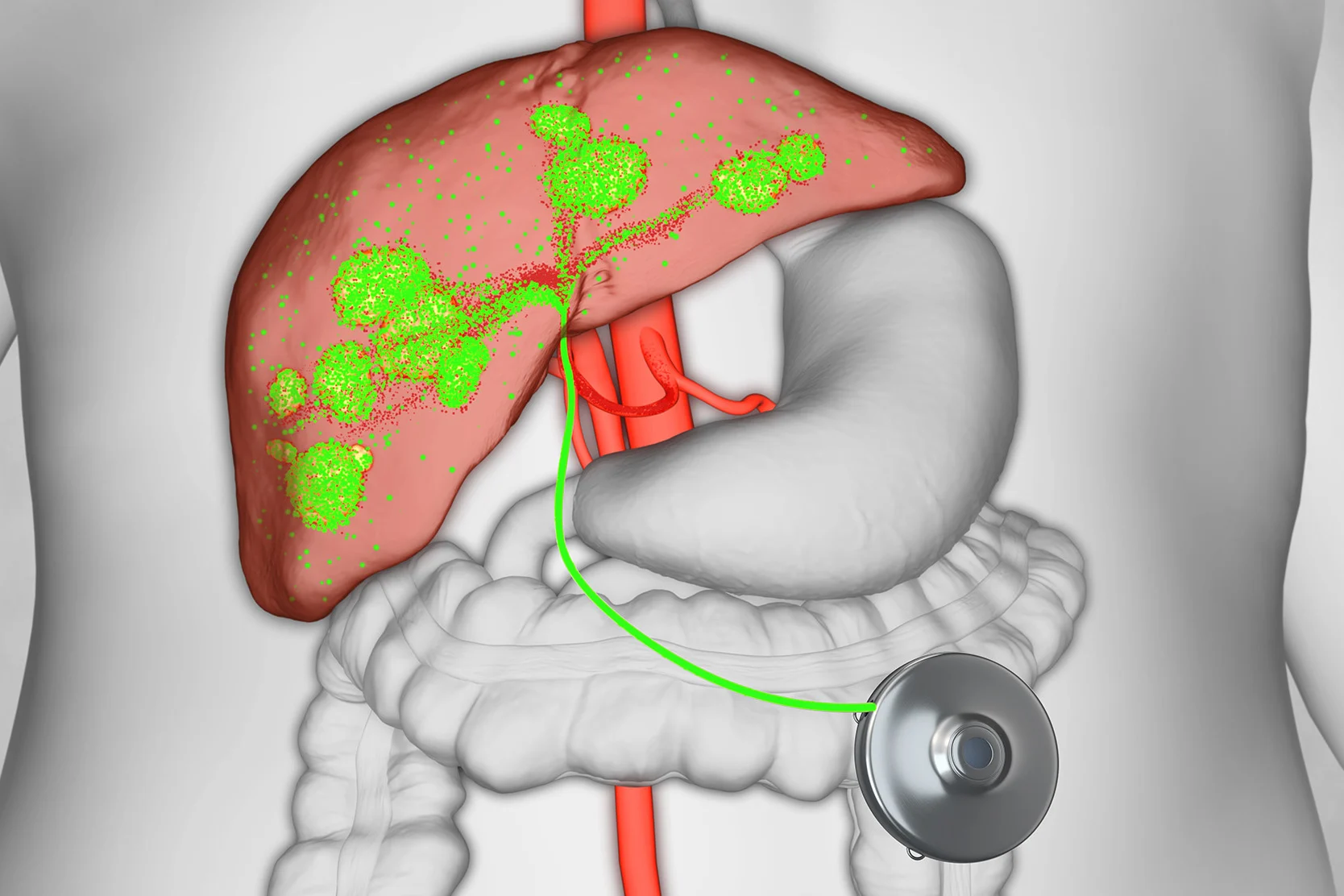
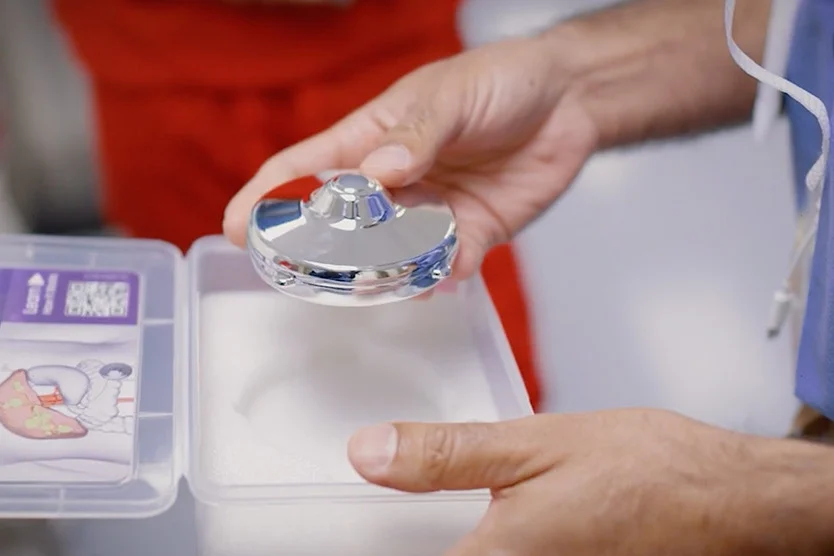
To initiate the therapy, a pump the size of a hockey puck is implanted under abdominal skin. The pump gradually releases a chemotherapy drug that is carried by a catheter (a thin, flexible tube) into the hepatic artery, the main vessel that supplies blood to tumors in the liver. (A different blood vessel supplies the liver's healthy parts.)
An advantage of HAI is that it's a targeted therapy. Chemotherapy is usually given intravenously (into a vein), which means the dose is diluted through the entire body and only a fraction reaches tumors in the liver. Because the drug's toxicity affects the whole body, we have to limit the dose. HAI pumps chemotherapy straight into the liver, making it possible to hit the tumors with much higher doses (up to 400 times higher than IV doses). Whatever amount the tumors don't absorb is metabolized by the liver, reducing side effects for other organs and tissues.
HAI may offer hope for patients with few treatment options. It can be used before surgery to shrink tumors, after surgery to kill any lingering cancer cells, or instead of surgery for liver tumors that are too extensive or numerous to be removed. By shrinking or even eliminating tumors, this therapy may extend patients' lives, ease their symptoms and, in some cases, keep the tumors from coming back.
Our gastrointestinal cancer team includes international leaders in the fields of surgical and medical oncology for the liver, pancreas and bile ducts. These experts are among the country's most experienced providers of HAI therapy. Indeed, UCSF is the only medical center in Northern California and one of just a few in the West offering this treatment.
Who may benefit
HAI therapy is for patients who have colon cancer that has spread to the liver or bile duct cancer that is extensive or can't be surgically removed. Patients are eligible for the surgery only if most of their tumors are in the liver.
Procedure
The HAI pump is surgically implanted under the skin of the lower abdomen, and the catheter is placed in a branch of the hepatic artery. Before the operation, you'll have an imaging test (either CT or MRI) so your doctors can see precisely where to place the pump. For the surgery itself, you'll be under general anesthesia (completely asleep). If the surgery is just to implant the pump, the hospital stay is a few days. If the pump is being placed as part of a liver surgery to remove tumors or combined with a colorectal surgery, you may be in the operating room for several hours and require a longer hospital stay.
Recovery
Recovering from the pump implantation procedure takes about four weeks. You may be aware of a slight bulge where the pump is located, but most people get used to it quickly.
Once you've recovered, you can resume most of your usual activities. However, a number of things can affect how your pump works, so keep the following restrictions in mind:
- Avoid contact sports or other rough activities that could damage the pump.
- Don't go scuba diving or deep-sea diving; the atmospheric pressure can affect the pump's flow rate.
- Don't place a heating pad or hot-water bottle directly over the pump site. Raising the temperature around the pump can make it flow faster.
- Avoid saunas and long soaks in hot tubs. The pump flows faster if your body temperature is high.
- A change in elevation can affect the flow rate. If you're planning to travel by air or to spend time at a different altitude, let your doctor know. Your medication may need to be adjusted.
During active treatment, you'll have office visits every two weeks so we can check your progress and refill the pump. Refilling the pump takes 10 to 15 minutes. A nurse or doctor uses a syringe to draw out any medicine remaining in the pump and then puts in a fresh dose. This process shouldn't cause physical discomfort.
HAI pump therapy can continue for months or even years. If you're not having active chemotherapy, the pump may be refilled with an inert material, such as saline or glycerin, to keep it operational. If your doctor decides you're done with HAI, the pump can be removed in an outpatient procedure (you won't have to stay in the hospital).
Risks
Complications of HAI therapy are mainly those associated with any liver surgery. Risks unique to HAI include:
- Arterial thrombosis or dissection (a blood clot or tear in the artery)
- Biliary sclerosis (hardening of the bile ducts)
- Blockage or dislodging of the pump or catheter
- Hematoma (an area of pooled blood resulting from damage to blood vessels)
- Infection at the pump site
During your presurgical evaluation, you and your doctor will discuss these risks and other details specific to your case.
Explore what we do
Targeting liver cancer with a small pump
Related services & conditions
Specialties
Conditions
- Metastatic Colon Cancer
- Rectal Cancer
- Cholangiocarcinoma
- Hepatic Cancer
UCSF Health medical specialists have reviewed this information. It is for educational purposes only and is not intended to replace the advice of your doctor or other health care provider. We encourage you to discuss any questions or concerns you may have with your provider.