
Lumpectomy

On this page
A lumpectomy, also called a partial mastectomy, is a surgical treatment for early-stage breast cancer. In a lumpectomy, the surgeon removes the tumor along with some of the surrounding tissue, preserving as much healthy tissue as possible.
A lumpectomy may also be performed to remove benign (noncancerous) or precancerous growths in a breast.
If your tumor can't be felt through the skin, you may undergo a localization procedure before your lumpectomy. In the localization procedure, a radiologist places either a thin wire or a tiny magnetic marker called a Magseed in the area of concern. The marker will help your breast surgeon find the tumor and will be removed during your lumpectomy.
Your breast surgeon may also remove some lymph nodes in the armpit area to determine whether the cancer has spread. This will be discussed with you before surgery.
After lumpectomy, most patients have radiation therapy to eliminate any remaining cancer cells and reduce the risk of recurrence (the cancer coming back).
Eligibility
If you have a small, early-stage tumor that's confined to one area of the breast, a lumpectomy may be an option for you. Your ability to undergo follow-up radiation may also be a factor, since radiation therapy is often needed to reduce the risk of recurrence.
Appearance may be another consideration with lumpectomy. Your doctor may evaluate whether enough tissue will remain to allow breast conservation after the cancer is removed. If not, you may have reconstruction options.
You may not be eligible for a lumpectomy if you have:
- A history of scleroderma, which can interfere with healing from the procedure
- A history of lupus or another medical condition that can worsen during radiation therapy
- A genetic mutation that increases your risk of breast cancer recurrence
- Large or multiple tumors in different areas of your breast
- Inflammatory breast cancer
- Prior breast radiation
If you're not eligible for a lumpectomy, you may need a mastectomy, or surgical removal of all breast tissue.
Procedure
When a localization procedure is needed, it's typically done sometime in the 30 days before the lumpectomy. Guided by imaging (either mammography or ultrasound), the radiologist locates your tumor, numbs your breast with a local anesthetic, and places either a wire or a Magseed in the tumor. The localization procedure takes about an hour.
The lumpectomy itself usually requires general anesthesia, meaning you will be completely asleep. The surgeon makes an incision in your breast to remove the tumor and some of the surrounding tissue, which will be analyzed for the presence of cancer cells. After removal, the surgeon closes the incision and places sutures (stitches) that will either dissolve on their own or be removed later by your doctor.
If you're having breast reconstruction, it may be done at the same time.
After surgery, you'll be moved to a recovery room and monitored while you wake up from the anesthesia. Most people can go home the same day.
If cancer cells are found in the tissue surrounding your tumor, you may need a second procedure, or re-excision, to remove the remaining cancer.
Breast reconstruction
When a lumpectomy will cause cosmetic concerns, some women choose to have breast reconstruction. Three types of reconstruction are commonly paired with a lumpectomy:
- Breast reduction. In this approach, your surgeon decreases the size of both breasts to make them look similar. The procedure is done immediately following the lumpectomy while you're still in the operating room. (If you have large breasts or a large amount of tissue removed during your lumpectomy, you may also receive a breast lift, or mastopexy, for a better aesthetic appearance.) This type of reconstruction causes more scarring because it requires additional incisions, but the scars generally become less noticeable over time.
- Complex closure. In this method, also done immediately following the lumpectomy, your surgeon rearranges the tissues near the incision to improve the contour of your breast.
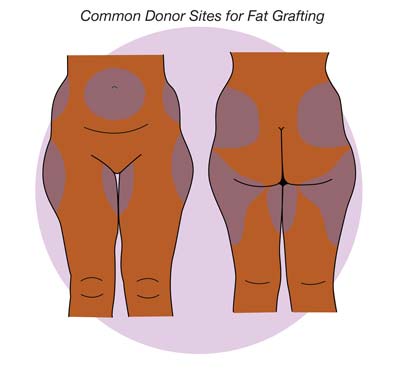
- Fat grafting. This is an option for lumpectomy patients after completing radiation therapy, since radiation can increase the risk of scarring if performed before reconstructive surgery. Unlike other reconstructive methods, fat grafting doesn't require additional incisions, so there are no extra scars. The surgeon uses liposuction to remove fat from the abdomen, lower back or thighs and then injects it into the breast. Additional fat transfer procedures may be necessary to achieve the desired result.
Recovery
You'll likely experience soreness in your chest and underarm, tenderness at the incision site, and numbness where the scar is healing. If lymph nodes were removed, you may also feel numbness or a burning sensation in your armpit and the area below.
You'll need to avoid strenuous activities, including vigorous exercise and lifting anything heavier than 10 pounds, until your first post-op appointment. At this visit, you'll receive instructions for exercises to help you regain range of motion. You may also be referred to physical therapy.
Recovery after lumpectomy, including reconstruction, typically takes at least two weeks. We often recommend waiting three to four weeks before returning to work, depending on the physical demands of your job.
Recommended reading

Preparing for a Lumpectomy or Mastectomy
Here’s how to prepare for a lumpectomy or mastectomy, including arrangements you should make before surgery, what to eat and items to bring to the hospital.
Follow-Up Care for Breast Cancer Patients
After completing early-stage breast cancer treatment, here's what to expect for follow-up exams, mammograms and other screening tests.
UCSF Health medical specialists have reviewed this information. It is for educational purposes only and is not intended to replace the advice of your doctor or other health care provider. We encourage you to discuss any questions or concerns you may have with your provider.