

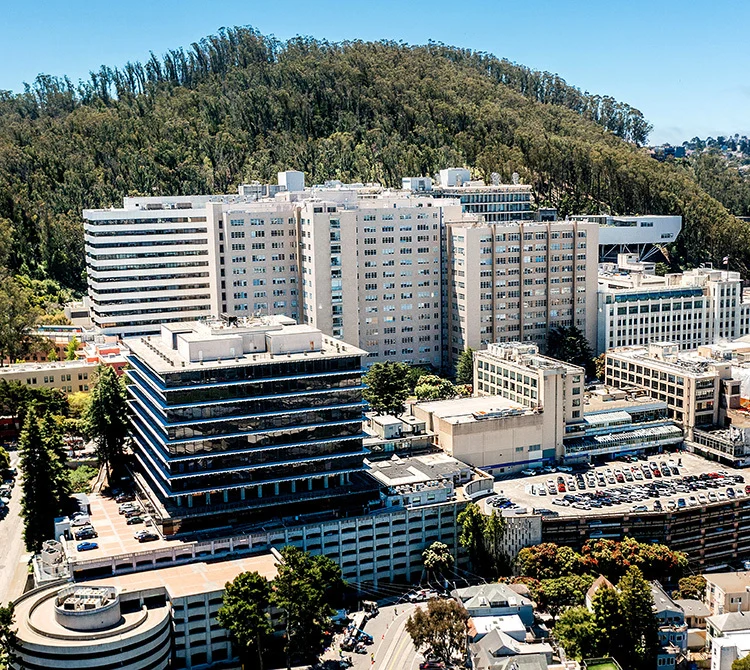
Cartilage Repair & Regeneration
On this page
Get care
Why choose UCSF Health for cartilage repair and regeneration?
Cartilage is a firm, flexible tissue surrounding the bones within your joints. Because of its low blood supply, cartilage doesn’t heal well on its own after an injury or long-term wear. Cartilage loss in the knee can cause joint pain, stiffness and swelling.
Our skilled orthopedic surgeons are regional leaders in knee cartilage treatment. We help repair and regenerate knee cartilage with innovative nonsurgical and surgical therapies, including biologic injections and cartilage implants grown from your own cells.
We are also at the forefront of the latest research. We study cartilage injuries and therapies to develop new minimally invasive approaches, expand care and improve cartilage health in our patients. You may be able to join a clinical trial and gain access to new therapies before they are widely available.
Why choose UCSF Health for cartilage repair and regeneration?
Cartilage is a firm, flexible tissue surrounding the bones within your joints. Because of its low blood supply, cartilage doesn’t heal well on its own after an injury or long-term wear. Cartilage loss in the knee can cause joint pain, stiffness and swelling.
Our skilled orthopedic surgeons are regional leaders in knee cartilage treatment. We help repair and regenerate knee cartilage with innovative nonsurgical and surgical therapies, including biologic injections and cartilage implants grown from your own cells.
We are also at the forefront of the latest research. We study cartilage injuries and therapies to develop new minimally invasive approaches, expand care and improve cartilage health in our patients. You may be able to join a clinical trial and gain access to new therapies before they are widely available.
Get care
Personalized treatment plan
Our team considers your goals, activity level and health history to tailor a care plan that fits your unique needs and lifestyle.Nonsurgical treatments
We offer effective, nonsurgical therapies to treat cartilage damage, avoiding surgery when possible.Comprehensive approach
Cartilage damage can develop over time or from an injury. We address underlying knee issues that may have led to damage to help restore function and reduce pain.Recovery-focused care
From regular follow-up visits to physical therapy, we support your healing and help you meet your recovery goals after knee cartilage surgery.
Cartilage repair and regeneration at UCSF Health
Our orthopedic surgeons specialize in regenerating and repairing damaged knee cartilage. We use advanced, effective therapies to treat cartilage damage caused by:
- ACL and ligament injuries
- Cartilage injury
- Knee joint misalignment
- Meniscus loss or injury
- Osteochondral defect
- Osteochondritis dissecans (OCD)
In addition to repairing cartilage, our orthopedic specialists treat the underlying knee condition to help you regain and maintain mobility.
Cartilage treatment tailored to you
At your first visit, we discuss your symptoms, health history and recovery goals. We examine how your knee moves and may perform imaging tests, such as an MRI, to see the tissues inside your knee.
Our skilled orthopedic surgeons help restore joint cartilage so you can get back to the activities you enjoy. We may combine several treatment options depending on your age, desired activity level and severity of symptoms. Your provider works with you to determine what treatments will be most appropriate and effective for you.
Nonsurgical cartilage treatments
Your orthopedic specialist may recommend nonsurgical treatments to help your knee feel better:
- Oral medications. We offer medication options to reduce inflammation and pain.
- Injections. We provide targeted joint injections, including hyaluronic acid, cortisone and orthobiologics, such as platelet-rich plasma (PRP).
- Physical therapy. In combination with other treatments, physical therapy can help strengthen muscles around the knee joint and improve joint mobility.
Knee cartilage surgery
Our orthopedic surgeons can help when nonsurgical treatments aren’t working. The surgical team performs many knee cartilage surgeries arthroscopically, a minimally invasive approach that uses a small camera through tiny incisions to repair the damage in your knee.
There are several surgical approaches we may use to repair and regenerate your knee cartilage, including:
Autologous chondrocyte implantation (ACI)
ACI is an innovative procedure that grows an implant from your own healthy cartilage cells. Your surgeon completes this in two stages:
- Collection of the healthy cells from your knee
- Placement of the lab-grown implant into your knee
The two procedures typically happen three to four weeks apart, so the cells have enough time to grow before we implant them into your knee.
Osteochondral grafting
To treat damaged cartilage, our surgeons may move healthy cartilage from a less critical part of your knee to the damaged area. A graft from your own knee is called an autograft.
Sometimes, we use donor cartilage, called an allograft, to repair a cartilage injury. You and your surgeon discuss which type of graft is right for you.
Ongoing follow-up care
After knee cartilage surgery, you’ll see your surgeon regularly over the next year. Our skilled physical therapists help you regain strength and mobility in your knee.
If damage in the knee joint is severe enough that cartilage repair and regeneration aren’t possible, you may be a candidate for a knee replacement procedure. We connect you with UCSF Health orthopedic surgeons specializing in joint replacement to discuss your options.
Providers

Nicholas Colyvas, MD
Orthopedic Surgery (Adult Reconstruction) • Sports Medicine
Brian Feeley, MD
Sports Medicine • Orthopedic Surgery
Nicolas Hatamiya, DO
Sports Medicine • Orthopedic Surgery
Awards & achievements
Best in Northern California and No. 6 in the nation for orthopedic care

Among the top hospitals in the nation
Related conditions & treatments
Conditions
- Cartilage Injury
- Osteochondral Defect
- Osteochondritis Dissecans
Treatments
- Knee Arthroscopy
- Autologous Chondrocyte Implantation
- Knee Arthroplasty
- Knee Cartilage Repair
- Knee Injection
- Osteochondral Allograft Transplantation
- Osteochondral Autograft Transplantation
Accreditations & memberships

American Academy of Orthopaedic Surgeons (AAOS)
Our surgeons stay current with the latest advancements and help shape national orthopedic care standards.